

Trump Sets 2031 Deadline As Quantum Threat Looms Over Crypto

President Trump has signed two executive orders mandating US federal systems migrate to post-quantum cryptography by 2031, as warnings grow that quantum computers could threaten Bitcoin and other crypto assets as early as 2030.
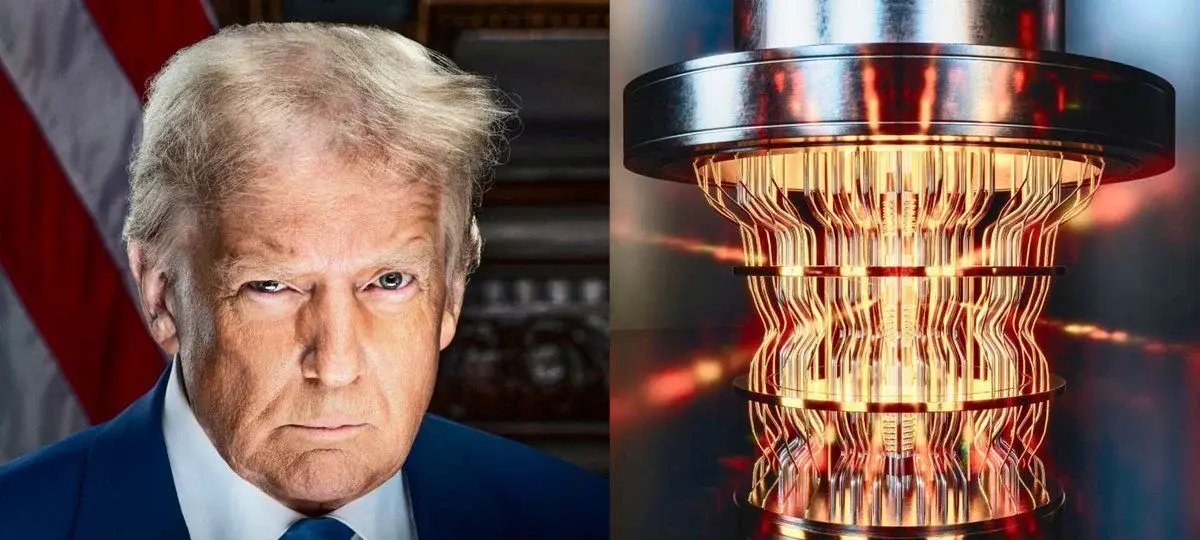
President Donald Trump has signed two executive orders directing all US federal agencies to migrate high-value systems to post-quantum cryptography, setting hard deadlines that put Washington at the forefront of a global race to secure digital infrastructure.
What the Orders Require
Trump issued Executive Orders 14409 and 14411. EO 14409, titled "Securing the Nation Against Advanced Cryptographic Attacks," focuses on mitigating the threats posed by large-scale quantum computers to current encryption standards. It sets deadlines for federal agencies to transition high-value assets and high-impact systems to NIST-approved post-quantum cryptography standards, key establishment by the end of 2030 and digital signatures by the end of 2031. A companion order, EO 14411, titled "Ushering In the Next Frontier of Quantum Innovation," established a roadmap for the US to utilize the commercial and research benefits of quantum information science and technology.
NIST must begin a pilot migration project within 180 days on selected systems it controls, with completion required by December 31, 2027. The cryptography order accelerates a deadline that ran to 2035 under the 2022 National Security Memorandum-10, meaning agencies must now reach quantum-resistant standards years earlier. The order highlights the risk of adversaries collecting US information now and decrypting it later once large-scale quantum computers are operational.
Why Bitcoin Holders Are Paying Attention
The concern for Bitcoin is what researchers call "Q-Day," the moment a quantum computer becomes powerful enough to reverse-engineer private keys from public addresses, effectively allowing an attacker to drain any exposed wallet. The orders do not directly regulate decentralized networks, but the broader warning has refocused attention on Bitcoin's own cryptographic vulnerabilities.
Roughly 1.7 million Bitcoin sit in old-style addresses (P2PK) where public keys are fully visible, making them directly vulnerable to a future quantum attack. Many of these are believed to be Satoshi's coins or funds whose owners have long since lost their keys. Factor in address reuse across other address types, and approximately 7 million Bitcoin total are currently considered quantum-vulnerable. That figure represents about one-third of the total supply that will ever exist.
Coinbase's Quantum Advisory Council has warned that Bitcoin and other crypto networks need to begin planning for post-quantum migration well before quantum computers can realistically break today's public-key cryptography. In a June 11 report titled "Post-Quantum Migration and Abandoned Coins," the council framed the issue as both a technical migration problem and a governance dilemma. Bitcoin Core developers have already proposed BIP-361, which would phase out legacy signatures and ban sending funds to vulnerable addresses. Unlike a traditional software update, transitioning a decentralized blockchain to new cryptographic standards requires broad consensus among miners, developers, node operators, and users. There is no central authority that can mandate such a change.
The executive orders set deadlines for government systems, not for decentralized networks. How quickly the Bitcoin ecosystem moves to match federal timelines remains an open question.
Sources:
Trump signs executive orders setting 2031 deadline for post-quantum migration (The Block)
Coinbase Quantum Advisory Council: Post-Quantum Migration and Abandoned Coins (Coinbase Blog)
Trump Executive Order Sets Deadlines for Federal Shift to Quantum-Resistant Encryption (Bitcoin.com News)
Latest News




Read More...




(Advertisement)
Author
 Soumen Datta
Soumen has been a crypto researcher since 2020 and holds a master’s in Physics. His writing and research has been published by publications such as CryptoSlate and DailyCoin, as well as BSCN. His areas of focus include Bitcoin, DeFi, and high-potential altcoins like Ethereum, Solana, XRP, and Chainlink. He combines analytical depth with journalistic clarity to deliver insights for both newcomers and seasoned crypto readers.