

TD Cowen flags worsening political environment for the CLARITY Act

TD Cowen's Washington Research Group warns the political environment for the CLARITY Act is deteriorating, with analyst Jaret Seiberg keeping passage odds well below market consensus and Senator Tillis holding firm on ethics language tied to Trump family crypto ventures.
TD Cowen's Washington Research Group is sounding a fresh alarm over the Digital Asset Market Clarity Act, warning that the political conditions surrounding the landmark crypto market structure bill are worsening, even as the legislation clears procedural hurdles on Capitol Hill.
A Committee Win That May Not Mean Much
The Senate Banking Committee voted 15 to 9 in May to advance the CLARITY Act, with two Democrats crossing party lines to join all thirteen Republicans. But TD Cowen analyst Jaret Seiberg cautioned investors against reading too much into the result. "The political environment is getting worse for the Clarity Act," Seiberg said in a note, adding: "It is why we remain pessimistic that Clarity will become law this year."
Seiberg said the committee vote shifted the fight to the full Senate rather than signaling a deal had been reached, and warned that major obstacles remained, particularly around conflict-of-interest provisions. Lawmakers must still resolve the sticky conflict-of-interest provision before a final version is likely to be available for a vote from the overall Senate, where 60 yes votes will be needed, necessarily including a significant number of Democrats.
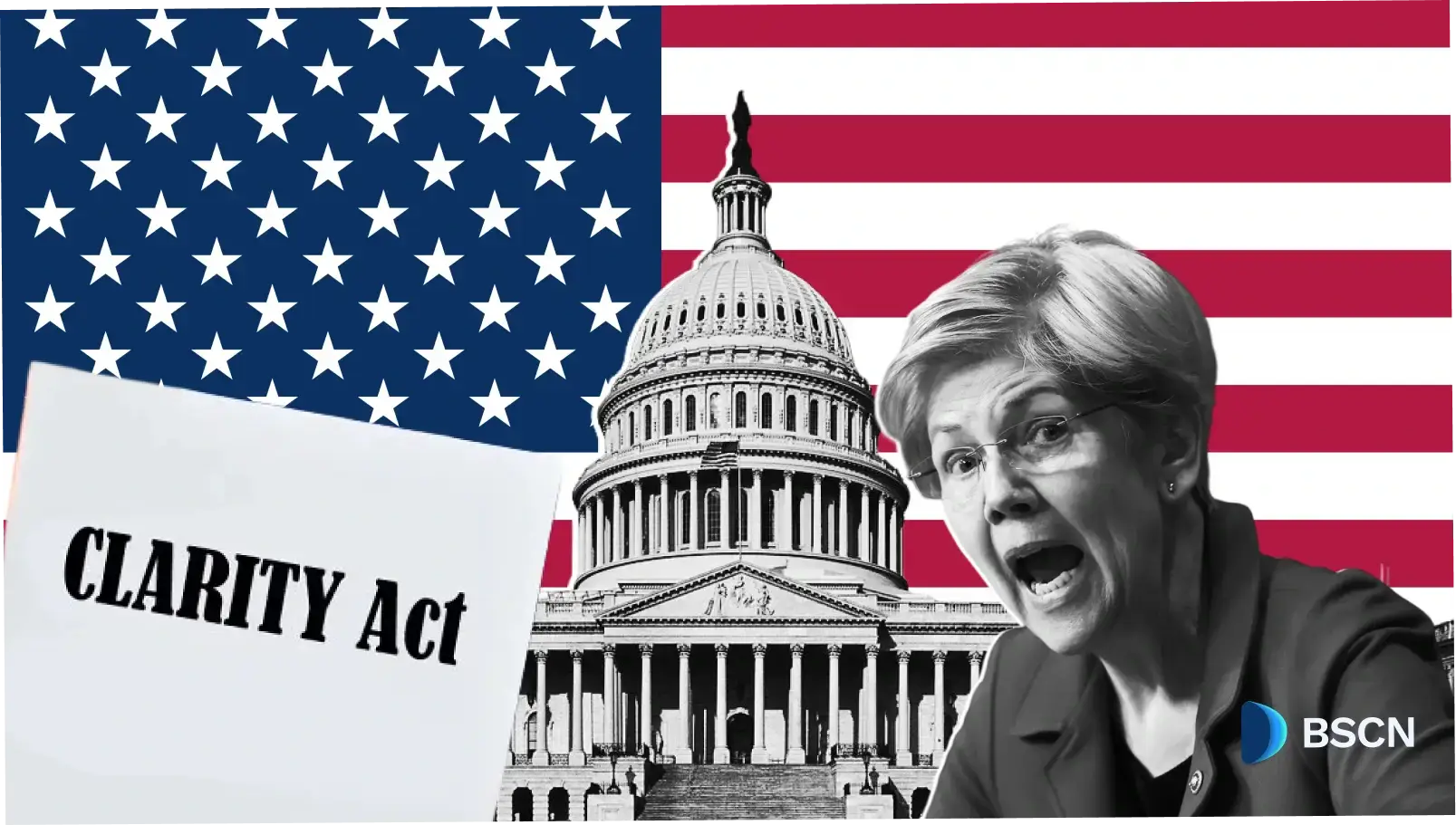
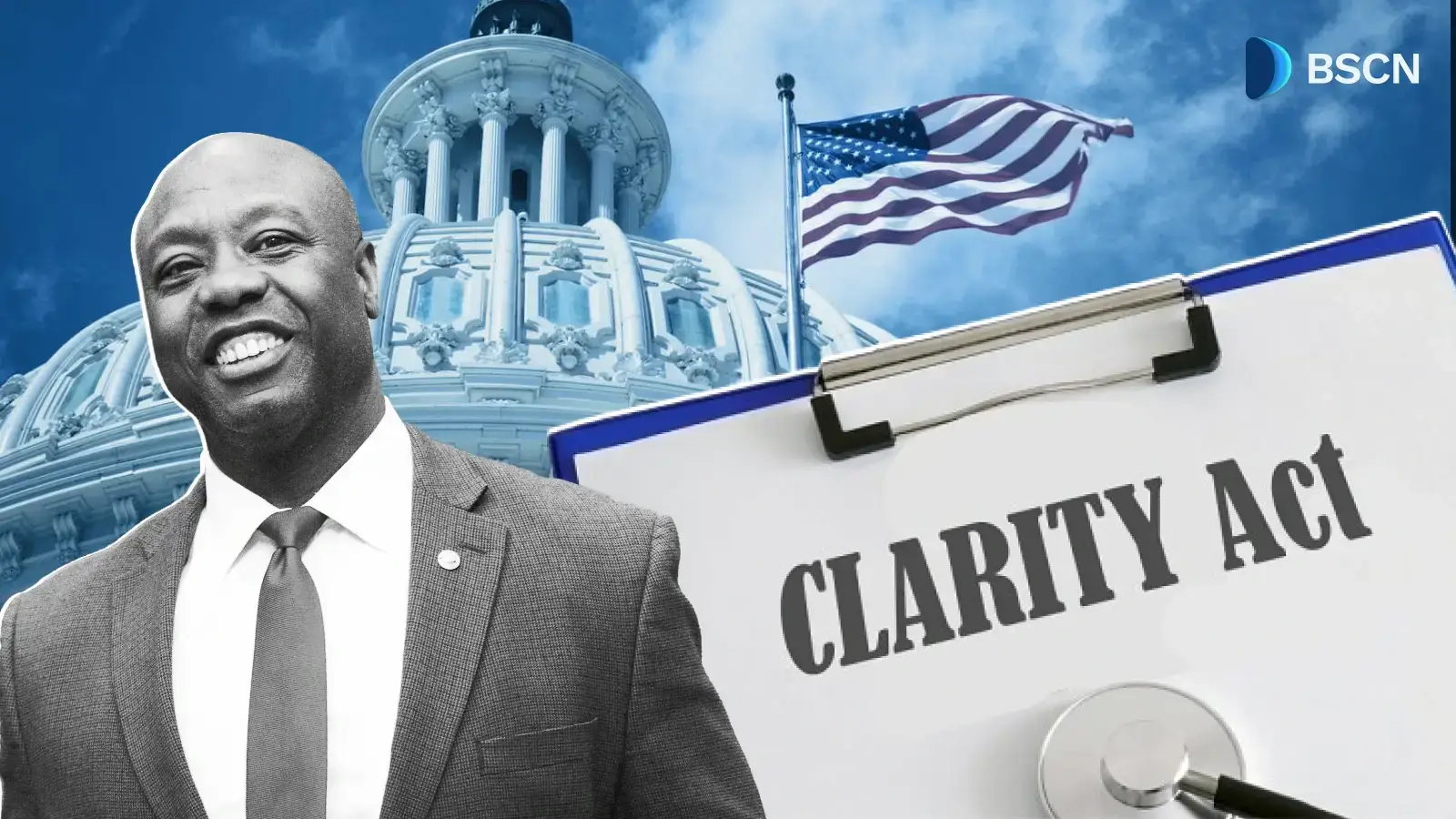
Central to that standoff is Section 307 of the bill, which would bar the President, Vice President, and members of Congress from trading crypto. The provision directly implicates Trump family ventures including World Liberty Financial, American Bitcoin, and associated memecoins. White House officials have repeatedly said they would not tolerate a bill that targets the president. At the same time, Democrats have said they will not allow the bill to move without such a section. @SenThomTillis is holding firm on the ethics language, deepening the impasse.
Forecasters Far Apart on Passage Odds
Seiberg said a series of recent developments involving President Trump and his administration are making it politically harder for Democrats to support the crypto bill. He pointed to financial disclosures showing that around 3,600 stock trades were executed on Trump's behalf during the first three months of 2026, with some appearing to coincide with periods when Trump publicly discussed companies or policy matters that could affect them. These developments are increasing pressure on Democrats to demand conflict-of-interest provisions before supporting the crypto bill.
As a result, Seiberg expects lawmakers may choose to delay action while waiting to see whether the political controversies fade. "This leads to inaction as lawmakers wait to see if the uproar will recede," he said. "The problem is that the upcoming election leaves little room for further delay." Seiberg has previously said the window to pass the bill likely extends until the August recess, and that delays could push passage to 2027, with final rules potentially not taking effect until 2029.
The divergence between analysts is striking. Seiberg has told clients he sees the bill's chances at one-in-three for this Congress, arguing that any serious fight over yield-bearing stablecoins and bank versus non-bank issuer parity could push final passage into the next administration. Galaxy Research, by contrast, had previously placed 2026 odds at around 75%. Seiberg later raised his estimate to 40% following the May committee vote, though he still sits well below market consensus. @SenLummis has described a June passage as "probably pretty optimistic," and TD Cowen says she might be right.
Sources:
The Block: TD Cowen says crypto bill unlikely to pass this year amid worsening political environment
CNBC: Crypto industry scores win as Clarity Act clears Senate hurdle
Elliptic: CLARITY Act advances from Senate Banking Committee
Latest News





Read More...

(Advertisement)
Author
 Crypto Rich
Rich has been researching cryptocurrency and blockchain technology for eight years and has served as a senior analyst at BSCN since its founding in 2020. He focuses on fundamental analysis of early-stage crypto projects and tokens and has published in-depth research reports on over 200 emerging protocols. Rich also writes about broader technology and scientific trends and maintains active involvement in the crypto community through X/Twitter Spaces, and leading industry events.