

Bitcoin Quantum Recovery Tool Cannot Save Satoshi Nakamoto Holdings

Project Eleven has developed a zero-knowledge proof system to help Bitcoin holders recover quantum-vulnerable coins under BIP-361, but the tool cannot rescue Satoshi Nakamoto's estimated 1.1 million BTC due to the absence of a modern key derivation path.
(Advertisement)

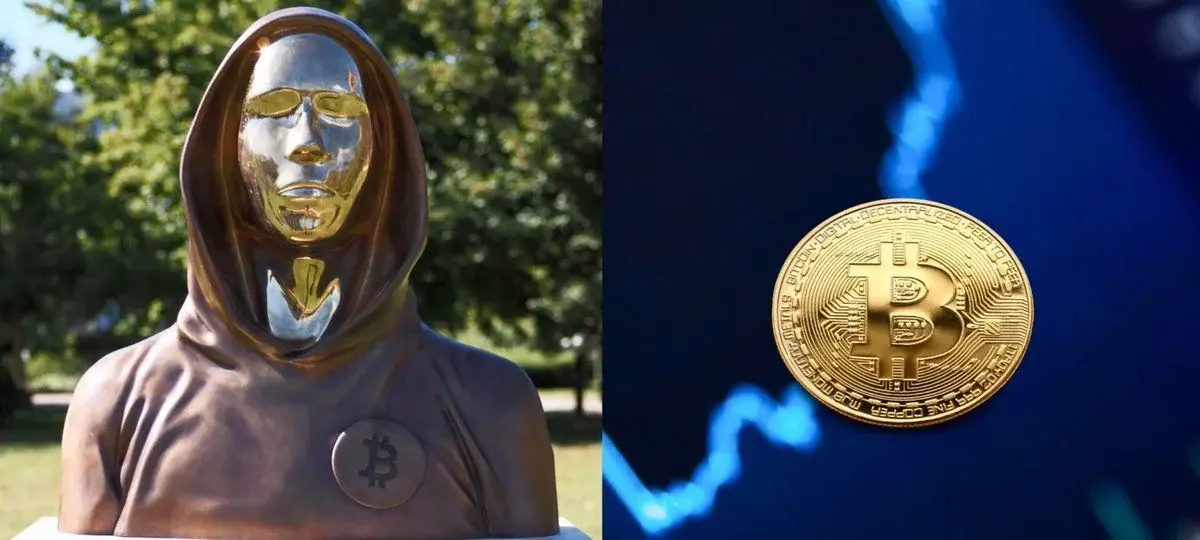
Post-quantum cryptography firm Project Eleven has unveiled a zero-knowledge proof system designed to help $BTC holders recover coins that would be frozen under BIP-361, a proposed Bitcoin protocol change targeting quantum-vulnerable addresses. The tool marks a meaningful step forward in Bitcoin's quantum preparedness, but it comes with one significant gap: it cannot save Satoshi Nakamoto's estimated 1.1 million BTC.
How the Recovery Tool Works
Project Eleven announced on July 15, 2026, that it had developed a faster zero-knowledge proof prototype designed to help verify control of Bitcoin wallets without publicly revealing sensitive key information. The scheme exploits the fact that quantum computers can break elliptic curve signatures but not the one-way hashing used in modern wallet key derivation, allowing only true owners with seed material to prove control. Project Eleven says it has funded a proof that lets a wallet's own key-derivation path stand in as ownership after quantum computers can forge its signatures, and it runs in 243 milliseconds on a laptop.
The tool is designed to support the recovery mechanism outlined in BIP-361. BIP-361, published in April by Jameson Lopp and five co-authors, would block new deposits to vulnerable addresses after three years and freeze whatever remained after five, stranding coins in more than a third of Bitcoin's supply. Project Eleven funded the implementation using Binius, an open-source proof system designed to accelerate hash-heavy cryptographic operations. Benchmarks show the prototype is dramatically faster than prior work, but it remains unaudited, incomplete, and would require contentious changes to blockchain rules before it could protect any live coins.
Why Satoshi's Bitcoin Is Beyond Reach
The entire trick depends on there being a key above a user's address to prove knowledge of, and that tree structure arrived with BIP-32, assigned on February 11, 2012. Before it, wallets generated every key independently and at random. Satoshi mined through 2009 and 2010 and was gone by 2011. Those coins sit in pay-to-public-key outputs with the public key written directly on-chain, generated by software that had no seed phrase, no derivation path, and no parent key. There is nothing above them in a tree, because trees did not exist yet.
The roughly 1.1 million BTC tied to Satoshi Nakamoto's early addresses, worth tens of billions of dollars, would be explicitly excluded from any rescue operation. The broader quantum threat to Bitcoin is not limited to Satoshi's holdings. More than 34% of all Bitcoin sits in quantum-vulnerable categories, according to BIP-361. A Coinbase advisory council report estimated in June 2026 that approximately 7 million Bitcoin could be vulnerable to quantum attacks.
The release of the tool adds practical weight to Bitcoin's post-quantum debate, but key questions remain. Any quantum-safe upgrade requires broad agreement across a decentralized network of miners, node operators, and developers, a process that historically takes years. For now, the recovery mechanism offers a fallback path for holders of modern HD wallets. Satoshi's coins, held in a format that predates the entire concept of seed-based recovery, remain permanently out of scope.
Sources:
CoinDesk: Bitcoin's quantum problem gets a recovery tool, but not for Satoshi's 1.1 million coins
Decrypt: Bitcoin Q-Day Recovery Proposal Aims to Let Users Prove Ownership After Quantum Attack
KuCoin: BIP-361 Explained: Bitcoin's New Plan to Survive Quantum Computing
(Advertisement)
Latest News


Read More...

Author
 Soumen Datta
Soumen has been a crypto researcher since 2020 and holds a master’s in Physics. His writing and research has been published by publications such as CryptoSlate and DailyCoin, as well as BSCN. His areas of focus include Bitcoin, DeFi, and high-potential altcoins like Ethereum, Solana, XRP, and Chainlink. He combines analytical depth with journalistic clarity to deliver insights for both newcomers and seasoned crypto readers.