

Hoskinson says Bitcoin's crown is at risk if governance fails the quantum test

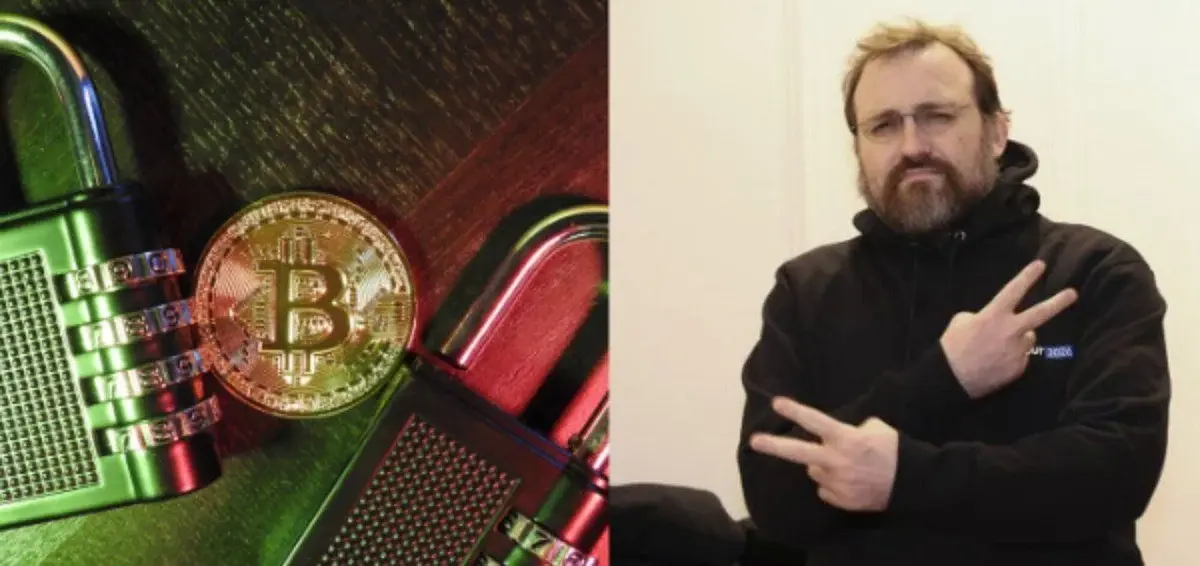
Cardano co-founder Charles Hoskinson warns that Bitcoin could lose its dominant position if its conservative governance culture cannot coordinate a migration to quantum-resistant cryptography, arguing that Cardano's on-chain governance is better equipped for the challenge.
(Advertisement)

A Governance Problem, Not Just a Technical One
@IOHK_Charles, co-founder of @Cardano, has issued a pointed warning: $BTC could lose its position as the world's leading cryptocurrency not because quantum computers will break its cryptography outright, but because Bitcoin's governance culture may be too slow and too fragmented to coordinate a response in time.
"The issue with Bitcoin is it's frozen in time. It's very difficult to change anything," Hoskinson told The Block's The Starting Block podcast on Friday. He also framed @Cardano as a natural successor to Bitcoin's founding vision. "Cardano is, in many ways, a spiritual successor [to Bitcoin]. It reflects correcting a lot of things that I think that Satoshi couldn't get around to because of expertise or time but was directionally moving there," he said.
The concern is grounded in real exposure. As of March 1, 2026, over 34% of all Bitcoin has a revealed public key on-chain, meaning those holdings could be stolen by an attacker with a sufficiently powerful quantum computer. Bitcoin's proposed answer is BIP-361, a phased migration plan designed to move the network toward quantum-resistant addresses. Hoskinson argues the proposal is mischaracterized as a soft fork and would in practice require a hard fork, which conflicts directly with Bitcoin's anti-hard-fork culture.
The stakes are significant. The agonizing problem is the coins that cannot migrate: an estimated 1.7 million $BTC sit in ancient addresses, including roughly a million believed to be Satoshi Nakamoto's, whose owners are lost, dead, or permanently absent. Those coins predate modern wallet standards and cannot be recovered under BIP-361's proposed mechanism.
"What made Bitcoin so strong is it survived external threats, including the loss of its founder," Hoskinson said. "Quantum computers are yet another threat. If Bitcoin's governance is such that it's impossible to actually make meaningful progress, or they compromise the core reason to use Bitcoin, I don't think Bitcoin's going to stay the number one cryptocurrency."
Cardano's Case and the Broader Stakes
"If you had on-chain governance, you could solve it," Hoskinson said. His argument is that the cryptography itself is solvable, but Bitcoin's decentralized, consensus-dependent upgrade process is not built for a transition of this scale. Hoskinson explained that Cardano's governance system makes large-scale upgrades easier to coordinate, and that the network is already voting on a quantum strategy while preparing a research proposal, with a long-term migration path designed to help users transition toward quantum-resistant infrastructure.
"With Cardano, we're going to have to make some decisions about what to do with quantum-vulnerable infrastructure. And if there needs to be a migration, we can have a vote, and then there could be an onchain function to do that," Hoskinson said. He added that Cardano is also preparing for what he described as its biggest upgrade to date, one that will make the network 60 times faster.
BIP-361 matters because Bitcoin moves slowly by design, and cryptographic migrations can take years to plan, debate, test, and adopt. How Bitcoin navigates that tension, with no CEO to mandate migration and no central authority to set deadlines, will set a template for every major chain facing the same challenge.
Sources:
CoinDesk: Hoskinson says Bitcoin's quantum fix can't save Satoshi's coins
Decrypt: Quantum Proposal Won't Save Satoshi's Bitcoin, Says Hoskinson
Crypto Times: BIP-361's Post-Quantum Migration Plan Sparks Debate
(Advertisement)
Latest News





Read More...



Author
 Crypto Rich
Rich has been researching cryptocurrency and blockchain technology for eight years and has served as a senior analyst at BSCN since its founding in 2020. He focuses on fundamental analysis of early-stage crypto projects and tokens and has published in-depth research reports on over 200 emerging protocols. Rich also writes about broader technology and scientific trends and maintains active involvement in the crypto community through X/Twitter Spaces, and leading industry events.