

Pavel Durov Accuses Reliance Of Disrupting Telegram Access Beyond India

Telegram CEO Pavel Durov has accused Indian telecom giant Reliance of using BGP hijacking to disrupt Telegram access for users outside India, including in the UAE, amid a temporary government ban tied to the NEET exam paper leak.
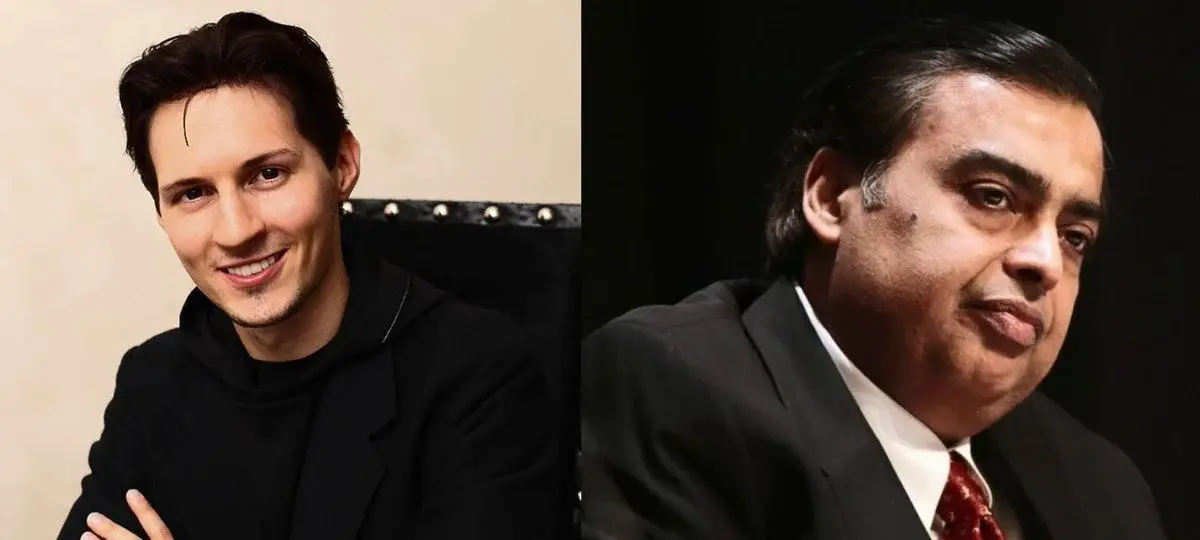
Durov Points to BGP Hijacking Beyond India's Borders
Telegram (@telegram) CEO Pavel Durov (@durov) has publicly accused Indian telecom giant Reliance of interfering with Telegram's network routing in a way that affected users well beyond India's borders. Durov claimed Reliance used a technique known as Border Gateway Protocol (BGP) hijacking to alter Telegram's network routes, with the impact extending to users in other regions, including the United Arab Emirates.
As of writing, independent monitors that track route hijacks had not publicly corroborated the claim, and it should be read as a founder-level charge rather than an established fact. Reliance has not publicly responded to the allegations.
Durov suggested the disruption may be part of a competitive war, noting that Reliance has partial ties to Meta, the company behind WhatsApp, and advised network operators to reject unauthorized BGP announcements from Reliance (AS18101) to prevent route hijacks.
He added: "I wouldn't be surprised if Reliance/WhatsApp were also behind the recent lobbying effort to ban Telegram in India." However, the ownership framing is not entirely accurate. Meta does not own a stake in Reliance Industries directly. Through its subsidiary Jaadhu Holdings, Meta holds a minority position in Jio Platforms, Reliance's digital and telecom holding company, acquired for roughly 43,574 crore rupees in 2020.
India's Temporary Telegram Ban Provides the Backdrop
The Indian government temporarily banned Telegram until June 22, 2026, citing concerns that the platform was being used to distribute leaked NEET (UG) 2026 re-examination papers.
Durov criticized the ban, saying it punished more than 150 million ordinary Indian users rather than the insiders responsible for leaking the exam materials, and that it failed on its own terms because the leaked content simply migrated to other apps such as WhatsApp.
India is one of Telegram's largest markets globally, which is why even a temporary block carries outsized weight for the company. The situation has drawn further attention given Telegram's growing role in crypto communities and the broader TON ecosystem, where Indian users represent a significant share of activity.
The allegations against Reliance remain unverified by independent network security researchers. This article will be updated if Reliance issues a public response.
Sources:
Digit.in: Pavel Durov reacts to Telegram ban in India, claims Reliance and WhatsApp might be behind it
Crypto Times: Telegram Ban in India, Crypto, TON and Durov's Attack on Reliance
NewsX: Telegram CEO Accuses Reliance of Disrupting Access Across Countries
Latest News
Read More...




(Advertisement)
Author
 Soumen Datta
Soumen has been a crypto researcher since 2020 and holds a master’s in Physics. His writing and research has been published by publications such as CryptoSlate and DailyCoin, as well as BSCN. His areas of focus include Bitcoin, DeFi, and high-potential altcoins like Ethereum, Solana, XRP, and Chainlink. He combines analytical depth with journalistic clarity to deliver insights for both newcomers and seasoned crypto readers.