

Dfinity Founder Fires Back At Centralization Claims

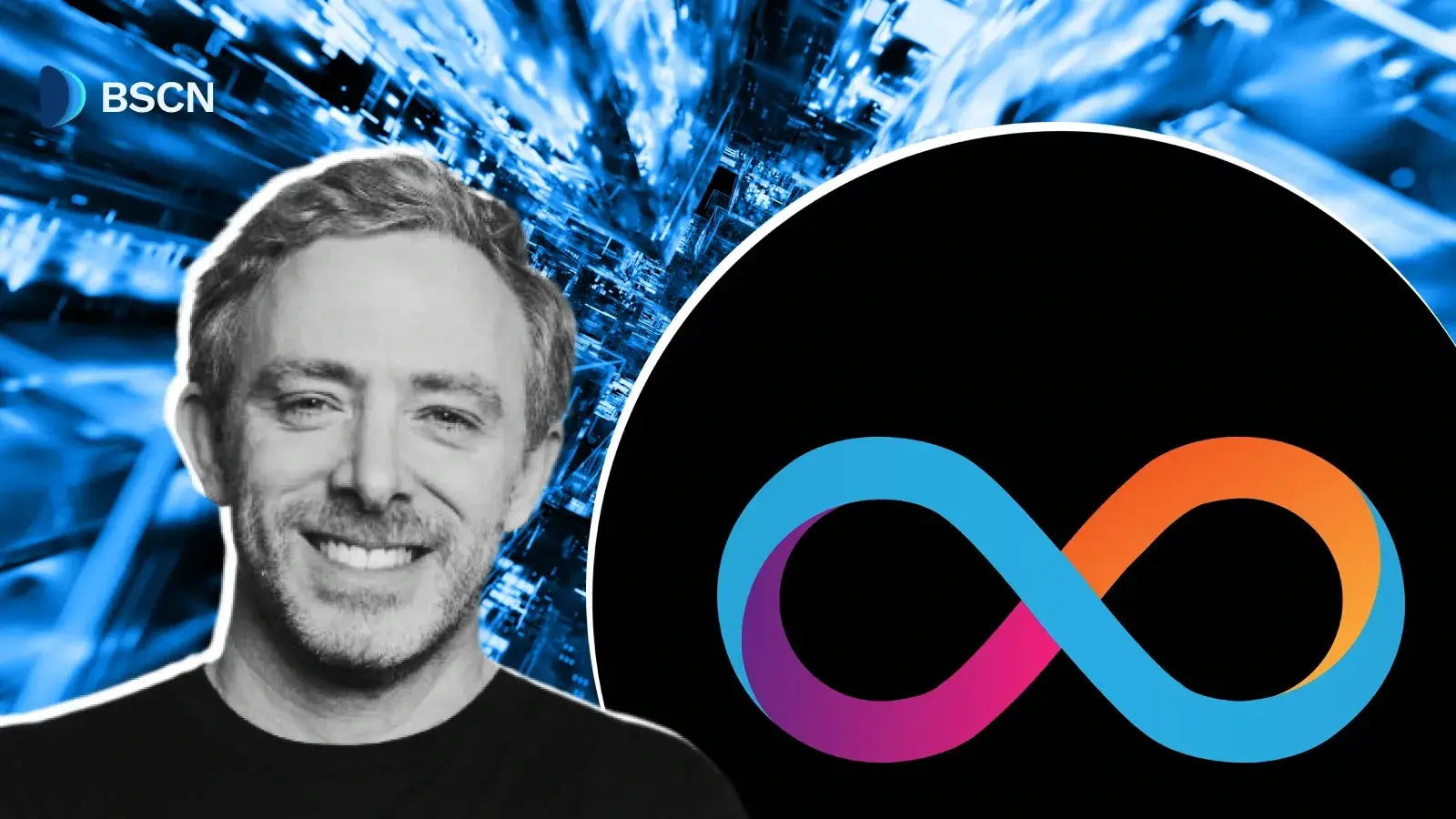
Dfinity founder Dominic Williams pushes back against Cyber Capital's Justin Bons, who called Internet Computer $ICP insecure and centralized, arguing that node count alone does not define decentralization.

(Advertisement)

Williams Challenges the Node Count Narrative
Dfinity (@dfinity) founder Dominic Williams (@dominic_w) has pushed back against criticism from Cyber Capital founder Justin Bons, who claimed that Internet Computer ($ICP) is insecure and highly centralized. Williams rejected that framing, arguing that simply counting nodes is not a meaningful measure of a network's security or decentralization.
His core argument centres on the quality of participation rather than its quantity. Williams contends that true security depends on the number of genuinely independent participants involved in consensus. In his view, a network with fewer, verified, non-anonymous operators can be more secure than one with a large but loosely accountable node set.
The broader charge he levels at many proof-of-stake networks is pointed. Williams suggested that some of those chains give the appearance of decentralization while in practice being controlled by a small, coordinated group. ICP, he argues, avoids that trap through its requirement for verified node operators.
How ICP Handles Node Governance
The design of ICP's node structure supports Williams' position in part. Node providers on ICP must be voted on by the network's governance system, which ensures that hardware meets ICP's standards and that the identity of each node provider is known to the community. Each node provider must sign a declaration of good intent and may be liable if the node misbehaves.
Nodes are also assigned to subnets in a way designed to maximise decentralization across operators, geography, and jurisdiction, a process the protocol calls deterministic decentralization.
Rather than using traditional proof-of-work or proof-of-stake models, ICP employs a consensus mechanism that combines threshold cryptography, randomized leader selection, and on-chain governance via the Network Nervous System (NNS).
Critics, including Bons, argue that the relatively small and permissioned nature of ICP's node set remains a vulnerability. Node requirements involve enterprise-grade hardware, which has raised concerns about access and decentralization among smaller operators. The debate reflects a wider, unresolved tension in the blockchain industry over how decentralization should be measured and what tradeoffs are acceptable in pursuit of performance and security.
Sources:
Internet Computer Official Docs: Network Architecture
99Bitcoins: What Is Internet Computer (ICP)?
Internet Computer Wiki: Decentralization in ICP
(Advertisement)
Latest News





Read More...




Author
 Soumen Datta
Soumen has been a crypto researcher since 2020 and holds a master’s in Physics. His writing and research has been published by publications such as CryptoSlate and DailyCoin, as well as BSCN. His areas of focus include Bitcoin, DeFi, and high-potential altcoins like Ethereum, Solana, XRP, and Chainlink. He combines analytical depth with journalistic clarity to deliver insights for both newcomers and seasoned crypto readers.