

Circle's CEO isn't panicking about OUSD

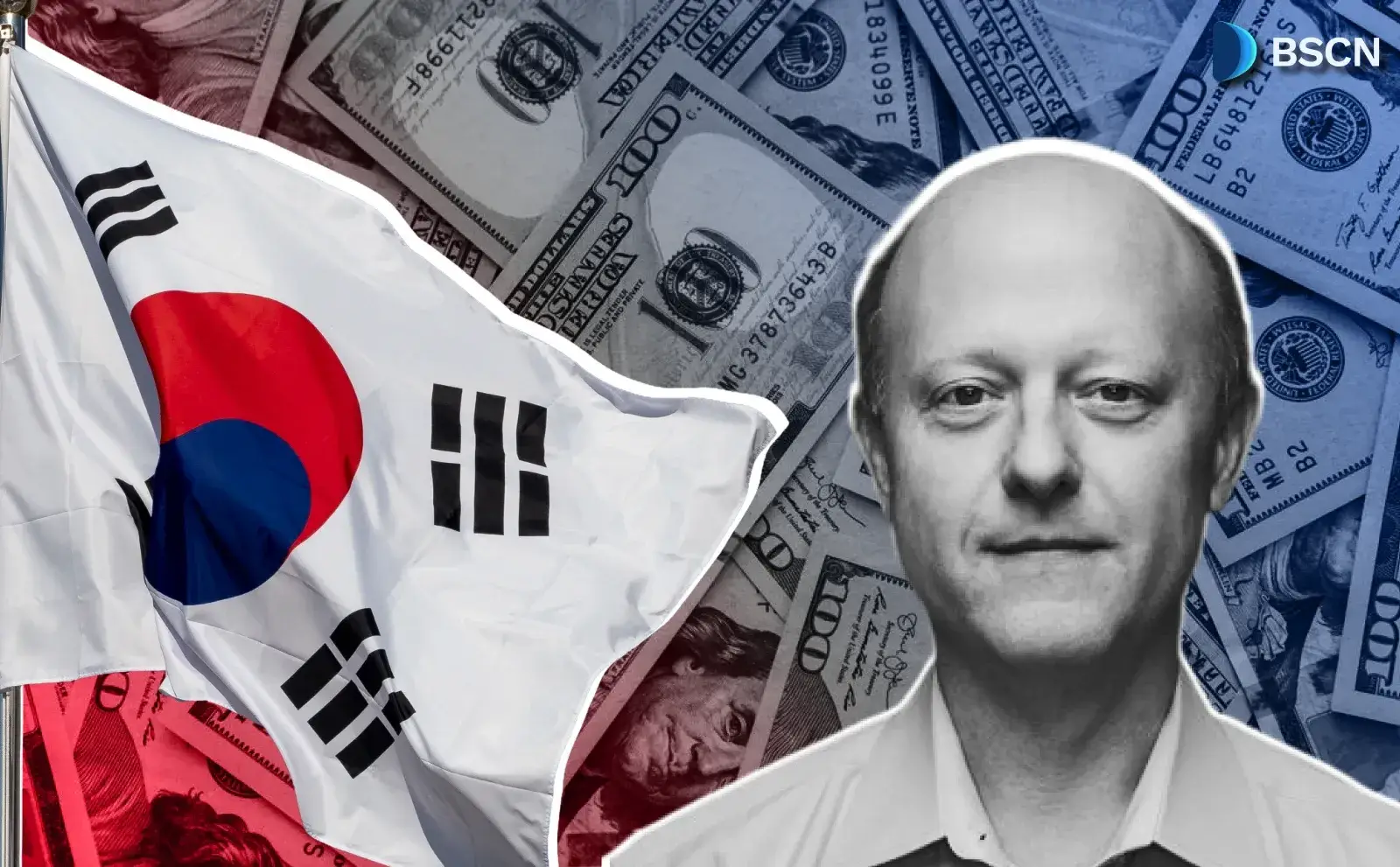
Circle CEO Jeremy Allaire (@jerallaire) pushes back on the Open USD (OUSD) threat, citing $USDC's dominant transaction volumes, a decade of network effects, and the poor historical track record of consortium stablecoins after $CRCL dropped more than 16%.

(Advertisement)

Circle CEO Jeremy Allaire (@jerallaire) moved quickly to address investor concerns after shares of Circle Internet Group ($CRCL) fell more than 16% following the announcement of Open USD (OUSD), a new rival stablecoin launched by a consortium called Open Standard.
A formidable line-up, but Allaire is not convinced
Open Standard announced OUSD on June 30, 2026, backed by more than 140 companies spanning payments, banking, tech, and crypto, with founding supporters including Visa, Mastercard, Stripe, Coinbase, BlackRock, and Google. The token is governed collectively by a partner board rather than a single issuer, and its pitch to businesses rests on three pillars: free minting and redemption with no volume caps, reserve yield shared across the partner network, and consortium governance.
Responding to what he described as numerous investor questions, Allaire addressed each of those selling points directly and dismissed them in turn. He argued that returning nearly all reserve income to partners risks "starving an infrastructure," and questioned whether unlimited free minting could remain sustainable at scale. His sharpest critique was reserved for the governance model. Allaire called the track record of consortium products "absolutely dismal" at achieving scale or product-market fit, noting that large groups of large companies tend to coordinate poorly and move slowly. He also disclosed that Circle itself tried a consortium model in $USDC's early days and "ran into endless challenges and complexity" even with a small group.
Underpinning his rebuttal is a broader argument: that stablecoins are not commodity products but platform businesses that tend toward winner-take-most outcomes, built on compounding layers of integrations, liquidity, regulatory approvals, and financial infrastructure that take years to replicate.
USDC's numbers remain hard to argue with
Allaire pointed to transaction volume as the clearest measure of USDC's moat. According to Artemis Analytics data cited by Circle, $USDC handled nearly $30 trillion in onchain transactions in Q1 2026, accounting for roughly 80% of all dollar stablecoin volume. $USDT took the remainder. Every other stablecoin combined barely registered.
Analysts were divided on the threat. Bernstein reaffirmed its Outperform rating on Circle with a $190 price target, while also acknowledging OUSD could become the "strongest and first new entrant to challenge the duopoly of Circle and Tether," though it flagged that governance, operational architecture, and the revenue-sharing formula remain unresolved. William Blair separately called OUSD "a solution searching for a problem," arguing Circle already offers comparable incentives to partners. ARK Invest research director Lorenzo Valente pointed to a cold-start liquidity problem, a lack of established trading pairs, and governance friction as structural hurdles for the new consortium.
Coinbase's position remains the most closely watched variable. The exchange is Circle's largest $USDC distribution partner and a founding OUSD backer. Notably, Jefferies flagged that Circle derives roughly 95% of its revenue from interest on USDC reserves and that its commercial agreement with Coinbase is reportedly up for renewal in August. Allaire moved to defuse that tension directly, saying the stablecoin partnership with Coinbase "remains as strong as ever." He closed on a deliberately measured note, welcoming OUSD as a new member of the stablecoin community and pointing to Circle's expanding infrastructure stack, including CCTP and its Circle Payments Network, as evidence the company is building for a multi-stablecoin world rather than against one.
OUSD is expected to go live later in 2026 on Solana, Stellar, Base, and Polygon. The core question is whether 140 companies with aligned financial incentives can outmaneuver a decade of entrenched network effects. Allaire is betting they cannot.
Sources:
The Defiant: Circle CEO Rebuts OUSD Pitch, Defends USDC's Network Effects After Stock Slide
CoinDesk: Jefferies Warns Against Buying the Dip in Circle as Open USD Raises Competition Fears
Fortune: Stripe, Visa and over 140 other businesses to launch stablecoin to rival Tether and Circle
(Advertisement)
Latest News




Read More...



Author
 Crypto Rich
Rich has been researching cryptocurrency and blockchain technology for eight years and has served as a senior analyst at BSCN since its founding in 2020. He focuses on fundamental analysis of early-stage crypto projects and tokens and has published in-depth research reports on over 200 emerging protocols. Rich also writes about broader technology and scientific trends and maintains active involvement in the crypto community through X/Twitter Spaces, and leading industry events.