

Cftc Eyes July 4 For Clarity Act

CFTC Chairman Mike Selig says Congress is 'at the finish line' on the Digital Asset Market Clarity Act, targeting a July 4 passage date, while Project Crypto advances rules on perpetual futures, DeFi, and AI trading.
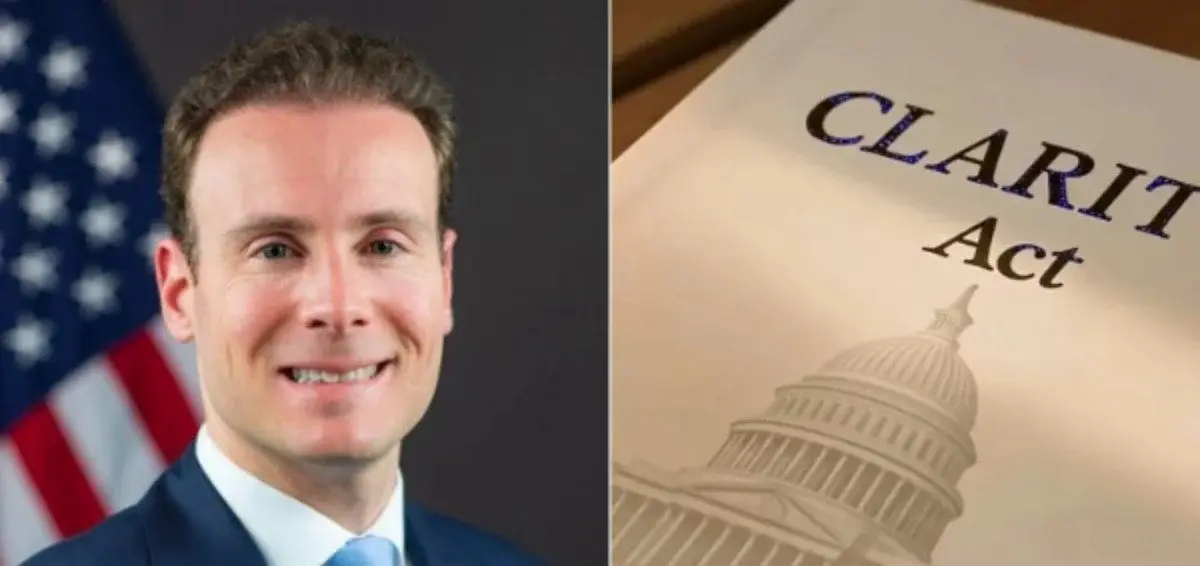
@ChairmanSelig, chairman of the @CFTC, said he is "hopeful" the Digital Asset Market Clarity Act can pass by July 4, telling attendees at the @MilkenInstitute Global Conference that Congress is "at the finish line" on the compromise crypto market structure bill.
The CLARITY Act and What It Would Do
The CLARITY Act, formally known as the Digital Asset Market Clarity Act of 2025, is designed to resolve one of the most persistent disputes in U.S. financial regulation. The bill seeks to define and rationalize the boundaries of SEC and CFTC jurisdiction, curing a source of significant regulatory friction and legal uncertainty in recent years. Under its terms, the CFTC would take a central role in regulating digital commodities and the intermediaries that trade or custody them. The bill defines digital commodities as blockchain-based assets that are not securities under federal law, giving the CFTC explicit authority over spot markets for those assets.
Selig also addressed the @CFTC's jurisdiction over prediction markets at the conference. He defended the agency's exclusive oversight of the space, applauded Kalshi for tightening its compliance standards, and reiterated the agency's strategy of challenging state-level lawsuits in court while preparing formal rulemaking. The CFTC recently filed an amicus brief in a state-led lawsuit against one of its registrants and says it will "continue to assess litigation strategies" to defend its exclusive jurisdiction over commodity derivatives against state challenges.
Project Crypto: A Joint SEC-CFTC Push
Beyond the legislative timeline, Selig pointed to concrete regulatory work already under way. SEC Chair @SECPaulSAtkins and CFTC Chair Selig announced that Project Crypto will proceed as a joint effort between the SEC and the CFTC to harmonize federal oversight of digital asset markets. The initiative is designed to streamline crypto oversight by creating a coherent asset taxonomy, cutting overlapping compliance obligations, clarifying jurisdictional boundaries, and enabling innovations such as tokenized collateral, perpetual futures, and prediction markets to function onshore under U.S. law.
The joint initiative has already delivered digital asset taxonomy guidance. Looking ahead, Selig directed staff to explore rulemaking to permit the responsible use of additional forms of tokenized collateral and to facilitate the onshoring of novel derivatives products, including perpetual contracts, that have largely developed offshore due to regulatory uncertainty in the United States. Selig also outlined plans to issue specific guidance for software developers, directing staff to address "the application of the CFTC's intermediary registration requirements to developers of non-custodial software systems, like digital wallets and decentralized finance applications." Rulemaking on AI-driven trading is also on the agenda, with Selig pointing to blockchain, smart contracts, and artificial intelligence as reshaping how markets trade, clear, settle, and manage collateral.
Selig has framed the wider effort in straightforward terms, writing on X: "Innovation does not come at the expense of integrity. We are focused on clear rules that allow crypto, prediction markets and AI to grow."
Sources:
CFTC: "The Next Phase of Project Crypto" (Chairman Selig remarks)
Arnold & Porter: Clarifying the CLARITY Act
The Block: CFTC's Selig on U.S. as crypto capital
Latest News





Read More...






(Advertisement)
Author
 Jon Wang
Jon studied Philosophy at the University of Cambridge and has been researching cryptocurrency full-time since 2019. He started his career managing channels and creating content for Coin Bureau, before transitioning to investment research for venture capital funds, specializing in early-stage crypto investments. Jon has served on the committee for the Blockchain Society at the University of Cambridge and has studied nearly all areas of the blockchain industry, from early stage investments and altcoins, through to the macroeconomic factors influencing the sector.