

BRAZIL MOVES TO BAN ELECTION AND SPORTS PREDICTION MARKETS
Brazil's Ministry of Finance moves to ban prediction market bets on elections and sports, coordinating with regulators including the CVM and Attorney General's Office.
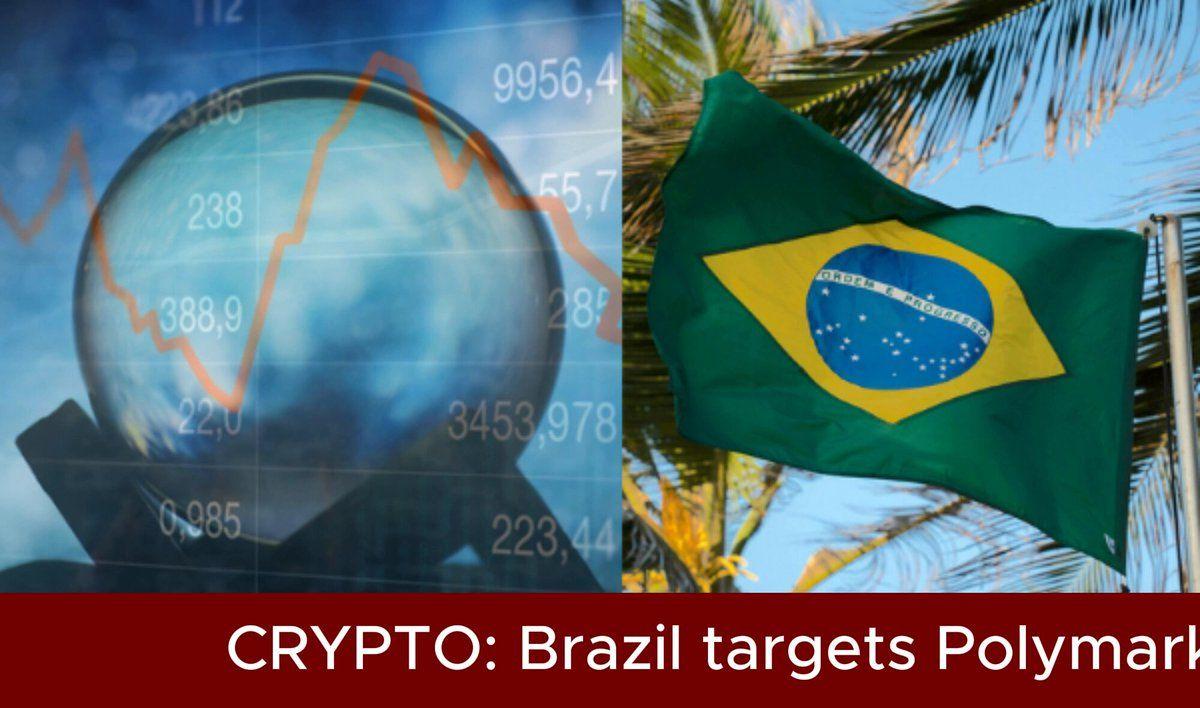
Brazil moved on Thursday to ban prediction market bets tied to elections and sporting events, according to Bloomberg. The policy marks the latest effort by Latin America's largest economy to rein in an industry that has attracted growing regulatory scrutiny worldwide.
A Multi-Agency Crackdown
The ban is being coordinated by Brazil's Ministry of Finance in partnership with the Federal Revenue Service, the securities regulator CVM, the Attorney General's Office, and the National Consumer Secretariat. The breadth of the inter-agency effort underscores the seriousness with which Brasília is treating the expansion of prediction markets into politically and socially sensitive territory.
Brazil's Superior Electoral Court already prohibits betting on voting outcomes under Article 62 of the country's electoral code and has ordered the takedown of sites that offered such wagers. The new measures would extend that stance into a broader regulatory framework encompassing both election and sports prediction markets.
Global Scrutiny of Prediction Markets Intensifies
The move comes as prediction markets face mounting pressure across multiple jurisdictions. In the United States, lawmakers from both parties have raised concerns about how the rapidly expanding prediction market industry could undermine election integrity. Just this week, the US-based platform Kalshi suspended three political candidates for what it described as "political insider trading" after they bet on their own campaigns. Meanwhile, about 40 US states have argued in court that prediction platforms offer products nearly identical to gambling and should comply with state gaming laws.
Brazil has been reshaping its broader gambling landscape. The country's regulated online betting market launched on January 1, 2025, following the passage of Law No. 14,790/2023 and a series of ordinances from the Secretariat of Prizes and Bets (SPA). That framework introduced licensing, taxation, and compliance requirements for fixed-odds betting operators. However, prediction markets — where users trade contracts on the outcomes of future events rather than placing traditional fixed-odds bets — occupy a regulatory grey area that authorities now appear determined to close.
The global prediction market industry has grown rapidly, with platforms like Polymarket processing over $7.5 billion in trading volume through 2025. Polymarket currently hosts active markets on the 2026 Brazilian presidential election, with more than $57 million traded on that outcome alone. Whether Brazil's ban will extend to decentralised, offshore platforms remains to be seen, but the policy signals a clear intent to prohibit the practice domestically.
Sources:
Bloomberg — Brazil Moves to Ban Prediction Markets on Elections, Sports
CNN — Kalshi Prediction Site Suspends Three Political Candidates
ICLG — Gambling Laws and Regulations: Brazil (2026)
Related News:

(Advertisement)
Author
 BSCN
BSCNBSCN's dedicated writing team brings over 41 years of combined experience in cryptocurrency research and analysis. Our writers hold diverse academic qualifications spanning Physics, Mathematics, and Philosophy from leading institutions including Oxford and Cambridge. While united by their passion for cryptocurrency and blockchain technology, the team's professional backgrounds are equally diverse, including former venture capital investors, startup founders, and active traders.