

Bitcoin Holds Firm As Iran-Israel Tensions Escalate

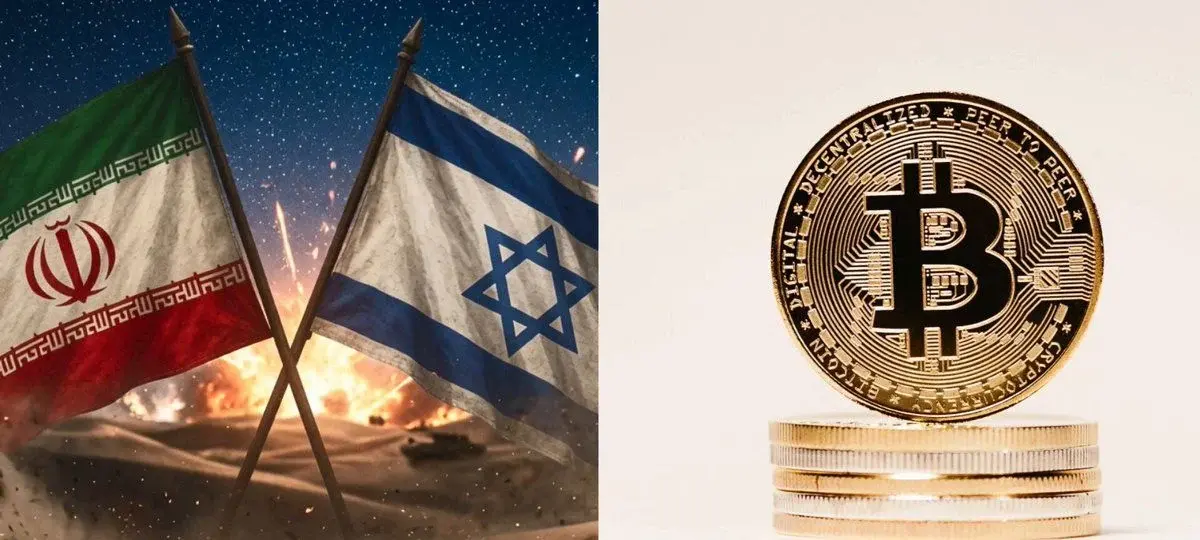
Bitcoin gained roughly 2.4% in 24 hours even as Iran launched missiles at Israel for the first time since a fragile April ceasefire, raising fears of a broader regional conflict and sending oil prices higher.
Fresh Strikes Test a Fragile Ceasefire
Bitcoin ($BTC) held largely steady on Sunday as Iran and Israel exchanged missile fire in the sharpest escalation since a ceasefire took effect in early April. The cryptocurrency gained roughly 2.4% over the 24-hour period, even as financial markets more broadly were rattled by the renewed hostilities.
Iran launched missiles at Israel in the first such bombardment since the fragile ceasefire began, raising the prospect of a return to full-scale fighting and complicating ongoing mediation efforts. Tehran had warned of retaliation after Israel struck Beirut's southern suburbs without warning, in defiance of Washington's earlier request to stand down. The strike on a residential building killed two people and wounded 20, Lebanon's health ministry said.
Iran fired several missile barrages toward Israel, threatening to disrupt a fitful ceasefire in the US's 100-day conflict with Tehran. In response, the Israeli military said it struck military targets in western and central Iran. Trump told Fox News that the missile attacks are "certainly not going to help negotiations."
Bitcoin Shrugs Off the Noise, but Analysts Stay Cautious
Bitcoin's price reacted immediately to the attacks but in a muted manner, dipping from over $62,000 to $61,200 before rebounding to near its starting point. The modest pullback and quick recovery suggest that crypto markets have, to a degree, priced in the ongoing conflict. On a broader scale, the asset has fallen by around $20,000 since its mid-May peak at $82,000, and analysts believe the next leg higher could come once the war in the Middle East ends.
Oil markets reacted more sharply to the news of renewed strikes, with traders weighing the risk of a wider regional conflict disrupting supply routes. James Butterfill, head of research at CoinShares, told DL News that if the conflict were to de-escalate, the immediate effect would likely come through lower oil prices and reduced inflation pressure, increasing the probability of easier monetary policy, which tends to support Bitcoin.
"Extreme Fear" sentiment prevailed in the broader crypto market, according to the Crypto Fear and Greed Index. Still, Bitcoin's ability to post gains during active missile exchanges points to a market that is increasingly treating geopolitical flare-ups as a known variable rather than a fresh shock. Peace negotiations involving mediators from Pakistan, Egypt, and Qatar were continuing even as the strikes unfolded, keeping hopes of a diplomatic resolution alive.
Sources:
NPR: Israel says Iran launched a missile at it, in a first during fragile ceasefire
CNBC: Iran and Israel exchange strikes, threatening fragile ceasefire
DL News: What ending the Iran war would mean for Bitcoin's price
Latest News




Read More...





(Advertisement)
Author
 Soumen Datta
Soumen has been a crypto researcher since 2020 and holds a master’s in Physics. His writing and research has been published by publications such as CryptoSlate and DailyCoin, as well as BSCN. His areas of focus include Bitcoin, DeFi, and high-potential altcoins like Ethereum, Solana, XRP, and Chainlink. He combines analytical depth with journalistic clarity to deliver insights for both newcomers and seasoned crypto readers.