News
(Advertisement)


Trump-Linked USD1 Stablecoin Was Under Attack And Most People Missed It

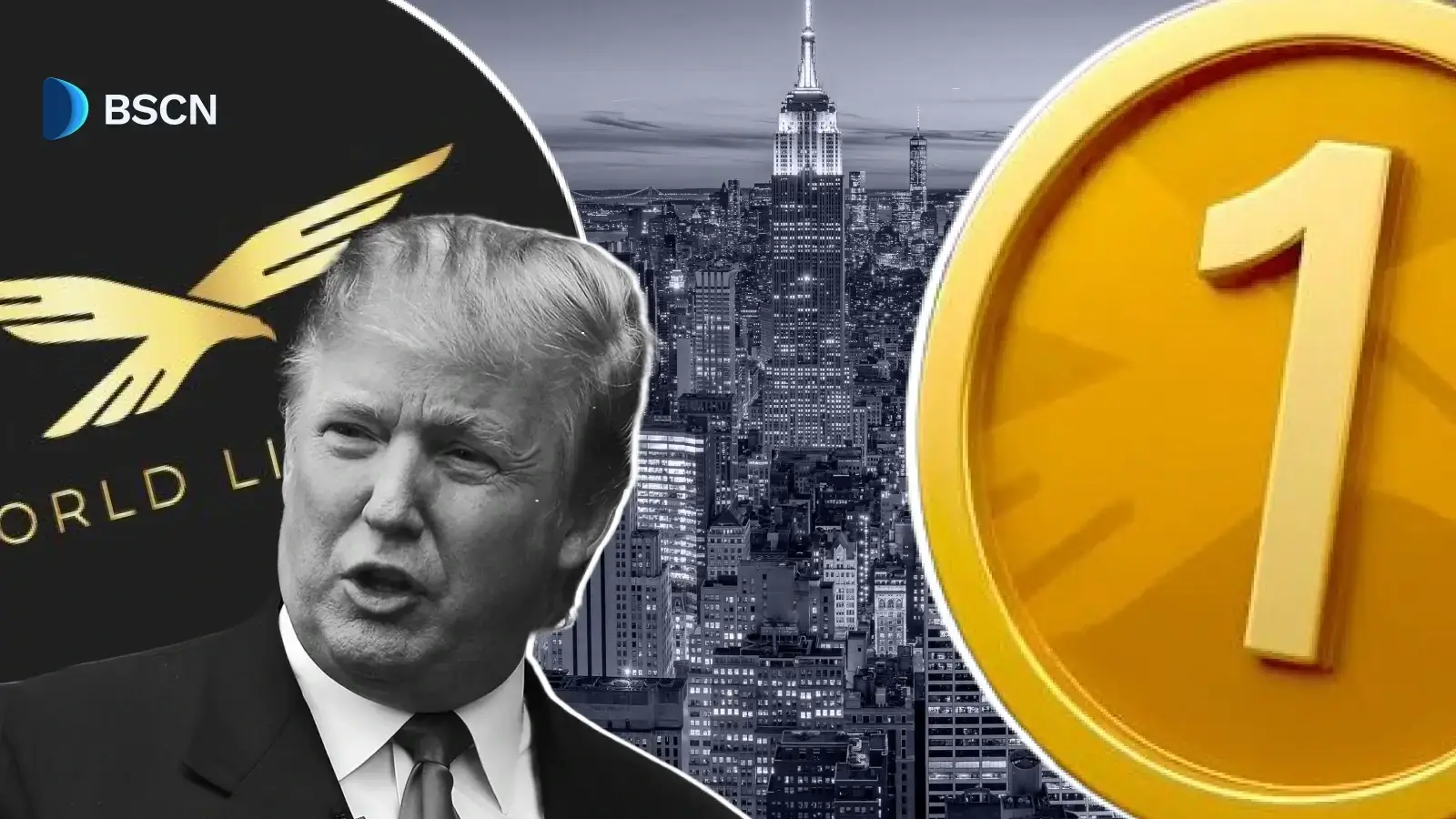
World Liberty Financial says hackers targeted USD1 and WLFI in a coordinated attack on Feb. 23. Here's what happened, what broke, and what held.

Soumen Datta
February 24, 2026
(Advertisement)
Table of Contents
World Liberty Financial (WLFI) says a “coordinated attack” on February 23 briefly knocked its USD1 stablecoin off its $1 peg, hacked cofounder social media accounts, and drove its governance token down roughly 7% intraday before both assets recovered.
The incident put one of the most politically connected projects in crypto under intense short-term pressure, even as the team insisted that no smart contracts, wallets, or protocol infrastructure were touched.
What Happened During The USD1 Depeg?
USD1 is the U.S. dollar stablecoin issued by World Liberty Financial, a DeFi (decentralized finance) protocol with direct ties to President Donald Trump and his family. A stablecoin is a crypto token designed to hold a fixed value, in this case $1, at all times. When it drifts from that price, even briefly, it is called a depeg.
On February 23, USD1 fell to approximately $0.994, about 0.6% below its $1 anchor, according to CoinGecko data. The token was trading at $0.998, still 0.2% below parity, as of the time of reporting.
That gap may look small on paper, but for a stablecoin currently carrying a market capitalization of nearly $5 billion, even a fractional deviation draws immediate scrutiny from traders, regulators, and the broader market.
How Did The Attack Work?
WLFI's team posted a detailed account of the incident on X (formerly Twitter), describing a multi-part effort to manufacture panic and profit from it.
According to the team, the attackers:
- Gained unauthorized access to several WLFI cofounder X accounts
- Used those accounts to spread fear, uncertainty, and doubt (FUD) across social media
- Opened large short positions in the WLFI governance token to profit from an anticipated price drop
A short position is a trade that profits when an asset's price falls. If you can push a token lower by flooding social channels with bad news, and you already hold a short bet against it, you stand to make money from the drop.
WLFI said the attempt failed. "It didn't work," the team wrote, pointing to USD1's mint-and-redeem mechanism as the key reason the peg held. That mechanism lets any USD1 holder exchange their tokens for an equal amount of U.S. dollars at a 1:1 ratio, which keeps the price anchored even when sentiment turns negative.
The team was also explicit about the scope of the breach:
"No WLFI or USD1 smart contracts or wallets were hacked. Today's incident involved unauthorized access to co-founders' X accounts, not wallets or protocol infrastructure. Zero smart contracts were affected."
How USD1 is Actually Backed?
This is a fair question to ask whenever a stablecoin faces any kind of stress event.
USD1 is custodied through BitGo, one of the better-known institutional-grade crypto custodians. Its reserves consist of short-term U.S. government treasuries, U.S. dollar deposits, and other cash equivalents. The project publishes monthly attestations of those reserves, signed by consulting firm Crowe.
WLFI repeated its reserve position clearly in the aftermath of the attack: "All USD1 funds remain completely safe, secure, and fully backed."
USD1 is not yet in the same league as the two dominant dollar stablecoins, Tether's USDT and Circle's USDC, but its $5 billion market cap places it firmly among the larger players in the space.
Why Did WLFI's Governance Token Drop 7%?
The WLFI governance token, which gives holders a say in protocol decisions, dropped roughly 7% intraday before stabilizing. To understand why that number looks the way it does, you need some context about where WLFI had just come from.
In the 24 hours surrounding news that major Wall Street and crypto executives would attend the World Liberty Forum at Mar-a-Lago, WLFI surged as much as 30%, with trading volume jumping to approximately $450 million and market cap hitting around $3.3 billion. Around the same time, Apex Group, a $3.5 trillion asset servicer, announced it would pilot USD1 as a settlement layer for tokenized funds, pushing WLFI up another 10%.
Technical analysis from market commentators noted that WLFI had topped near $0.18 in late January before selling off, then rebounded 20 to 30% into the forum and partnership headlines, with resistance building between $0.12 and $0.14.
That kind of compressed, event-driven rally leaves positions crowded. When a negative headline hits directly tied to the core stablecoin product, short-term traders exit quickly. Stop-loss orders trigger. The 7% drop over a 24 to 30-hour window is consistent with that mechanics, not necessarily with panic about fundamental failure.
Existing Scrutiny Made The Incident Hit Harder
WLFI has faced ongoing political scrutiny for months, specifically around its relationship with Binance, which holds a significant portion of USD1's circulating supply. USD1 was also used in a multi-billion-dollar investment into Binance, which raised conflict-of-interest concerns and prompted calls for congressional oversight. Binance's promotional campaign for USD1 drew political blowback because of those entanglements.
World Liberty Financial has also been active on the real-world asset (RWA) tokenization front, partnering with Securitize and DarGlobal to issue tokens tied to loan revenue from the Trump International Hotel and Resort in the Maldives. RWA tokenization refers to putting the ownership or cash flows of a physical asset on a blockchain as a digital token.
Against that backdrop, any bad news tied to USD1's peg becomes amplified quickly.
Resources
World LibertyFi on X: Posts on Feb. 23
Report by CoinDesk: Trump-linked stablecoin wobbles as WLFI says it's under 'coordinated attack'
Report by New York Post: Trump crypto business unveils deals at Mar-a-Lago summit with Wall Street titans and Nicki Minaj
Report by CoinDesk: Trump-linked World Liberty taps BlackRock-backed Securitize for hotel tokenization
Report by Bloomberg: Trump-Linked World Liberty Targets Real Estate as Crypto Slides
Press release by World LibertyFi: World Liberty Financial to Tokenize Trump International Hotel & Resort, Maldives, in Partnership with DarGlobal and Securitize
Press release by Dar Global: World Liberty Financial to Tokenize Trump International Hotel & Resort, Maldives, in Partnership with DarGlobal and Securitize
Read Next...

Frequently Asked Questions
What is USD1 and who issues it?
USD1 is a U.S. dollar stablecoin issued by World Liberty Financial, a DeFi protocol associated with President Donald Trump and his family. It is backed 1:1 by short-term U.S. Treasuries and dollar deposits, custodied through BitGo, and carries a market capitalization of approximately $5 billion.
Were any WLFI wallets or smart contracts hacked in the February 23 attack?
No. WLFI confirmed that the breach was limited to unauthorized access to cofounder X (Twitter) accounts. No wallets, smart contracts, or protocol infrastructure were compromised, and all USD1 reserves remained fully intact.
Why did the WLFI governance token fall 7% if the attack failed?
WLFI had surged 30% days earlier on positive news from the World Liberty Forum and a partnership with Apex Group. That rally left short-term positions vulnerable. When the depeg and attack headlines hit, traders exited quickly, triggering a correction that reflected position unwinding more than fundamental concern about the protocol.
Disclaimer
Disclaimer: The views expressed in this article do not necessarily represent the views of BSCN. The information provided in this article is for educational and entertainment purposes only and should not be construed as investment advice, or advice of any kind. BSCN assumes no responsibility for any investment decisions made based on the information provided in this article. If you believe that the article should be amended, please reach out to the BSCN team by emailing [email protected].
Author
 Soumen Datta
Soumen has been a crypto researcher since 2020 and holds a master’s in Physics. His writing and research has been published by publications such as CryptoSlate and DailyCoin, as well as BSCN. His areas of focus include Bitcoin, DeFi, and high-potential altcoins like Ethereum, Solana, XRP, and Chainlink. He combines analytical depth with journalistic clarity to deliver insights for both newcomers and seasoned crypto readers.
(Advertisement)
Latest News
July 14, 2026
Report: Cardano's Biggest Updates from H1 2026
July 14, 2026

What is an XDC Network Masternode Validator?
July 13, 2026
Telebiz Goes Live With an Open-Source CRM Built Directly Into Telegram
July 13, 2026
Will Robinhood Chain Push ETH's Price to All Time Highs?
July 13, 2026
What is BlackRock's BUIDL Fund on Avalanche AVAX?
July 10, 2026
How Do PancakeSwap's CAKE Token Burns Actually Work?
July 10, 2026

Report: Ripple & The XRP Ecosystem in H1 2026
July 10, 2026

How Is Cardano Advancing Financial Inclusion in Developing Countries?
(Advertisement)

Crypto Project & Token Reviews
Project & Token Reviews
Comprehensive reviews of crypto's most interesting projects and assets
Learn about the hottest projects & tokens

Latest Crypto Articles
Get up to date with the latest crypto news stories and events