Research
(Advertisement)


Trump's Gaza Stablecoin: What We Know

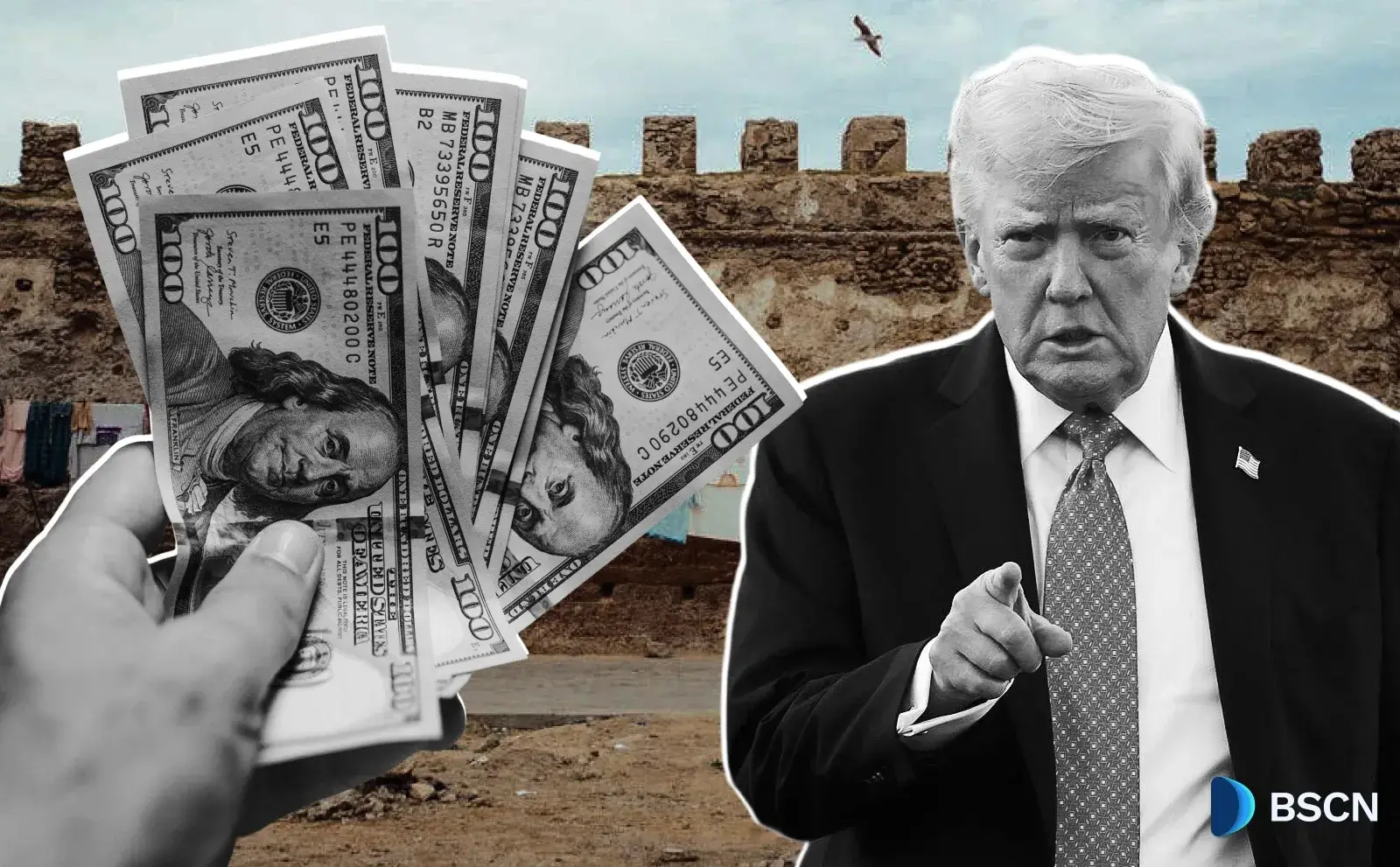
Trump's Board of Peace is exploring a dollar-pegged stablecoin for Gaza. Here's what we know about the proposal, its challenges, and the WLF connection.

Crypto Rich
February 25, 2026

(Advertisement)
Table of Contents
Officials tied to the Trump administration's "Board of Peace" are in early talks about launching a U.S. dollar-pegged stablecoin designed specifically for Gaza. The idea is to bypass the enclave's destroyed banking system and give residents a way to transact digitally while keeping funds traceable and out of Hamas's hands. No issuer has been named, no timeline exists, and the whole thing is still exploratory. But the implications, and the controversy, are already piling up.
Why Does Gaza Need a Stablecoin?
Gaza's financial system is in ruins. Israel's prolonged military campaign against Hamas, running since October 2023, has wiped out ATMs, shuttered banks, and blocked fresh deliveries of Israeli shekels into the territory. That vacuum created a boom for black-market brokers who charge brutal fees just to move money around.
Residents have been forced into makeshift electronic payment systems out of necessity. Proponents of the stablecoin say a regulated digital dollar could replace that chaos with a functional alternative. One source familiar with the discussions described it as a way for Gazans to transact digitally, not a replacement for the shekel or a new Palestinian currency.
The logic from the administration's side is straightforward: traceable digital payments make it harder for Hamas to siphon funds while still allowing ordinary people to pay for goods, receive aid, and access services like healthcare and education.
Who Is Behind It?
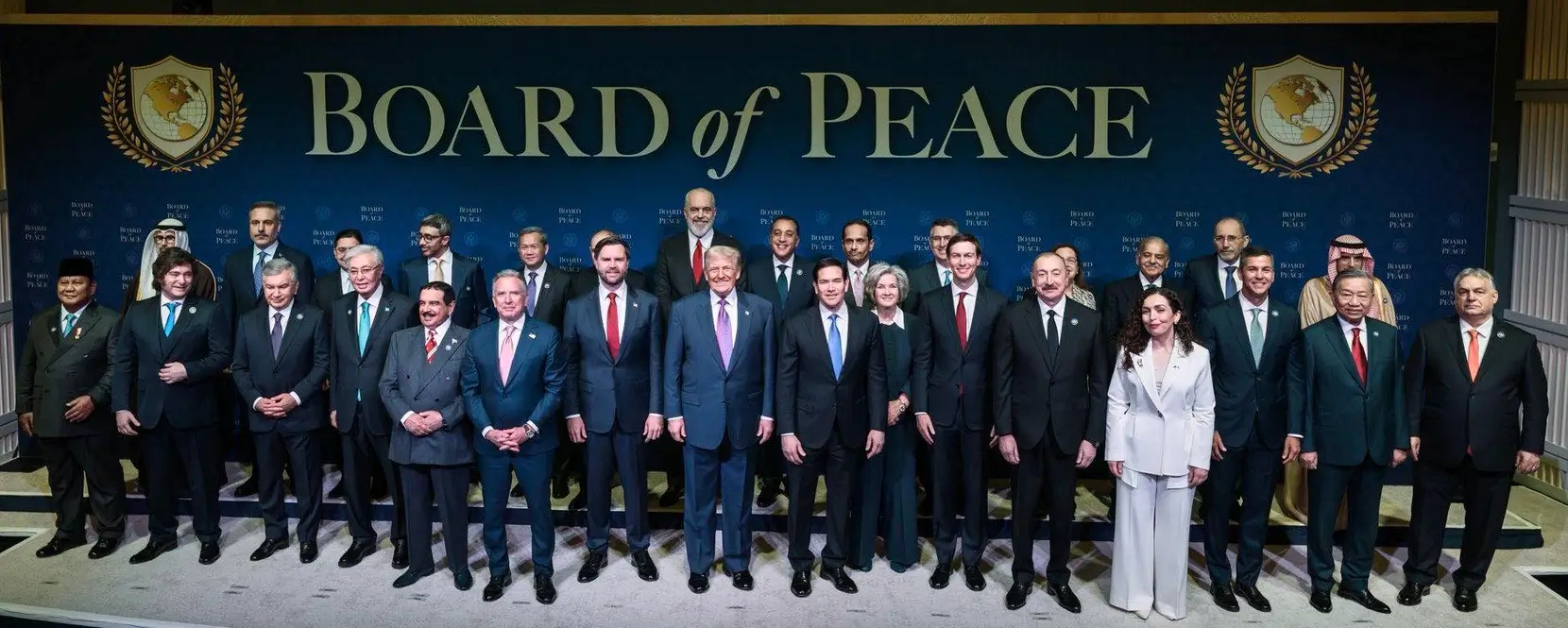
The Board of Peace is a U.S.-led international body formally established in January 2026 at the World Economic Forum. It works alongside the 14-member National Committee for the Administration of Gaza (NCAG), a Palestinian technocratic government, and the Office of the High Representative led by former UN envoy Nickolay Mladenov.
Leading the stablecoin discussions is Liran Tancman, an Israeli tech entrepreneur and unpaid adviser to the Board of Peace. Tancman has been pushing for what he calls a "secure digital backbone" for Gaza, including upgrading the territory's outdated 2G network to high-speed internet by July 2026. Gulf Arab and Palestinian companies with crypto experience are expected to help with implementation.
At its inaugural meeting on February 19, the Board secured $17 billion in total pledges: $10 billion from the U.S. and $7 billion from nine member nations, mostly Gulf states. Permanent membership on the board costs $1 billion per country.
The World Liberty Financial Question
This is where it gets complicated.
World Liberty Financial (WLF) is the Trump family's crypto platform. Its co-founders include Eric Trump, Donald Trump Jr., and Barron Trump, alongside Zach and Alex Witkoff, the sons of Steve Witkoff, Trump's Middle East envoy. Both the president and the elder Witkoff are listed as co-founders emeritus. WLF already issues USD1, a dollar-pegged stablecoin with a roughly $4.7 billion market cap, making it the fifth-largest stablecoin globally.
WLF has deep ties to the UAE. In May 2025, Abu Dhabi-based investment firm MGX used $2 billion in USD1 to settle its investment in Binance, a deal that effectively handed WLF a massive deposit generating interest on the backing Treasury assets. The UAE is also involved in the Board of Peace. That overlap has raised conflict-of-interest flags among critics and lawmakers, with Senators Warren and Schiff both calling for investigations into whether the arrangements violate ethics laws.
Trump signed the GENIUS Act in July 2025, establishing the first federal regulatory framework for stablecoins and cementing U.S. crypto leadership. Critics note the legislation does nothing to prevent the president or his family from profiting off stablecoin issuance.
Some reports suggest USD1 could serve as the backbone for whatever Gaza stablecoin emerges. If that happens, it would effectively turn humanitarian aid infrastructure into a revenue stream connected to the president's family business.
Worth noting: on February 23, USD1 briefly slipped below its dollar peg on Binance before recovering within minutes. WLF blamed the incident on a "coordinated attack" involving hacked co-founder accounts and short positions on its WLFI governance token. Stability questions for a stablecoin meant to serve a war-torn population are not trivial.
What Are the Practical Hurdles?
Even setting the political and ethical questions aside, the ground reality in Gaza is harsh:
- Frequent power outages make consistent digital access unreliable
- Internet infrastructure is minimal, still running on 2G in most areas
- Adopting a separate digital currency risks fragmenting the Palestinian economy from the West Bank, where the shekel remains the formal currency under the Palestine Monetary Authority
Supporters insist the stablecoin would not divide the territories and could actually foster economic unity through easier cross-border payments. That remains to be seen.
Critics Say It Misses the Point
Not everyone is convinced that a stablecoin addresses what Gaza actually needs. Skeptics argue the territory's most urgent requirements are safety, freedom of movement, and basic human rights, not fintech experiments layered on top of an ongoing humanitarian crisis.
The proposal also fits a pattern. Earlier Trump-era plans for Gaza included AI-powered smart cities and digital tokens for land development. The administration's tech-first approach to reconstruction has consistently been accused of prioritizing investor returns over the people living through the crisis.
Where Does This Stand Now?
As of February 25, 2026, everything is still in the discussion phase. Trump officials say they are exploring "all options" to restart Gaza's economy. No regulatory framework has been set, no issuer selected, and no launch date announced.
If it moves forward, this would be one of the first attempts to deploy a stablecoin as core financial infrastructure in a post-conflict zone. Whether that becomes a genuine lifeline for 2 million people depends entirely on execution.
Sources:
- Financial Times Primary reporting on the Board of Peace stablecoin discussions, Tancman's role, and Gaza's cash crisis
- Reuters Confirmation of the USD1 depeg and WLF's response
- CoinDesk USD1 market cap data and depeg details
- Senator Warren's office Investigation into Witkoff's ethics conflicts and WLF's UAE connections
- White House Fact sheet on the GENIUS Act signing
- Axios Board of Peace funding pledges and meeting details
- BeInCrypto via Yahoo Finance Overview of the stablecoin proposal and Board of Peace structure
- Gizmodo Coverage of earlier Trump-era digital token and smart city proposals for Gaza
Read Next...



Disclaimer
Disclaimer: The views expressed in this article do not necessarily represent the views of BSCN. The information provided in this article is for educational and entertainment purposes only and should not be construed as investment advice, or advice of any kind. BSCN assumes no responsibility for any investment decisions made based on the information provided in this article. If you believe that the article should be amended, please reach out to the BSCN team by emailing [email protected].
Author
 Crypto Rich
Rich has been researching cryptocurrency and blockchain technology for eight years and has served as a senior analyst at BSCN since its founding in 2020. He focuses on fundamental analysis of early-stage crypto projects and tokens and has published in-depth research reports on over 200 emerging protocols. Rich also writes about broader technology and scientific trends and maintains active involvement in the crypto community through X/Twitter Spaces, and leading industry events.
(Advertisement)
Latest News
1h : 22m ago
Grayscale Picks Its Most Promising Tokenization Blockchains
3h : 19m ago

Crypto's Top Five Centralized Exchanges
4h : 24m ago
How Is Polygon Trying to Connect Every Blockchain Into a Single Network?
8h : 54m ago

What Does It Really Mean To Host A Website On The Internet Computer?
July 15, 2026
REAL Joins Blockchain for Europe to Shape EU Tokenisation Rules
July 15, 2026

Which Crypto Companies and Protocols Make The Most Money?
July 15, 2026
How SBI Built Japan's Largest Crypto Business
July 15, 2026

Elon Musk And Dogecoin: How One Man Shaped A Memecoin’s Price And Reputation
(Advertisement)

Crypto Project & Token Reviews
Project & Token Reviews
Comprehensive reviews of crypto's most interesting projects and assets
Learn about the hottest projects & tokens

Latest Crypto Articles
Get up to date with the latest crypto news stories and events