News
(Advertisement)


SafeMoon Scandal Ends With 8-Year Sentence For ex-CEO

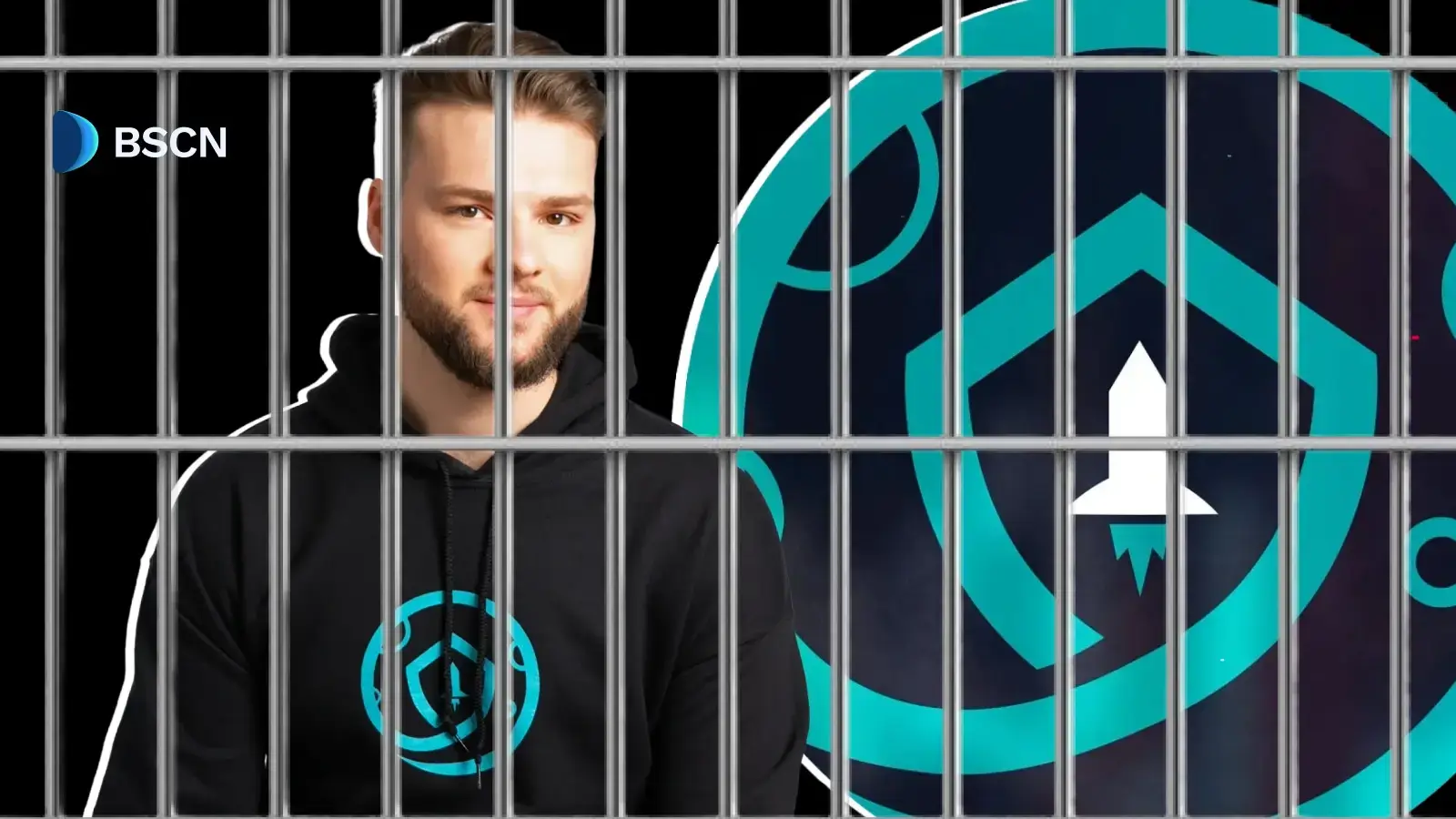
Ex-SafeMoon CEO Braden Karony sentenced to 8 years in prison for defrauding investors of millions. Details on the fraud scheme and conviction.

Soumen Datta
February 11, 2026

(Advertisement)
Table of Contents
Former SafeMoon CEO Braden John Karony received a 100-month prison sentence in federal court in Brooklyn after being convicted on charges of conspiracy to commit securities fraud, wire fraud, and money laundering. A federal jury found Karony guilty in May 2025 following a three-week trial for his role in defrauding investors in the SafeMoon digital asset.
Judge Eric Komitee also ordered Karony to forfeit approximately $7.5 million, with additional restitution to victims to be determined at a later hearing.
The U.S. Attorney's Office for the Eastern District of New York announced the sentencing on Tuesday, with prosecutors stating that Karony used investor funds to purchase mansions, sports cars, and custom trucks while lying to investors about how their money would be used.
What Was SafeMoon And How Did It Work?
SafeMoon launched in March 2021 as a digital asset issued by SafeMoon LLC on a public blockchain. The token quickly gained attention and grew to millions of holders with a market capitalization exceeding $8 billion in the months following its launch.
The SafeMoon smart contract included a unique 10% transaction tax applied automatically to every transfer. When a holder transferred 10 SafeMoon tokens to another user, 1 token was automatically retained as tax while the remaining 9 tokens went to the recipient.
According to marketing materials provided to investors, the 10% tax was split into two equal parts. The first 5% was supposed to be "reflected" back to all SafeMoon holders proportionally, automatically increasing the total quantity of tokens held by every investor. The second 5% was supposed to be deposited into designated SafeMoon liquidity pools.
Liquidity pools are smart contracts that hold pairs of tokens to facilitate trading. Larger liquidity pools generally mean more stable prices and easier trading for token holders. SafeMoon marketed these pools as "locked," which implied that developers and insiders could not access or withdraw the funds.
How Did Karony Defraud SafeMoon Investors?
Karony and his co-conspirators made several material misrepresentations to investors about how SafeMoon operated. They claimed the liquidity pools were "locked" and would automatically increase in size due to the 10% transaction tax.
They also told investors that locked liquidity pools prevented developers from executing a "rug pull," a type of crypto fraud where project creators suddenly withdraw all liquidity from a project, leaving investors with worthless tokens.
A rug pull represents one of the most damaging scams in decentralized finance. When liquidity is removed from a pool, token holders cannot sell their assets at reasonable prices, often losing their entire investment. SafeMoon's marketing specifically promised protection against this scenario.
Additional false claims included that tokens in the liquidity pool would only be used for limited business purposes rather than personal enrichment, that developers would manually add token pairs to the pool when transactions occurred on centralized exchanges, and that the development team did not hold or trade SafeMoon tokens for personal benefit.
The Reality Behind The Fraud
In reality, Karony and his co-conspirators retained access to the SafeMoon liquidity pools and intentionally diverted millions of dollars worth of tokens for personal use. Despite public denials, they repeatedly bought and sold SafeMoon tokens, sometimes at peak market prices, generating millions in profits.
The defendants used sophisticated methods to hide their fraudulent activity. They moved stolen funds through numerous private crypto wallet addresses, employed complex transaction routing, and used pseudonymous accounts on centralized exchanges to obscure the trail of illicit proceeds.
Karony personally acquired over $9 million in crypto assets through the scheme. He used these funds to purchase luxury items including:
- A $2.2 million home in Utah
- Additional residential properties in Utah and Kansas
- A $277,000 Audi R8 sports car
- A second Audi R8
- A Tesla vehicle
- Custom Ford F-550 and Jeep Gladiator pickup trucks
The jury ordered the forfeiture of two residential properties as part of the verdict.
What Did Federal Prosecutors Say About The Case?
U.S. Attorney Joseph Nocella stated that Karony "lied to investors from all walks of life, including military veterans and hard-working Americans, and defrauded thousands of victims in order to buy mansions, sports cars, and custom trucks." Nocella emphasized that the sentence demonstrates significant consequences for financial crimes and that his office will continue prosecuting economic crimes that harm investors and weaken trust in digital asset markets.
FBI Assistant Director James Barnacle noted that Karony "abused his position as CEO" and "betrayed his investors' trust by stealing more than nine million dollars in digital assets from his company to fund his lavish lifestyle." The FBI remains committed to addressing fraud in the digital asset marketplace.
IRS Criminal Investigation Special Agent in Charge Harry Chavis explained that Karony "exploited his access to SafeMoon's liquidity pool to divert and misappropriate millions in cryptocurrency" and used complex transactions to obscure the movement of illicit proceeds. However, IRS special agents successfully traced the financial transactions despite Karony's intricate schemes.
Homeland Security Investigations Acting Special Agent in Charge Michael Alfonso described the case as exposing "the deep betrayal at the heart of a scheme that preyed on the hopes and trust of SafeMoon investors" and affected over a million victims.
What Happened To Karony's Co-Conspirators?
Thomas Smith, SafeMoon's former chief technology officer, pleaded guilty in February 2025 to conspiracy to commit securities fraud and wire fraud. Smith is currently awaiting sentencing, with no date announced.
Kyle Nagy, identified as SafeMoon's creator, remains at large according to the Department of Justice. No information about his location or capture efforts has been made public.
How Does This Case Compare To Other Crypto Fraud Convictions?
Karony joins a growing list of crypto executives convicted and sentenced for crimes committed during the 2021-2022 market cycle, when retail participation in crypto markets reached peak levels.
Former FTX CEO Sam Bankman-Fried is currently serving a 25-year sentence for fraud related to the collapse of his cryptocurrency exchange and misuse of customer funds. Former Celsius CEO Alex Mashinsky received a 12-year sentence for defrauding customers of his crypto lending platform.
Prosecutors initially sought a 12-year sentence for Karony but Judge Komitee ultimately imposed the 100-month term. Karony will also face three years of supervised release after completing his prison sentence. A separate hearing scheduled for April 23 will determine the total amount of restitution Karony must pay to victims.
Conclusion
The SafeMoon case demonstrates that federal prosecutors will pursue fraud charges in digital asset markets with the same vigor as traditional financial crimes. Karony's conviction involved conspiracy to commit securities fraud, wire fraud, and money laundering through misrepresenting how investor funds would be used and protected.
The 8-year sentence, combined with millions in forfeiture and pending restitution, sends a clear message about accountability in crypto markets. With one co-conspirator awaiting sentencing and another still at large, the SafeMoon prosecution continues to unfold as part of broader enforcement efforts targeting fraud from the 2021-2022 crypto market cycle.
Resources
Press release by the office of the U.S. Attorneys Eastern District of New York: CEO of Digital Asset Company SafeMoon Sentenced to 100 Months in Prison for Multi-Million Dollar Crypto-Fraud Scheme
Report by Business Insider: Dogecoin's slide after the failed 'Doge Day' has crypto traders eyeing a replacement for the world's favorite meme token
Press release by the US DOJ: Samuel Bankman-Fried Sentenced to 25 Years for His Orchestration of Multiple Fraudulent Schemes
Report by CoinDesk: Ex-SafeMoon CEO gets 8-year prison sentence for defrauding investors
Read Next...

Frequently Asked Questions
What was the SafeMoon fraud scheme?
SafeMoon CEO Braden Karony and co-conspirators claimed the project had "locked" liquidity pools that developers could not access, preventing rug pulls. In reality, they retained access and withdrew millions of dollars for personal use, including luxury homes and vehicles, while lying about holding or trading SafeMoon tokens.
How long will the SafeMoon CEO spend in prison?
Braden John Karony was sentenced to 100 months (8 years and 4 months) in federal prison, followed by 3 years of supervised release. He must also forfeit approximately $7.5 million, with additional restitution to be determined at a hearing scheduled for April 23.
What is a rug pull in cryptocurrency?
A rug pull is a type of crypto fraud where project developers suddenly withdraw all liquidity from a token's liquidity pool, making it impossible for investors to sell their holdings at reasonable prices. This typically leaves investors with worthless tokens and represents one of the most damaging scams in decentralized finance.
Disclaimer
Disclaimer: The views expressed in this article do not necessarily represent the views of BSCN. The information provided in this article is for educational and entertainment purposes only and should not be construed as investment advice, or advice of any kind. BSCN assumes no responsibility for any investment decisions made based on the information provided in this article. If you believe that the article should be amended, please reach out to the BSCN team by emailing [email protected].
Author
 Soumen Datta
Soumen has been a crypto researcher since 2020 and holds a master’s in Physics. His writing and research has been published by publications such as CryptoSlate and DailyCoin, as well as BSCN. His areas of focus include Bitcoin, DeFi, and high-potential altcoins like Ethereum, Solana, XRP, and Chainlink. He combines analytical depth with journalistic clarity to deliver insights for both newcomers and seasoned crypto readers.
(Advertisement)
Latest News
2h : 4m ago
What Happens to Unverified Pi Balances If Users Miss the Deadline?
5h : 49m ago
What Is in Trump's CLARITY Act Ethics Deal?
July 21, 2026

Pudgy Penguins to Reach Millions with Target Placement
July 21, 2026
What is the GENIUS Act and Why Does it Matter?
July 21, 2026
What Is Jimothy Memecoin?
July 21, 2026
What Is the Cardano Van Rossem Upgrade?
July 20, 2026
How Does Pump.Fun Make Money?
July 20, 2026

A Closer Look at Avalanche's 2026 Fundamentals
(Advertisement)

Crypto Project & Token Reviews
Project & Token Reviews
Comprehensive reviews of crypto's most interesting projects and assets
Learn about the hottest projects & tokens

Latest Crypto Articles
Get up to date with the latest crypto news stories and events