Research
(Advertisement)


Who is Federal Reserve Chair Nominee Kevin Warsh?

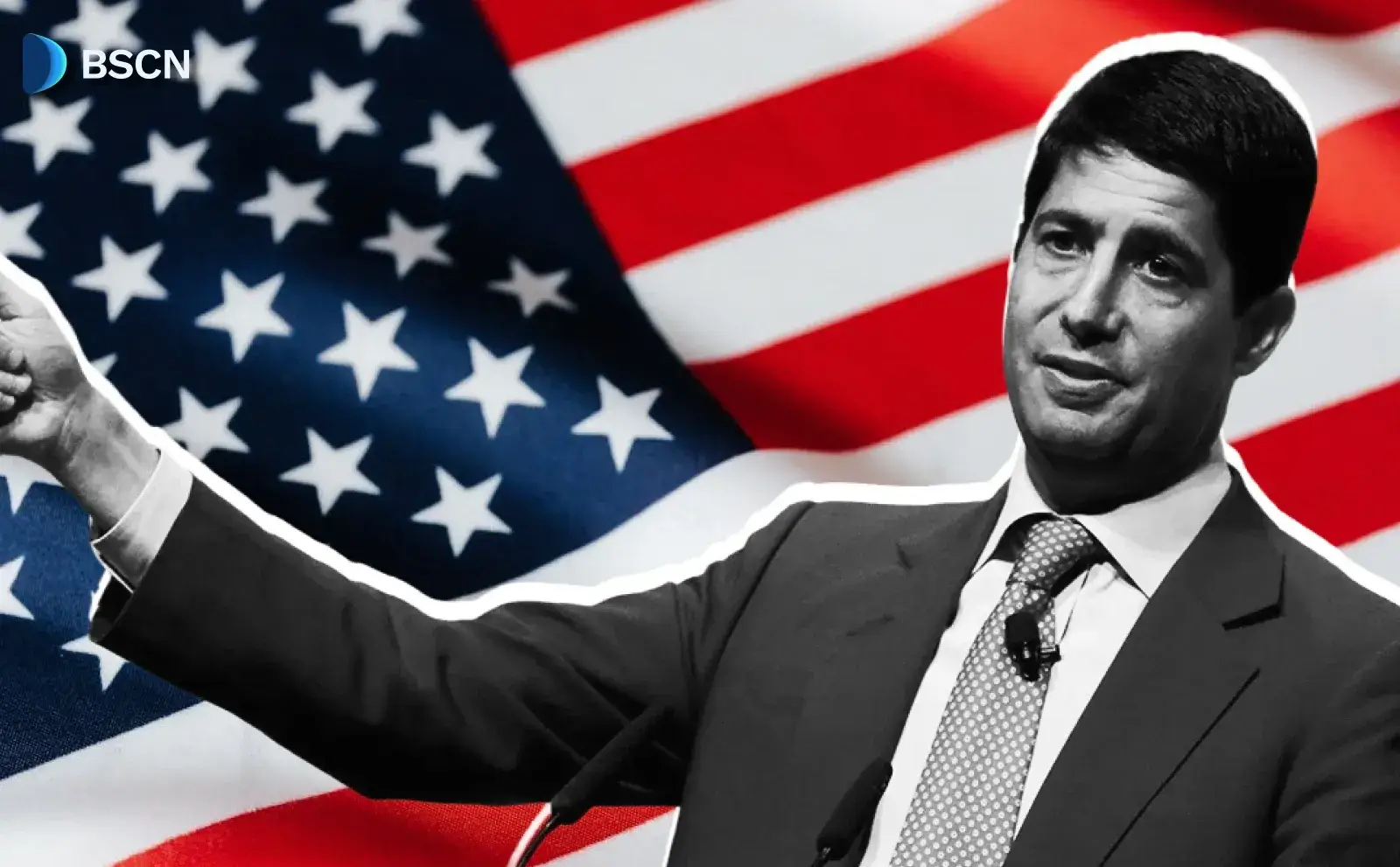
Kevin Warsh, Trump's Fed Chair nominee, is an inflation hawk with surprising crypto ties. Here's what his nomination means for Bitcoin and markets.

Crypto Rich
February 3, 2026

(Advertisement)
Table of Contents
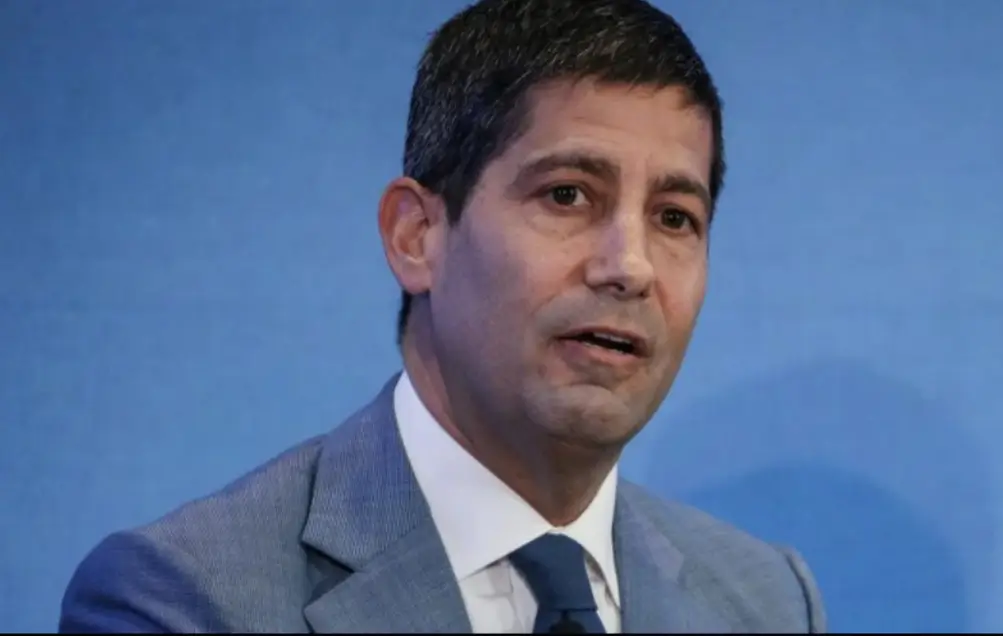
Kevin Warsh is a former Federal Reserve governor, Morgan Stanley veteran, and inflation hawk whom President Donald Trump nominated on January 30, 2026, to succeed Jerome Powell as Chair of the Federal Reserve. His term would begin in May, pending Senate confirmation.
The nomination triggered shockwaves through financial markets. Gold crashed up to 16%, silver plunged as much as 39%, and Bitcoin dropped roughly 10-15% toward $77,000. But here's what makes Warsh interesting for crypto holders: despite his hawkish reputation, he's described Bitcoin as a "sustainable store of value, like gold" and has invested in multiple blockchain-related ventures. This isn't your typical Fed nominee.
What's Warsh's Background?
Born April 13, 1970, in Albany, New York, Warsh built credentials that span Wall Street, Washington, and academia. He earned a bachelor's degree in public policy from Stanford University in 1992 with honors, emphasizing economics and statistics. He followed that with a JD from Harvard Law School in 1995, plus additional coursework at Harvard Business School and MIT's Sloan School of Management.
His career started at Morgan Stanley in 1995, where he worked on mergers and acquisitions and rose to executive director by 2002. That same year, he shifted to public service as special assistant to President George W. Bush for economic policy.
In 2006, Bush appointed the 35-year-old Warsh to the Federal Reserve Board of Governors. He became the youngest person ever to hold that position. He served until 2011 and played a direct role in the Fed's response to the 2008 financial crisis under Chairman Ben Bernanke.
Since leaving the Fed, Warsh has served as a distinguished visiting fellow at the Hoover Institution and as a lecturer at Stanford's Graduate School of Business. He currently serves on the boards of UPS and Coupang, and advises the Congressional Budget Office and the Group of Thirty.
What's His Economic Philosophy?
Warsh has been consistently critical of excessive quantitative easing and loose monetary policies, arguing they create asset bubbles and unsustainable debt levels. With U.S. federal debt now surpassing $38 trillion, he's pointed to how prolonged low rates worsen fiscal imbalances.
His core belief: the Fed should prioritize price stability and financial system integrity over acting as a backstop for government spending.
That said, Warsh isn't rigid. In recent commentary, he's supported rate cuts in 2026 to foster growth, citing potential productivity gains from AI and technology that could suppress inflation without tight policy. He wants to reduce the Fed's balance sheet to prevent bubbles while easing some bank regulations to improve liquidity.
This blend of discipline with pragmatic flexibility stems from his 2008 crisis experience. He's called for a "regime change" at the Fed to reduce political influences and outdated models.
What Does Warsh Think About Crypto?
This is where things get interesting.
Warsh's views on digital assets have evolved significantly. In a 2022 Wall Street Journal op-ed, he dismissed cryptocurrencies as "software pretending to be money" and symptoms of speculative excess fueled by easy money. He saw blockchain technology as innovative but remained skeptical of tokens as reliable money.
By 2025, his tone had shifted. He now describes Bitcoin as a "sustainable store of value, like gold," particularly for younger generations. He's called it a "policeman for policy" that signals when monetary decisions go wrong. While he acknowledges fraud exists in many crypto projects, he views Bitcoin specifically as a legitimate technological advancement.
Warsh has put money behind these words. He's invested in crypto-related firms, including Bitwise, where he serves as an adviser and investor. He backed Basis, an algorithmic stablecoin project. He also advises Electric Capital, a blockchain-focused venture capital firm.
He supports developing a U.S. central bank digital currency to counter competitors like China's digital yuan. Rather than dismissing crypto, he's urged the Fed to engage with it proactively. His position: crypto provides market discipline without threatening dollar dominance.
Why Did Markets React So Violently?
The January 30 announcement triggered immediate turbulence across asset classes, but the extreme magnitude of the moves tells a bigger story than just the nomination itself.
Gold dropped 9% to 16%, falling from highs near $5,595 to around $4,700 to $4,900. Silver collapsed 28% to 39%, marking its worst single-day drop since 1980, sliding from around $122 to the $75 to $85 range. Bitcoin declined roughly 10-15% in the initial selloff, dipping toward $74,000-$77,000 before rebounding slightly to around $78,000-$79,000 by early February. The S&P 500 fell a more modest 0.4% to 0.5%. The dollar strengthened, bond yields rose, and Bitcoin and Ethereum ETFs saw outflows approaching $1 billion in a single session.
The Warsh nomination was the catalyst, but these markets were primed to blow. Gold's RSI had hit 90, and silver's reached 93.86, its highest level since 1980. Silver had exploded 500% since early 2023 and 317% in just nine months. Analysts described it as a classic mania with heavy leverage built up among speculators.
OCBC strategist Christopher Wong noted that while the nomination triggered the selloff, "a correction was already inevitable as the market had been searching for a reason to end the previous parabolic rally." Deutsche Bank's Jim Reid observed that price action "had long since detached from any sane discussion on debasement" and that "it often takes only a small ripple to trigger a broader correction, especially when there is leverage around."
When the news broke, margin calls went out. Forced liquidations cascaded through precious metals and crypto as leveraged positions unwound. The nomination provided the spark, but the tinderbox was already soaked.
Investors initially read the pick as hawkish, fearing fewer rate cuts and potential balance sheet reduction. But some analysts argue this interpretation misses nuance. Warsh has indicated support for 2026 rate cuts amid tech-driven growth, and his nomination could actually signal Fed independence, potentially stabilizing markets longer term.
What Happens Next?
Warsh still needs Senate confirmation, which could face delays due to ongoing controversies around Fed independence and a related DOJ investigation into the Fed. If confirmed, he may push the Fed toward sustainable growth while supporting innovation in digital finance.
For crypto markets specifically, his track record suggests a nuanced approach. Short-term liquidity concerns are real, but his direct investments in blockchain ventures and his positive comments on Bitcoin indicate he won't be hostile toward the space.
Investors should watch Senate hearings closely for signals on his policy direction. The initial panic may have created opportunities for those who understand his actual positions on digital assets.
If confirmed by May, Warsh could bring a pragmatic, innovation-friendly voice to the Fed. That could prove a net positive for crypto's maturation despite near-term headwinds.
Sources:
- White House - Official announcement of Warsh nomination
- Wikipedia - Biographical information and career history
- CoinDesk - Cryptocurrency positions and investments
- CNBC - Precious metals market analysis
- Yahoo Finance - Market reaction and crypto views
Read Next...



Frequently Asked Questions
Who is Kevin Warsh?
Kevin Warsh is a former Federal Reserve governor who served from 2006 to 2011, becoming the youngest person ever appointed to that role at age 35. He was nominated by President Trump in January 2026 to succeed Jerome Powell as Fed Chair, pending Senate confirmation.
Is Kevin Warsh pro-Bitcoin?
His stance has evolved to become supportive. He's described Bitcoin as a "sustainable store of value, like gold" and has invested in crypto firms including Bitwise and Electric Capital. However, he remains critical of fraudulent projects and has advocated for a U.S. central bank digital currency.
Why did markets crash after Warsh's nomination?
The nomination was the catalyst, but markets were already overextended. Gold and silver had reached extreme overbought levels with heavy speculative leverage. When the hawkish news hit, margin calls triggered forced liquidations. The nomination sparked the correction, but the conditions for a sharp pullback were already in place.
Disclaimer
Disclaimer: The views expressed in this article do not necessarily represent the views of BSCN. The information provided in this article is for educational and entertainment purposes only and should not be construed as investment advice, or advice of any kind. BSCN assumes no responsibility for any investment decisions made based on the information provided in this article. If you believe that the article should be amended, please reach out to the BSCN team by emailing [email protected].
Author
 Crypto Rich
Rich has been researching cryptocurrency and blockchain technology for eight years and has served as a senior analyst at BSCN since its founding in 2020. He focuses on fundamental analysis of early-stage crypto projects and tokens and has published in-depth research reports on over 200 emerging protocols. Rich also writes about broader technology and scientific trends and maintains active involvement in the crypto community through X/Twitter Spaces, and leading industry events.
(Advertisement)
Latest News
July 15, 2026
REAL Joins Blockchain for Europe to Shape EU Tokenisation Rules
July 15, 2026

Which Crypto Companies and Protocols Make The Most Money?
July 15, 2026
How SBI Built Japan's Largest Crypto Business
July 15, 2026

Elon Musk And Dogecoin: How One Man Shaped A Memecoin’s Price And Reputation
July 15, 2026
DTCC Tokenization Platform: How Does Wall Street's Blockchain Pilot Actually Work?
July 14, 2026

Report: Cardano's Biggest Updates from H1 2026
July 14, 2026

What is an XDC Network Masternode Validator?
July 13, 2026
Telebiz Goes Live With an Open-Source CRM Built Directly Into Telegram
(Advertisement)

Crypto Project & Token Reviews
Project & Token Reviews
Comprehensive reviews of crypto's most interesting projects and assets
Learn about the hottest projects & tokens

Latest Crypto Articles
Get up to date with the latest crypto news stories and events