News
(Advertisement)


Ethereum Solved the Blockchain Trilemma, Says Vitalik Buterin

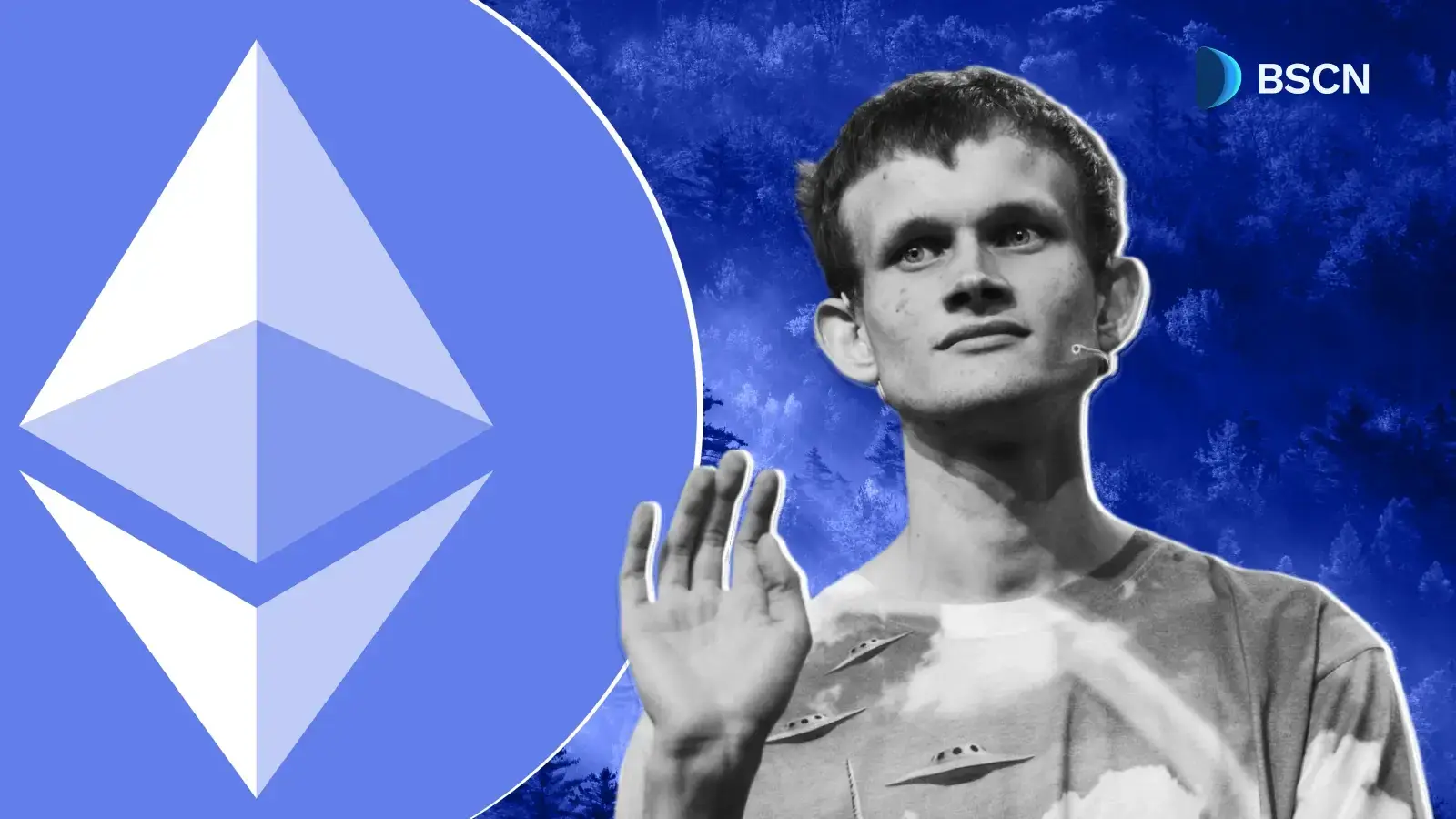
Vitalik Buterin says Ethereum has solved the blockchain trilemma using PeerDAS and ZK-EVMs. Here is what that means, technically and practically.

Soumen Datta
January 5, 2026

(Advertisement)
Table of Contents
Ethereum co-founder Vitalik Buterin says the blockchain trilemma has been solved, not as a theory, but in live code already running on Ethereum. In a post on X, Buterin argued that the combination of Peer Data Availability Sampling (PeerDAS) and Zero-Knowledge Ethereum Virtual Machines (ZK-EVMs) allows Ethereum to achieve decentralization, security, and high bandwidth at the same time, a balance long considered unattainable in blockchain design.
“The trilemma has been solved - not on paper, but with live running code, of which one half (data availability sampling) is *on mainnet today*, and the other half (ZK-EVMs) is *production-quality on performance today* - safety is what remains,” Buterin said.
Blockchain trilemma has shaped every major protocol decision for more than a decade. If Buterin is right, Ethereum’s underlying architecture is entering a new phase, one built on distributed computation rather than replicated work, with real implications for scalability, validation, and network resilience.
What Is The Blockchain Trilemma?
The blockchain trilemma describes the difficulty of optimizing three core properties at once:
- Decentralization: Many independent participants can run nodes and verify the system.
- Security: The network resists attacks, fraud, and invalid state changes.
- Scalability (High Bandwidth): The system processes large volumes of data and transactions efficiently.
Historically, blockchains have managed to achieve only two of these at the expense of the third. Bitcoin, for example, prioritizes decentralization and security but processes transactions slowly. Faster chains often trade decentralization for performance by relying on fewer validators or heavier hardware requirements.
Why Did Vitalik Buterin Say The Trilemma Is Solved?
Buterin’s argument rests on two technical upgrades now advancing in parallel: PeerDAS and ZK-EVMs. One is already live on Ethereum mainnet. The other has reached production-quality performance, with safety work still ongoing.
In his words, Ethereum is becoming “a fundamentally new and more powerful kind of decentralized network.” He compared the new architecture to “BitTorrent with consensus,” combining high bandwidth with cryptographic agreement on state.
Unlike earlier proposals, this shift is not speculative. Data availability sampling is live today, and ZK-EVM proving performance has improved to the point where most Ethereum blocks can be verified in seconds.
How Did Earlier Networks Handle Bandwidth And Consensus?
To understand why this matters, Buterin pointed to two earlier peer-to-peer systems that shaped blockchain thinking.
BitTorrent (2000)
BitTorrent demonstrated that massive bandwidth could be achieved in a decentralized way. Files were split into pieces and shared across many peers. However, there was no consensus layer. The system could not agree on a single global state.
Bitcoin (2009)
Bitcoin introduced decentralized consensus, allowing thousands of nodes to agree on transaction history. But it achieved this by replicating work. Every full node processes every transaction. This design keeps the system secure but caps throughput.
Ethereum’s new design aims to break this pattern by distributing work across nodes while preserving full cryptographic verification.
What Is PeerDAS And Why Does It Matter?
Peer Data Availability Sampling changes how Ethereum nodes check whether block data is available.
Instead of downloading entire blocks, validators randomly sample small portions of the data. If enough samples are available, the network can be confident the full data exists and is accessible.
Worth noting, data availability is the main bottleneck for scaling Ethereum. By reducing the data burden on individual nodes, PeerDAS allows:
- Higher throughput without raising hardware requirements
- Continued participation by home and small-scale validators
- Strong guarantees that block data cannot be withheld
PeerDAS is already live on Ethereum mainnet, marking a shift from theoretical research to operational infrastructure.
What Are ZK-EVMs And How Do They Fit In?
Zero-Knowledge Ethereum Virtual Machines allow Ethereum transactions to be verified using cryptographic proofs instead of re-executing every computation.
In simple terms, a ZK-EVM generates a proof that says, “These transactions were executed correctly according to Ethereum’s rules,” without revealing every internal step. Other nodes can verify that proof quickly.
Recent performance gains have been significant:
- Proving times dropped from about 16 minutes to roughly 16 seconds
- Proving costs fell by around 45 times
- About 99% of Ethereum blocks are now provable in under 10 seconds on target hardware
ZK-EVMs are currently at the alpha stage. Performance is considered production-quality, but safety and security audits are still ongoing.
Why Does This Combination Change Ethereum’s Architecture?
PeerDAS and ZK-EVMs address different parts of the scaling problem.
PeerDAS handles data availability, ensuring that block data is accessible without forcing every node to download everything. ZK-EVMs handle computation, allowing nodes to verify correctness without repeating all execution.
Together, they allow Ethereum to move from replicated work to distributed work. This is the key reason Buterin says the trilemma is solved in practice.
Ethereum can now support:
- Decentralized participation
- Cryptographic consensus
- High data throughput
All three pillars are present at once, backed by live code and measurable performance improvements.
What Is The Timeline For Full Deployment?
Buterin outlined a multi-year roadmap that extends through the end of the decade.
In 2026
Large gas limit increases that do not depend on ZK-EVMs are expected. These rely on Balance Attack Limits and enshrined Proposer-Builder Separation. This period will also mark the first real opportunities to run ZK-EVM nodes.
Between 2026 And 2028
Developers plan to introduce gas repricing, changes to state structure, and the movement of execution payloads into blobs. These steps aim to make higher throughput safe and sustainable.
Between 2027 And 2030
ZK-EVM validation is expected to become the primary method for verifying blocks. Gas limits would increase significantly beyond current levels during this phase.
Why Is Security Still A Major Concern?
Despite performance gains, Ethereum’s developers have stressed that security remains the top priority.
The Ethereum Foundation has set clear cryptographic targets:
- 100-bit provable security by May 2026
- 128-bit provable security by the end of 2026
- Mandatory use of the soundcalc security estimation tool by February
The foundation has warned that if a proof system is compromised, the consequences are severe. An attacker could mint tokens, rewrite state, or steal funds.
George Kadianakis from the foundation’s cryptography team has emphasized the importance of stabilizing architectures before deeper formal verification work begins.
What Is Distributed Block Building And Why Does It Matter?
Beyond PeerDAS and ZK-EVMs, Buterin described distributed block building as a third long-term goal.
The ideal outcome is a system where no single entity ever constructs a full block in one place. While this is not expected soon, even partial progress could reduce risks of censorship and centralized interference.
Possible approaches include:
- Expanding in-protocol transaction inclusion channels
- Using distributed builder marketplaces outside the protocol
Both aim to improve geographic fairness and reduce control over transaction ordering.
How Does This Affect Ethereum’s Broader Direction?
Buterin has also cautioned against distraction. In a separate post, he warned Ethereum should not chase short-term trends like tokenized dollars or political memecoins at the expense of its core goals.
He has repeatedly stressed the importance of applications that can survive even if their original developers disappear. This “walkaway test” reflects a broader concern about trustlessness and system resilience.
At the same time, he has warned that growing protocol complexity risks concentrating understanding among a small group of experts, undermining decentralization in practice.
Conclusion
Vitalik Buterin’s claim that the blockchain trilemma has been solved rests on concrete technical progress, not abstract promises. With PeerDAS live on mainnet and ZK-EVMs reaching production-level performance, Ethereum now supports decentralization, security, and high bandwidth within a single architecture.
The full rollout will take years, and safety remains the dominant concern. Still, this marks the result of a decade-long effort, beginning with early data availability research in 2015 and early ZK-EVM experiments around 2020.
Resources
Vitalik Buterin on X: Post on January 3
Ethereum Foundation on PeerDAS: About PeerDAS
Ethereum Fondation on ZKEVM: About ZKEVM
Read Next...

Frequently Asked Questions
What Is The Blockchain Trilemma?
It refers to the challenge of achieving decentralization, security, and scalability at the same time in a blockchain network.
What Are PeerDAS And ZK-EVMs?
PeerDAS allows nodes to verify data availability by sampling small portions of block data. ZK-EVMs use cryptographic proofs to verify transaction execution efficiently.
When Will ZK-EVMs Fully Validate Ethereum Blocks?
According to Buterin’s roadmap, ZK-EVMs are expected to become the primary block validation method between 2027 and 2030.
Disclaimer
Disclaimer: The views expressed in this article do not necessarily represent the views of BSCN. The information provided in this article is for educational and entertainment purposes only and should not be construed as investment advice, or advice of any kind. BSCN assumes no responsibility for any investment decisions made based on the information provided in this article. If you believe that the article should be amended, please reach out to the BSCN team by emailing [email protected].
Author
 Soumen Datta
Soumen has been a crypto researcher since 2020 and holds a master’s in Physics. His writing and research has been published by publications such as CryptoSlate and DailyCoin, as well as BSCN. His areas of focus include Bitcoin, DeFi, and high-potential altcoins like Ethereum, Solana, XRP, and Chainlink. He combines analytical depth with journalistic clarity to deliver insights for both newcomers and seasoned crypto readers.
(Advertisement)
Latest News
1h : 20m ago
Grayscale Picks Its Most Promising Tokenization Blockchains
3h : 17m ago

Crypto's Top Five Centralized Exchanges
4h : 22m ago
How Is Polygon Trying to Connect Every Blockchain Into a Single Network?
8h : 52m ago
What Does It Really Mean To Host A Website On The Internet Computer?
July 15, 2026
REAL Joins Blockchain for Europe to Shape EU Tokenisation Rules
July 15, 2026
Which Crypto Companies and Protocols Make The Most Money?
July 15, 2026

How SBI Built Japan's Largest Crypto Business
July 15, 2026

Elon Musk And Dogecoin: How One Man Shaped A Memecoin’s Price And Reputation
(Advertisement)

Crypto Project & Token Reviews
Project & Token Reviews
Comprehensive reviews of crypto's most interesting projects and assets
Learn about the hottest projects & tokens

Latest Crypto Articles
Get up to date with the latest crypto news stories and events