News
(Advertisement)


Bittensor’s First Halving Approaches: What Does It Mean for TAO?

Bittensor’s first halving cuts TAO emissions by 50%, reducing inflation, increasing scarcity, and reshaping incentives across miners, validators, and subnets.

UC Hope
December 8, 2025

(Advertisement)
Table of Contents
Bittensor’s first halving will reduce the network’s daily issuance of new TAO by 50%, cutting block rewards from 1 TAO to 0.5 TAO once total supply reaches 10.5 million. This programmed shift will mark a significant decrease in token inflation and introduce greater scarcity across the ecosystem.
With the circulating supply expected to cross the halving threshold on December 14, 2025, the event is set to influence miner incentives, subnet performance, and market behavior in ways comparable to Bitcoin’s halving cycles.
How does the Bittensor Halving Mechanism Work?
Bittensor is a decentralized machine learning network that rewards the production, validation, and distribution of AI models through its native token, TAO. Modeled on Bitcoin’s capped supply structure, TAO has a maximum supply of 21 million.
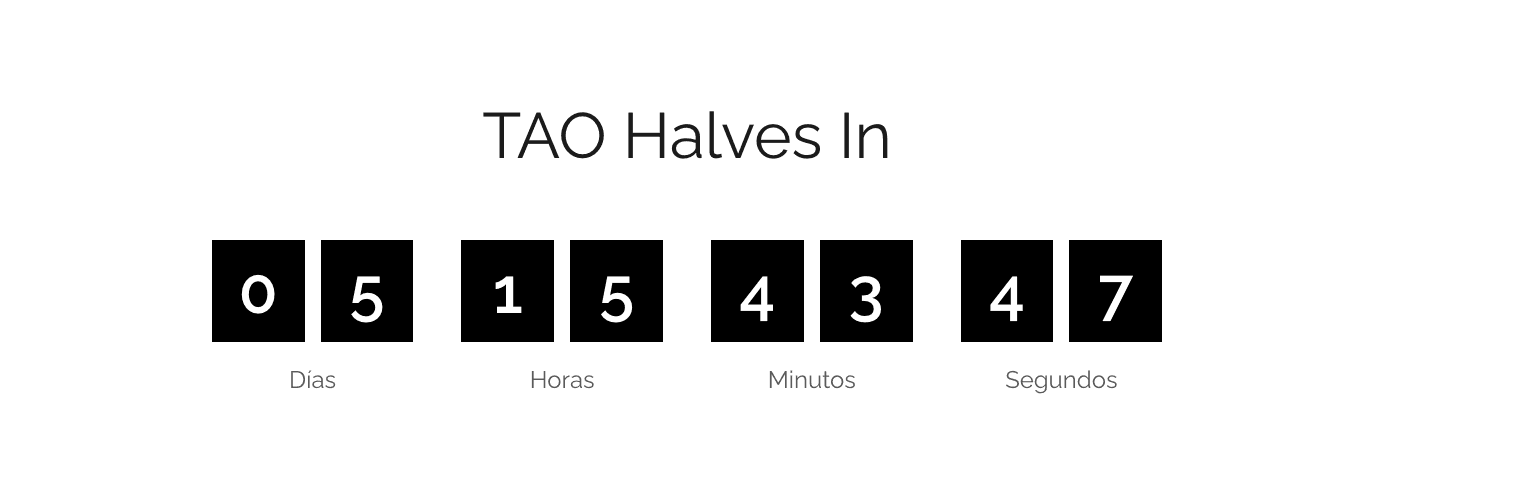
While Bitcoin halves based on block height, Bittensor’s halving is supply-triggered. It activates the moment 10.5 million TAO enter circulation. As of December 8, 2025, supply is approaching that threshold.
Pre-Halving Emission
- 1 TAO per block
- Approximately 12-second block times
- Approximately 7,200 TAO per day
Post-Halving Emission
- 0.5 TAO per block
- Approximately 3,600 TAO per day
The reduction applies universally: miners (AI model providers), validators, and subnet owners all see their rewards halved.
One variable is TAO “recycling.” Fees are burned through subnet registration and other mechanisms, and later re-emitted into the network. This can shift the precise halving date by a small margin. In February 2025, the introduction of Dynamic TAO (DTAO) added subnet-specific Alpha tokens, which follow the same halving schedule as TAO and are also affected.
Why the Halving Matters?
The halving represents a structural change in Bittensor’s economics. Reducing the issuance of new tokens tightens the available supply. If demand for TAO remains steady or continues the growth observed alongside new subnet launches and institutional participation, the reduction in inflation can influence price dynamics and reward distribution throughout the network.
This adjustment mirrors Bitcoin’s approach, in which lower issuance gradually drives each block toward greater scarcity. Bittensor’s mechanism similarly aims to encourage long-term sustainability by aligning incentives around high-quality AI output rather than short-term reward chasing.
Emission Cut and Supply Dynamics
Daily New Supply Drops by 50%
The decline from 7,200 to 3,600 TAO per day reduces mining-related sell pressure. Miners and validators often sell a portion of rewards to cover costs. Lower issuance typically translates into fewer tokens consistently reaching exchanges.
Inflation Rate Contracts
With lower emissions and a fixed cap, Bittensor’s inflation rate declines materially after the halving. As minted supply slows, TAO edges closer to long-term scarcity. This environment favors participants who accumulate and stake TAO for governance or subnet operations.
Quality Pressure on Subnets
Because rewards decrease for all parties, weaker subnets may struggle with reduced liquidity, especially if their Alpha tokens were dependent on regular injections of new supply. This naturally amplifies competition among the network’s 128+ subnets (combined market cap roughly $3B, according to Taostats).
The result is an ecosystem that rewards subnets offering reliable, high-value AI services. Underperforming subnets may deregister or fail to attract participants, a dynamic often described by community analysts as a form of economic “Darwinism.”
Impact on Miners and Validators
Mining rewards support the training and sharing of machine learning models on Bittensor. With rewards halved, miners must operate more efficiently. Validators, which evaluate model outputs, face similar pressure to remain competitive in a lower-emission environment.
Alpha Token Effects
Alpha tokens linked to DTAO-enabled subnets also halve, reducing their liquidity inflows. Earlier subnets may benefit, having accumulated more Alpha pre-halving. Newer subnets must differentiate through model performance and utility to attract stake and survive in the tighter economic cycle.
Market Impact: What Do Analysts Expect?
Demand-side conditions will determine how TAO behaves after the halving. Market participants currently express a mix of caution and confidence, though sentiment trends positively across X discussions and industry research.
Bullish Considerations
- Reduced automatic sell pressure: With fewer new tokens entering circulation, consistent demand tightens available supply.
- Institutional exposure: The creation of products such as Grayscale’s Bittensor Trust, ETP listings, and public companies holding TAO adds credibility and liquidity.
- Utility-driven demand: As more subnets launch AI services and attract users, demand for TAO may rise in parallel.
Grayscale analysts have characterized the halving as a “maturation milestone,” noting that issuance reductions historically benefit networks with capped supply models, provided usage continues to grow.
Risks and Bearish Considerations
- Short-term volatility: Halvings frequently coincide with “sell-the-news” market behavior.
- Validator churn: Lower rewards may prompt operators to exit or consolidate.
- Subnet liquidity strain: Halved Alpha emissions pressure emerging subnets that rely on frequent liquidity injections.
The interplay of these factors may cause fluctuations in TAO’s price in the weeks leading up to the halving. Over longer horizons, network fundamentals and growing institutional participation will likely play larger roles in determining stability.
Bittensor’s Growth in 2025
Bittensor’s network growth has accelerated in 2025, with more than 128 subnets providing diverse AI capabilities. These include natural-language processing models, ranking systems, multimodal tools, and specialized inference markets. The halving reinforces a shift toward subnets that deliver tangible utility and attract real users.
Users across various communities emphasize the alignment between reduced emissions and the network’s objective: to create a competitive AI marketplace where resources flow toward the most valuable models. The halving encourages participants to assess long-term performance rather than short-term token rewards.
Real-time trackers such as taostats.io and bittensorhalving.com allow participants to monitor the circulating supply and estimate when the supply threshold is reached.
Conclusion
Bittensor’s first halving halves new TAO emissions, marking a significant milestone for the network’s tokenomics. The event reduces inflation, increases scarcity, and places greater emphasis on efficiency and quality within the subnet ecosystem.
While short-term market fluctuations are possible, the halving reinforces the economic structure that underpins Bittensor’s decentralized AI marketplace. Its impact will be shaped by demand, network adoption, and the ongoing performance of miners, validators, and subnet operators.
Sources
- Bittensor countdown: Real-time Halving Countdown
- Taostats: Bittensor real-time data
- TheBlock PR: Grayscale says Bittensor Halving could push price up
Read Next...
Frequently Asked Questions
When will the Bittensor halving occur?
The halving will take place when the circulating supply reaches 10.5 million TAO. Based on the countdown, it may take place on December 14, 2025.
How much will TAO emissions decrease?
Block rewards drop from 1 TAO to 0.5 TAO, reducing daily issuance from ~7,200 to ~3,600 TAO.
Does the halving affect subnet Alpha tokens?
Yes. Alpha tokens introduced through Dynamic TAO in February 2025 follow the same halving schedule, meaning their emissions also halve.
Disclaimer
Disclaimer: The views expressed in this article do not necessarily represent the views of BSCN. The information provided in this article is for educational and entertainment purposes only and should not be construed as investment advice, or advice of any kind. BSCN assumes no responsibility for any investment decisions made based on the information provided in this article. If you believe that the article should be amended, please reach out to the BSCN team by emailing [email protected].
Author
 UC Hope
UC holds a bachelor’s degree in Physics and has been a crypto researcher since 2020. UC was a professional writer before entering the cryptocurrency industry, but was drawn to blockchain technology by its high potential. UC has written for the likes of Cryptopolitan, as well as BSCN. He has a wide area of expertise, covering centralized and decentralized finance, as well as altcoins.
(Advertisement)
Latest News
4h : 51m ago
REAL Joins Blockchain for Europe to Shape EU Tokenisation Rules
6h : 17m ago

Which Crypto Companies and Protocols Make The Most Money?
7h : 44m ago
How SBI Built Japan's Largest Crypto Business
8h : 6m ago

Elon Musk And Dogecoin: How One Man Shaped A Memecoin’s Price And Reputation
13h : 6m ago
DTCC Tokenization Platform: How Does Wall Street's Blockchain Pilot Actually Work?
July 14, 2026
Report: Cardano's Biggest Updates from H1 2026
July 14, 2026

What is an XDC Network Masternode Validator?
July 13, 2026

Telebiz Goes Live With an Open-Source CRM Built Directly Into Telegram
(Advertisement)

Crypto Project & Token Reviews
Project & Token Reviews
Comprehensive reviews of crypto's most interesting projects and assets
Learn about the hottest projects & tokens

Latest Crypto Articles
Get up to date with the latest crypto news stories and events