News
(Advertisement)


Backpack Token Is Coming, And Dumping Won’t Be Easy: Here’s Why

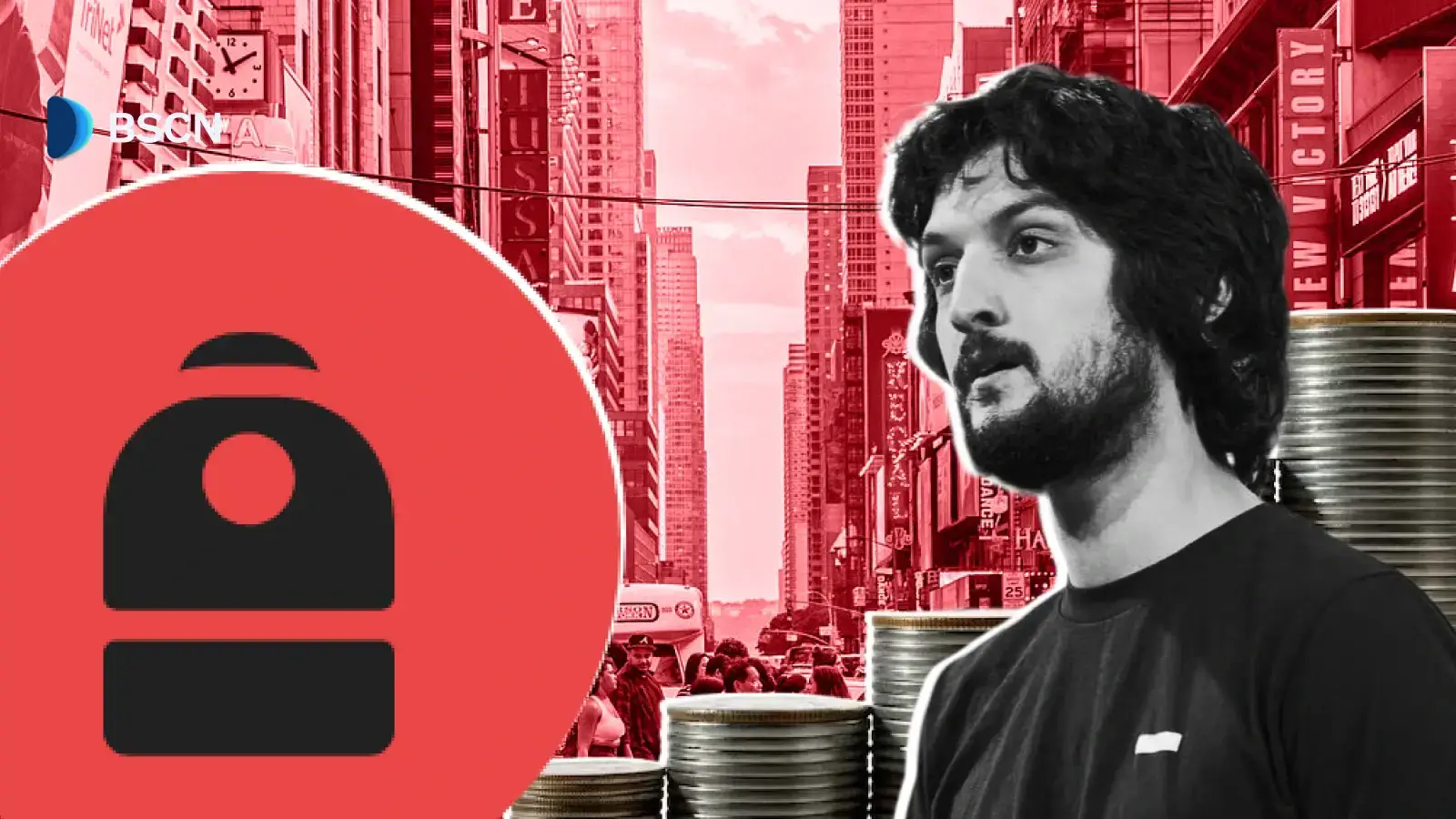
Backpack Exchange unveils 1 billion token supply with IPO-linked distribution preventing insider dumping until US public listing completion.

Soumen Datta
February 10, 2026

(Advertisement)
Table of Contents
Backpack Exchange announced plans to launch its token with a 1 billion token supply on Monday with a distribution model that prevents founders and early investors from profiting until the company completes a US initial public offering. The crypto exchange, founded by former FTX employees, will launch 25% of the total supply at its Token Generation Event, with the remaining tokens locked behind growth milestones and IPO requirements.
25% on TGE
— Backpack 🎒 (@Backpack) February 9, 2026
Here's the entire token distribution
Utility coming next 🎒 pic.twitter.com/O7gyL7WP4v
The tokenomics framework ties insider compensation directly to measurable business achievements rather than time-based vesting schedules. CEO Armani Ferrante stated the approach ensures "insiders 'dumping on retail' should be impossible" until the platform reaches what he calls "escape velocity."
Backpack serves approximately 48% of the global market currently and plans to pursue traditional finance integration alongside its crypto offerings, including banking infrastructure, fiat currency accounts, and securities trading capabilities.
How Does Backpack's Token Distribution Work?
The 1 billion token supply breaks down into three distinct tranches, each unlocking under different conditions designed to align team incentives with long-term platform growth.
At the Token Generation Event, 250 million tokens become available immediately. This represents 25% of the total supply and splits between two groups:
- 240 million tokens distributed to points holders from Seasons 1-4
- 10 million tokens allocated to Mad Lads NFT holders
The TGE date has not been announced yet, though Backpack indicated additional utility details will be released soon.
Another 375 million tokens, representing 37.5% of total supply, will unlock pre-IPO through achievement of specific milestones. These milestones include opening in new regions, launching new products, and demonstrating measurable regulatory progress. Each time Backpack expands geographically or releases a major feature, additional tokens become available to users.
The final 375 million tokens remain locked on the company's balance sheet until at least 12 months after a successful IPO. These tokens form Backpack's corporate treasury and cannot be accessed even if the company completes all pre-IPO milestones.
What Makes This Tokenomics Model Different?
Traditional crypto projects typically distribute tokens to founders, team members, and venture investors through time-based vesting schedules. A common structure might vest tokens over three to four years with a one-year cliff, allowing insiders to begin selling regardless of project performance.
Backpack's model eliminates direct token allocations to insiders entirely. Ferrante explained that "not a single founder, executive, team member, or venture investor has been given a direct token allocation."
Instead, the founding team holds equity in the parent company, and the company owns the token supply. Team members can only realize value from tokens after Backpack goes public or completes another equity exit event. This structure requires the company to access public capital markets and complete extensive regulatory work before founders benefit from token appreciation.
The approach prevents dilution of retail holders by connecting token releases to measurable economic activity. Ferrante stated that "the value of added growth created by new token unlocks must always be greater than the dilution of those unlocks" for the model to function properly.
Why Is Backpack Pursuing A US IPO?
Backpack aims to become a hybrid platform offering both crypto and traditional finance products through a single interface. The company is working toward banking rails worldwide, fiat currency accounts in major markets (USD in the US, EUR in the EU, JPY in Japan), and securities trading capabilities.
Ferrante described the company's vision:
"We're trying to not only build great crypto products, but we're also trying to build great TradFi products."
The exchange wants to serve retail users, regulated counterparties, and institutional clients through licensed products in multiple jurisdictions.
This regulatory-first approach explains why Backpack currently serves only 48% of the global market. The company has prioritized obtaining proper licenses over rapid geographical expansion, which Ferrante acknowledged "sometimes feels like running with a parachute."
The IPO timeline remains uncertain. Ferrante noted going public "might happen quickly, it might happen not so quickly, and in fact, it might not happen at all." The team has been working on the foundation for over three years, obtaining licenses and building infrastructure across different jurisdictions.
According to Axios, Backpack is in discussions to raise $50 million at a $1 billion pre-money valuation, potentially making it the crypto industry's latest unicorn company.
How Will Growth Milestones Trigger Token Unlocks?
The 375 million pre-IPO tokens unlock in stages as Backpack achieves specific business milestones. Each regional expansion or product launch creates an opportunity to distribute additional tokens to active users.
Ferrante outlined several growth levers that would trigger unlocks:
- Opening European Union markets
- Launching in Japan
- Expanding to United States users
- Introducing predictions markets
- Adding stock trading capabilities
- Rolling out payment cards
The framework treats tokens "like gasoline onto a fire," using new distributions to kickstart growth in each market the same way points programs drove user acquisition during the exchange's first four seasons.
This milestone-based approach differs from projects like MegaETH, which recently decoupled its TGE from mainnet launch but still uses a similar framework tying distribution to network development and user adoption rather than arbitrary time schedules.
Who Founded Backpack Exchange?
Armani Ferrante, a Solana developer, and Tristan Yver, a former FTX executive, founded Backpack Exchange. The team includes other former FTX employees who left before or during the exchange's collapse in November 2022.
The FTX connection provides context for Backpack's emphasis on preventing insider dumping. FTX's spectacular failure, which involved misuse of customer funds and fraudulent accounting, destroyed billions in user value. Backpack's structure prevents similar outcomes by ensuring the founding team cannot extract value from tokens unless the company succeeds as a regulated, publicly traded entity.
Conclusion
Backpack's tokenomics model eliminates traditional insider allocations by tying all team compensation to equity rather than direct token holdings. The 1 billion token supply distributes 25% at launch to existing community members, unlocks 37.5% through measurable growth milestones, and reserves the final 37.5% until at least one year post-IPO.
The structure prevents founders from profiting before building a regulated, publicly traded financial platform serving both crypto and traditional finance markets. Whether this approach attracts more users or inspires similar models across the industry depends on Backpack's ability to execute its ambitious regulatory roadmap and reach its planned US public listing.
Resources
Backpack Exchange on X: Post on Feb. 9
Armani Ferrante on X: Post on Feb. 9
Report by Axios: Scoop: Backpack Exchange raising at $1B valuation
Report by CoinTelegraph: Crypto exchange Backpack to launch token with unlocks tied to IPO goal
Read Next...

Frequently Asked Questions
When will Backpack's token generation event happen?
Backpack has not announced a specific date for its token generation event. The company stated that 250 million tokens will become available at launch, with 240 million going to points holders and 10 million to Mad Lads NFT holders.
Do Backpack founders receive any tokens directly?
No. Backpack founders, executives, team members, and venture investors hold zero direct token allocations. They own equity in the parent company, which owns tokens on its balance sheet. The team can only benefit after Backpack completes an IPO or another equity exit event.
How many tokens unlock before the IPO?
375 million tokens, representing 37.5% of total supply, can unlock pre-IPO through achievement of growth milestones like regional expansions and product launches. Another 250 million tokens distribute at the token generation event, totaling 625 million tokens available before any public listing.
Disclaimer
Disclaimer: The views expressed in this article do not necessarily represent the views of BSCN. The information provided in this article is for educational and entertainment purposes only and should not be construed as investment advice, or advice of any kind. BSCN assumes no responsibility for any investment decisions made based on the information provided in this article. If you believe that the article should be amended, please reach out to the BSCN team by emailing [email protected].
Author
 Soumen Datta
Soumen has been a crypto researcher since 2020 and holds a master’s in Physics. His writing and research has been published by publications such as CryptoSlate and DailyCoin, as well as BSCN. His areas of focus include Bitcoin, DeFi, and high-potential altcoins like Ethereum, Solana, XRP, and Chainlink. He combines analytical depth with journalistic clarity to deliver insights for both newcomers and seasoned crypto readers.
(Advertisement)
Latest News
1h : 59m ago
What Happens to Unverified Pi Balances If Users Miss the Deadline?
5h : 44m ago
What Is in Trump's CLARITY Act Ethics Deal?
July 21, 2026

Pudgy Penguins to Reach Millions with Target Placement
July 21, 2026
What is the GENIUS Act and Why Does it Matter?
July 21, 2026
What Is Jimothy Memecoin?
July 21, 2026
What Is the Cardano Van Rossem Upgrade?
July 20, 2026
How Does Pump.Fun Make Money?
July 20, 2026
A Closer Look at Avalanche's 2026 Fundamentals
(Advertisement)

Crypto Project & Token Reviews
Project & Token Reviews
Comprehensive reviews of crypto's most interesting projects and assets
Learn about the hottest projects & tokens

Latest Crypto Articles
Get up to date with the latest crypto news stories and events