

Michael Saylor Pushes Back On Ray Dalio Bitcoin Criticism

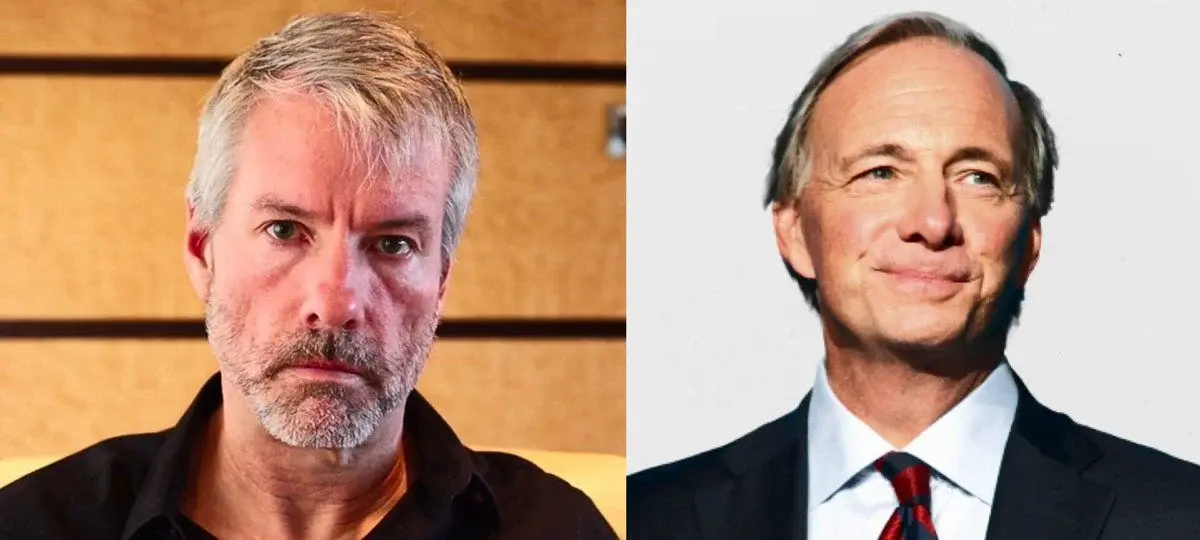
Bridgewater founder Ray Dalio (@RayDalio) says Bitcoin ($BTC) has failed as a safe-haven asset, citing its correlation with tech stocks and lack of privacy. Strategy chairman Michael Saylor (@saylor) fired back, calling Bitcoin superior digital capital that has outperformed gold since Strategy adopted its Bitcoin-standard balance sheet.
Dalio Questions Bitcoin's Safe-Haven Status
Bridgewater Associates founder Ray Dalio (@RayDalio) renewed his criticism of Bitcoin ($BTC) on May 11, arguing the world's largest cryptocurrency has not lived up to its billing as a safe-haven asset. Posting on X, Dalio outlined three core objections to the popular "digital gold" narrative.
First, he pointed to Bitcoin's transparency as a structural weakness. Dalio argued that because all transactions are visible on a public ledger, they can be monitored and potentially controlled, which he said is a key reason central banks have shown little appetite to hold the asset as a reserve. Second, he highlighted Bitcoin's persistent correlation with technology stocks. Dalio noted that in periods of market stress, investors tend to sell Bitcoin to cover losses elsewhere, behavior more typical of a risk asset than a defensive one. Third, he argued that Bitcoin's relatively small and concentrated market makes it more susceptible to forced selling during liquidity crunches, unlike gold, which he described as more widely held and deeply established.
Dalio's position is consistent with views he has held for some time. While he does hold Bitcoin at roughly 1% of his portfolio for diversification, he believes it falls short of gold in several key areas. At the time of writing, the 90-day correlation coefficient between Bitcoin and the Nasdaq stood at 0.89, according to data from TradingView, meaning the two assets have moved closely together over that period.
Saylor Frames Bitcoin as Superior Digital Capital
Strategy chairman Michael Saylor (@saylor) was quick to respond, framing the debate as a choice between two distinct forms of capital. Saylor called gold "analog capital" and Bitcoin "digital capital," arguing the two assets represent different monetary eras rather than direct substitutes. He contended that Bitcoin's transparency, far from being a liability as Dalio suggests, actually strengthens its role as global collateral by making it verifiable and trustless.
Saylor has developed this thesis at length in recent months. Speaking at the Digital Asset Summit 2026, he described Bitcoin as competing with gold, real estate, and fiat-based assets as a long-term store of wealth. He also pointed to performance, noting that since Strategy adopted a Bitcoin-standard balance sheet, the asset has outperformed gold with superior risk-adjusted returns.
The exchange reflects a wider divide among institutional investors over where to turn for monetary alternatives outside a weakening dollar. Dalio remains cautious, preferring gold's deep central bank adoption and long track record. Saylor sees Bitcoin's programmable, borderless nature as the defining financial innovation of the current era. The debate is unlikely to be resolved soon, but with macroeconomic uncertainty running high, the stakes for both sides are rising.
Sources:
CoinDesk: Ray Dalio explains why central banks won't touch BTC (May 12, 2026)
Benzinga: Ray Dalio says Bitcoin is no safe haven (May 12, 2026)
Crypto Times: Michael Saylor explains why Bitcoin is emerging as digital capital (March 2026)
Latest News



Read More...



(Advertisement)
Author
 Soumen Datta
Soumen has been a crypto researcher since 2020 and holds a master’s in Physics. His writing and research has been published by publications such as CryptoSlate and DailyCoin, as well as BSCN. His areas of focus include Bitcoin, DeFi, and high-potential altcoins like Ethereum, Solana, XRP, and Chainlink. He combines analytical depth with journalistic clarity to deliver insights for both newcomers and seasoned crypto readers.