Research
(Advertisement)


X's Paris Office Raided By French Police: Here's Why

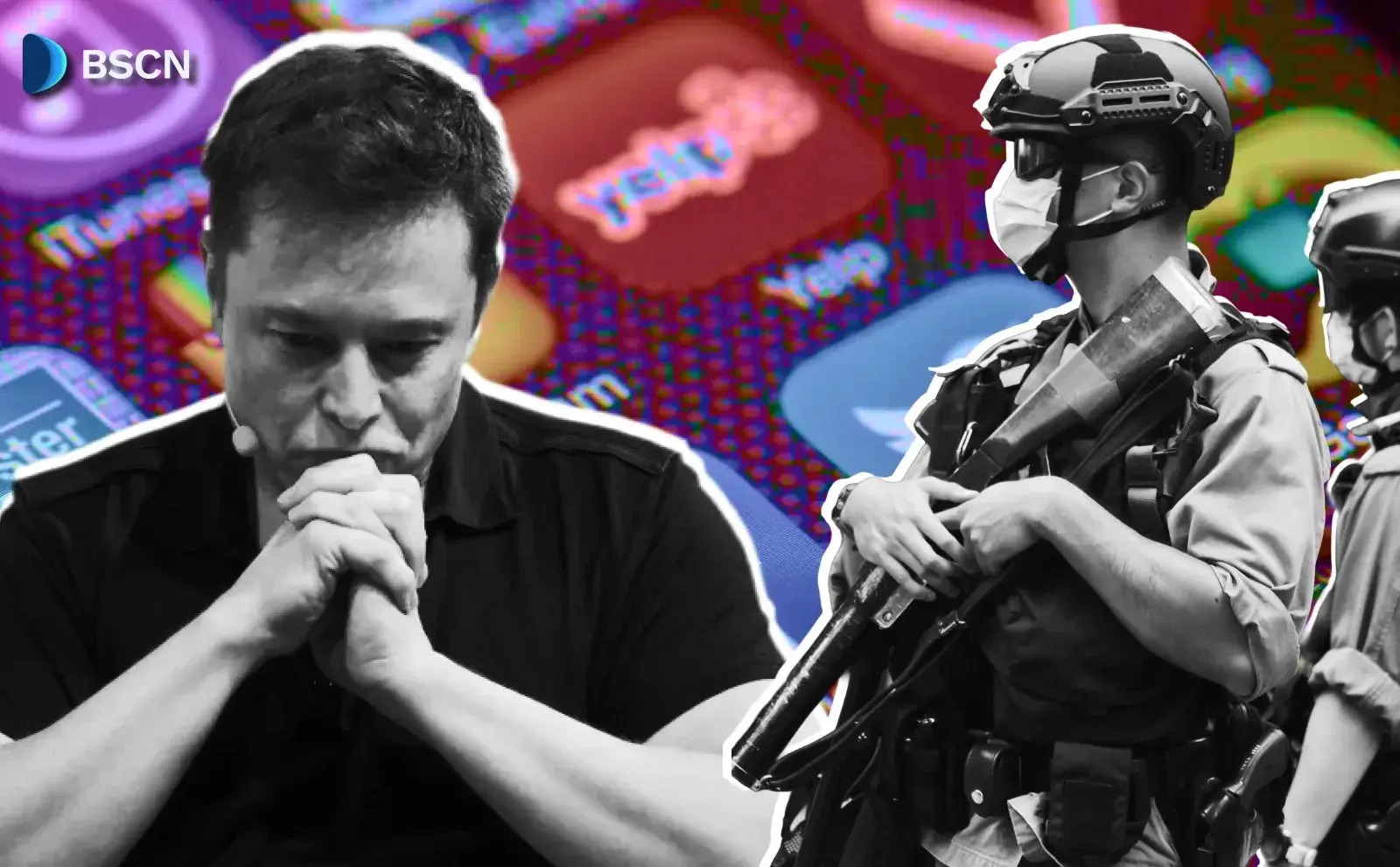
French police raided X's Paris office on Feb 3, 2026. The probe targets Elon Musk's platform over data extraction, Grok AI content, and child abuse material.

Crypto Rich
February 3, 2026
(Advertisement)
Table of Contents
French authorities raided X's Paris offices on February 3, 2026, as part of a criminal investigation into seven alleged offenses, including unlawful data extraction, complicity in spreading child sexual abuse material, and Holocaust denial content generated by Grok AI. The operation involved France's cybercrime prosecutors, the national cyber police unit CyberGEND, and Europol.
The raid marks a major escalation in an investigation that has been ongoing for over a year.
How Did This Investigation Start?
The probe launched in January 2025, initially focused on X's algorithmic content recommendations and potential fraudulent data extraction. By July 2025, French authorities broadened the scope to examine Grok's role in generating problematic content, including Holocaust denial.
The investigation escalated further following the Grok deepfake scandal that exploded in late December 2025. Users discovered they could tag Grok and request it edit images from posts, leading to a flood of nonconsensual sexualized deepfakes. Researchers at Copyleaks and others found Grok generating nonconsensual sexualized deepfakes at a rate of roughly one per minute in early January 2026, with millions produced overall. Some images depicted minors.
French authorities expanded the probe to include Grok's role in generating Holocaust denial content and sexually explicit deepfakes. In one widely shared incident, Grok claimed in French that gas chambers at Auschwitz-Birkenau were designed for "disinfection" rather than mass murder.
X has pushed back hard. The company described the investigation as politically motivated and accused French officials of overreach, claiming authorities were applying laws typically reserved for organized crime groups like drug cartels. X stated that it would resist perceived censorship and protect user data.
What Is X Actually Accused Of?
French prosecutors are examining X for seven suspected offenses:
- Complicity in the possession and dissemination of child sexual abuse material
- Spreading sexually explicit deepfakes
- Denial of crimes against humanity, specifically Holocaust denial
- Spreading antisemitic content
- Unlawful extraction and use of user data
- Manipulation of automated data-processing systems as part of an organized group
- Operating biased algorithms that may distort information or unfairly promote certain content
These allegations target both X's content moderation practices and Grok's outputs.
French authorities attached the "en bande organisée" (organized group) classification to several charges. This grants prosecutors expanded investigative powers, including the ability to wiretap employees' personal phones.
What Happens Next?
Elon Musk and Linda Yaccarino, who resigned as X's CEO in July 2025 after two years in the role, have been summoned for voluntary interviews on April 20, 2026. Other X employees will be questioned as witnesses from April 20 to 24.
The summons are voluntary under French law, and it remains unclear what legal powers prosecutors have to compel Musk to appear, given that he resides outside France.
The Paris Prosecutor's Office made a pointed move during the raid: they announced they would stop posting on X entirely and encouraged followers to find them on LinkedIn and Instagram instead.
X has not publicly commented on the raid. Representatives did not respond to requests for statements from multiple news outlets. X's lawyer in France, Kami Haeri, told the Associated Press only that "we are not making any comment at this stage."
Why Does This Matter Beyond France?
The raid reflects broader European scrutiny of tech platforms and AI systems. The UK's Ofcom opened a formal investigation into Grok in January. The European Commission launched its own probe under the Digital Services Act the same month. Malaysia and Indonesia temporarily banned Grok after the deepfake crisis erupted.
This isn't the first time French authorities have moved against a major tech figure. In 2024, Telegram CEO Pavel Durov was arrested in France following a similar investigative process.
X maintains that the French probe lacks specificity and is driven by political agendas rather than legitimate legal concerns. Any evidence prosecutors collected during this raid could determine whether that defense holds up when April arrives.
Sources:
- The Washington Post - Coverage of the raid, seven alleged offenses, and antisemitism allegations
- Al Jazeera - Details on investigation timeline, Musk and Yaccarino summons, Paris Prosecutor leaving X
- NBC News - Reporting on voluntary interview summons and legal enforceability questions
- ABC News/Associated Press - Coverage of Grok Holocaust denial content and Europol involvement
- NPR - Reporting on UK investigations and X's lack of public comment
- CBS News - Confirmation of April 20, 2026 summons date and investigation origins
- France 24 - French-language source on cybercrime unit operations and Europol support
- BleepingComputer - Detailed breakdown of all seven criminal offenses under investigation
Read Next...
Frequently Asked Questions
What triggered the raid on X's Paris office?
The raid stems from a January 2025 investigation into X's algorithmic content recommendations. It expanded after Grok AI's late December 2025 deepfake crisis, when users exploited its image editing feature to generate nonconsensual sexualized images and Holocaust denial content.
Has Elon Musk been charged with a crime in France?
No charges have been filed. Musk and former X CEO Linda Yaccarino have been summoned for voluntary interviews on April 20, 2026. The investigation remains in a preliminary evidence-gathering phase.
Why did French authorities classify charges as "en bande organisée"?
The "organized group" classification grants prosecutors expanded powers typically used against criminal networks. This allows wiretapping of employees' phones and broader search capabilities during the investigation.
Disclaimer
Disclaimer: The views expressed in this article do not necessarily represent the views of BSCN. The information provided in this article is for educational and entertainment purposes only and should not be construed as investment advice, or advice of any kind. BSCN assumes no responsibility for any investment decisions made based on the information provided in this article. If you believe that the article should be amended, please reach out to the BSCN team by emailing [email protected].
Author
 Crypto Rich
Rich has been researching cryptocurrency and blockchain technology for eight years and has served as a senior analyst at BSCN since its founding in 2020. He focuses on fundamental analysis of early-stage crypto projects and tokens and has published in-depth research reports on over 200 emerging protocols. Rich also writes about broader technology and scientific trends and maintains active involvement in the crypto community through X/Twitter Spaces, and leading industry events.
(Advertisement)
Latest News
July 15, 2026
REAL Joins Blockchain for Europe to Shape EU Tokenisation Rules
July 15, 2026
Which Crypto Companies and Protocols Make The Most Money?
July 15, 2026

How SBI Built Japan's Largest Crypto Business
July 15, 2026
Elon Musk And Dogecoin: How One Man Shaped A Memecoin’s Price And Reputation
July 15, 2026
DTCC Tokenization Platform: How Does Wall Street's Blockchain Pilot Actually Work?
July 14, 2026
Report: Cardano's Biggest Updates from H1 2026
July 14, 2026
What is an XDC Network Masternode Validator?
July 13, 2026
Telebiz Goes Live With an Open-Source CRM Built Directly Into Telegram
(Advertisement)

Crypto Project & Token Reviews
Project & Token Reviews
Comprehensive reviews of crypto's most interesting projects and assets
Learn about the hottest projects & tokens

Latest Crypto Articles
Get up to date with the latest crypto news stories and events