News
(Advertisement)


Former New York Mayor Eric Adams’ NYC Token Collapse: What Went Wrong

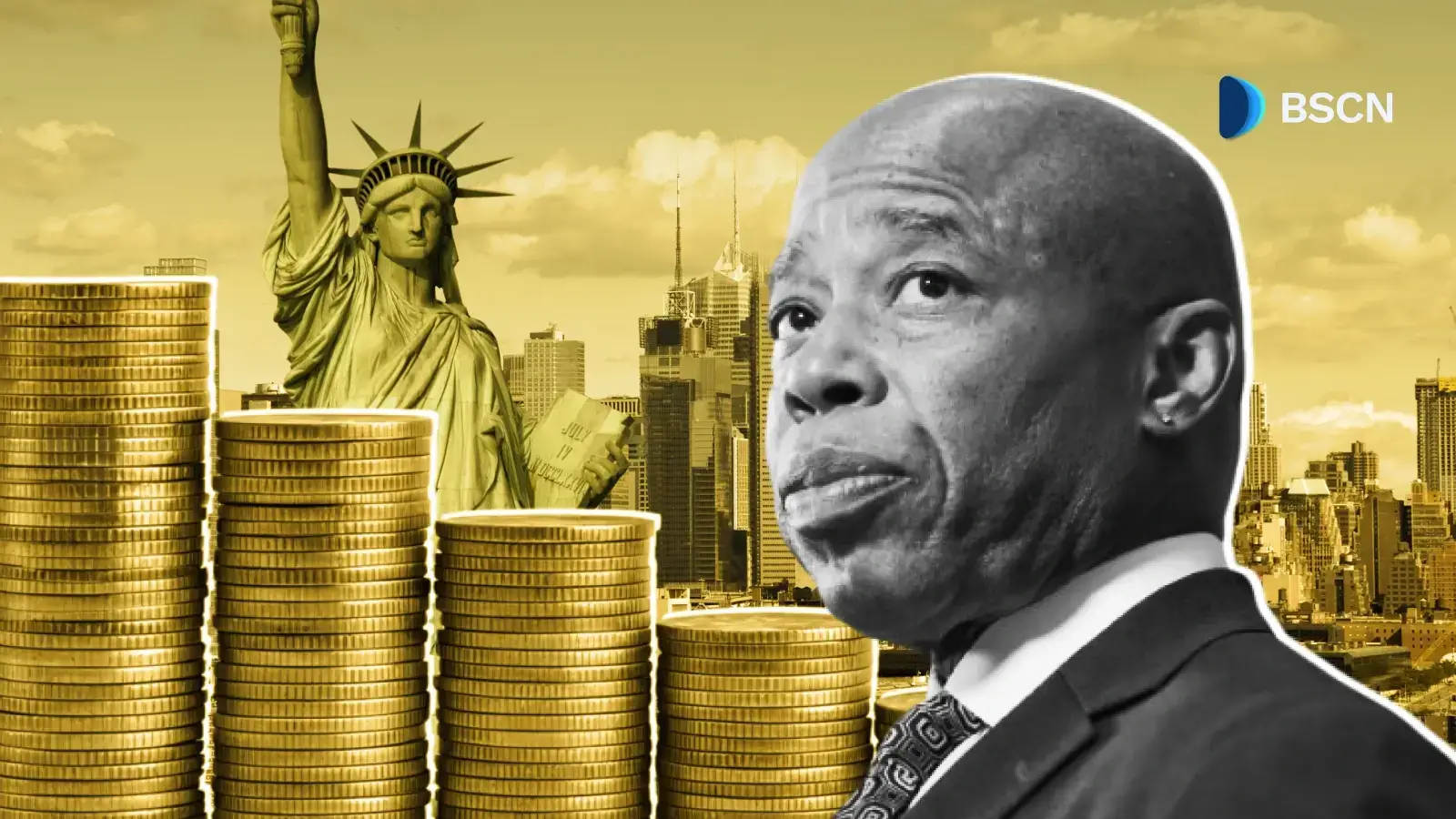
Eric Adams’ NYC Token saw $1M vanish in suspicious liquidity moves, raising questions about transparency, governance, and tokenomics in the project.

Soumen Datta
January 13, 2026

(Advertisement)
Table of Contents
The NYC Token, promoted by former New York City Mayor Eric Adams, collapsed within hours of its launch on Jan. 12, after nearly $1 million in USDC liquidity went unaccounted for. The incident has raised questions about transparency, governance, and the technical setup behind the token.
Amid the Times Square sideshows, Eric Adams announces his “NYC Token,” a crypto coin he says will fight antisemitism.
— Josie Stratman (@JosieStratman) January 12, 2026
“I’m not taking a salary at this time,” he said of the yet to be launched coin. “Down the line, we will make the determination of doing so” pic.twitter.com/KnTTdTv6y1
On-chain analytics from Bubblemaps showed that Adams’ token faced unusual liquidity pool activity that removed $2.43 million in USDC before returning only $1.5 million, leaving $932,000 missing.
The token, aimed at raising funds to combat antisemitism and “anti-Americanism” while educating children about blockchain, quickly surged in market capitalization to over $87 million before losing more than 81% of its value.
What Was The NYC Token?
The NYC Token is a decentralized finance (DeFi) project that ties its identity to New York City. Its website claims it allows trading, lending, and earning without banks, with tokenomics that include:
- A maximum supply of 1 billion tokens
- Market cap claims of $2.5 million at launch
- 10% of profits allocated to an unnamed team
- Community governance features
Adams’ announcement described the token as a tool for civic engagement and social causes. However, the website lacked basic information about backers, operational details, and the mechanics for funding education initiatives. Most functional buttons, including “Buy NYC Token” and “Read Whitepaper,” were broken at launch.
How Did The Liquidity Collapse Happen?
Suspicious liquidity pool activity drove the token’s rapid decline. According to Bubblemaps:
- Adams’ team sent 80 million NYC tokens to an account providing liquidity on a decentralized exchange
- That account removed $2.43 million in USDC before adding back $1.5 million
- Approximately $932,000 in liquidity was unaccounted for
This manipulation mirrors past incidents in politician-backed crypto projects, including the LIBRA token promoted by Argentine President Javier Milei. Wallet 9Ty4M, linked to the NYC Token deployer, created one-sided liquidity pools on the Meteora platform, which destabilized the token price.
As a result, the token price fell from $0.59 to $0.12, representing an 80% drop, with market cap plummeting from $600 million to roughly $125 million, according to birdeye.
Why Did Transparency Concerns Rise?
The NYC Token lacked clarity on key points:
- Investors and backers were unnamed
- Allocation details beyond a 10% team share were vague
- Adams didn’t disclose potential conflicts of interest related to city connections
For cryptocurrency projects, trust and transparency are fundamental. Public teams, fully disclosed investors, and clear governance models are common among successful tokens like Ethereum and Solana. The absence of these elements in the NYC Token created skepticism among investors and contributed to the token’s volatility.
How Did Adams’ Crypto History Influence The Token?
Eric Adams has long been a public crypto supporter. This includes:
- Taking his first mayoral paycheck in Bitcoin
- Hosting a crypto summit at Gracie Mansion in 2025
- Announcing plans for Bitcoin-backed NYC bonds (never executed)
- Establishing the Office of Digital Assets and Blockchain Technology
Adams also promoted blockchain applications in public services, like using smart cameras on school buses and robot dogs in policing. His enthusiasm for crypto has remained consistent, though some promises went unfulfilled.
What Role Did Tokenomics Play In The Collapse?
The NYC Token’s design exposed several economic vulnerabilities:
- One-sided liquidity pools allowed the deployer to extract funds easily
- Community governance mechanisms were untested
- No mechanisms were in place to prevent sudden withdrawals of USDC or other liquidity manipulation
The tokenomics, combined with insufficient disclosure, made it susceptible to market swings. The sudden removal of liquidity effectively drained confidence, causing panic selling and the sharp price drop.
What Are The Ethical Implications?
Adams’ post-office involvement in a city-linked crypto project raises legal and ethical questions:
- Former officials are barred from dealing with NYC government entities for one year on matters handled while in office
- Lack of backer disclosure could hide potential conflicts of interest
- Ethics groups have previously criticized Adams for financial and governance lapses
These concerns are amplified by the high-profile nature of the token, which drew attention precisely because of Adams’ former position.
Could The NYC Token Have Been Handled Differently?
Several approaches could have reduced risk:
- Full transparency: Listing backers and financial allocations upfront
- Decentralized control: Employing multi-signature wallets for liquidity management
- Audits and verifications: Pre-launch third-party smart contract audits to avoid fund manipulation
- Gradual liquidity introduction: Preventing sudden large-scale withdrawals
Without these precautions, the project was vulnerable to liquidity shocks and investor mistrust.
How Does This Compare To Other Politician-Backed Crypto Projects?
The NYC Token follows a pattern observed in previous politically promoted tokens:
- LIBRA token by Argentine President Javier Milei suffered liquidity manipulation and fraud lawsuits
- Other municipal tokens, like MiamiCoin, showed limited adoption despite official backing
The key difference is that NYC Token’s liquidity removal occurred within hours, accelerating the crash and highlighting gaps in oversight and project structure.
What’s Next For Eric Adams’ Crypto Plans?
Adams has indicated that NYC Token is only one initiative in a broader strategy:
- Plans to pursue international partnerships
- Potential future projects include exchanges, NFT marketplaces, and blockchain consulting
- Crypto education and civic engagement remain a stated goal
Conclusion
The NYC Token collapse illustrates how even high-profile endorsements cannot compensate for gaps in transparency, liquidity design, and tokenomics. Nearly $1 million in USDC vanished due to one-sided liquidity manipulation, and the token lost more than 81% of its value within hours.
Adams’ experience in cryptocurrency and blockchain promotion highlights potential utility, but operational execution and investor trust remain critical. For decentralized finance projects, governance, disclosure, and smart contract design are essential to maintaining stability and credibility.
Resources
NYC token website: General info
Solscan data: Data regarding to the wallet 9Ty4M allegedly linked to NYC token
birdeye portal: NYC token price action
Report by Fortune: Former New York Mayor Eric Adams has a new act as a crypto entrepreneur—though details of his ‘NYC Token’ remain vague
Report by Decrypt: Eric Adams' NYC Token Crashes Amid Liquidity Extraction Allegations
Read Next...




Frequently Asked Questions
Why did the NYC Token collapse?
Liquidity manipulation removed nearly $1 million in USDC, causing price instability and investor panic.
Who controls the NYC Token funds?
The token is linked to the deployer account and an entity called “C18 Digital,” but backers remain unnamed.
Can NYC Token recover?
Recovery would require transparency, proper liquidity management, and strong governance, though initial investor confidence is severely damaged.
Disclaimer
Disclaimer: The views expressed in this article do not necessarily represent the views of BSCN. The information provided in this article is for educational and entertainment purposes only and should not be construed as investment advice, or advice of any kind. BSCN assumes no responsibility for any investment decisions made based on the information provided in this article. If you believe that the article should be amended, please reach out to the BSCN team by emailing [email protected].
Author
 Soumen Datta
Soumen has been a crypto researcher since 2020 and holds a master’s in Physics. His writing and research has been published by publications such as CryptoSlate and DailyCoin, as well as BSCN. His areas of focus include Bitcoin, DeFi, and high-potential altcoins like Ethereum, Solana, XRP, and Chainlink. He combines analytical depth with journalistic clarity to deliver insights for both newcomers and seasoned crypto readers.
(Advertisement)
Latest News
July 15, 2026

REAL Joins Blockchain for Europe to Shape EU Tokenisation Rules
July 15, 2026

Which Crypto Companies and Protocols Make The Most Money?
July 15, 2026
How SBI Built Japan's Largest Crypto Business
July 15, 2026

Elon Musk And Dogecoin: How One Man Shaped A Memecoin’s Price And Reputation
July 15, 2026
DTCC Tokenization Platform: How Does Wall Street's Blockchain Pilot Actually Work?
July 14, 2026

Report: Cardano's Biggest Updates from H1 2026
July 14, 2026

What is an XDC Network Masternode Validator?
July 13, 2026

Telebiz Goes Live With an Open-Source CRM Built Directly Into Telegram
(Advertisement)

Crypto Project & Token Reviews
Project & Token Reviews
Comprehensive reviews of crypto's most interesting projects and assets
Learn about the hottest projects & tokens

Latest Crypto Articles
Get up to date with the latest crypto news stories and events