Research
(Advertisement)


Complete Guide to K-Social: Kaspa's own social app


Learn how to use the K-social application in easy steps.

UC Hope
January 16, 2026

(Advertisement)
Table of Contents
K-Social is a decentralized social networking application built directly on the Kaspa blockchain. It allows users to publish posts, interact with others, and manage a social identity without relying on centralized servers or corporate moderation systems. Instead of storing content in private databases, K-Social embeds social activity directly into Kaspa transactions, making posts verifiable, censorship-resistant, and publicly accessible through open-source indexing software.
This article explains how K-Social works and how to use it step by step. It also outlines the platform's technical architecture, current capabilities, and limitations, providing a practical guide for anyone interested in on-chain social media built on proof-of-work infrastructure.
Why K-Social Exists: Limits of Centralized Social Platforms
Most mainstream social media platforms are controlled by a small number of private companies. These firms operate the servers, define the rules, and retain full authority over content visibility and account access. While this model offers convenience, it also introduces structural issues that conflict with open network principles.
Common problems include:
- Content ranking governed by opaque algorithms
- Posts removed or suppressed without clear justification
- Accounts suspended or deleted with limited recourse
- Dependence on platform approval to participate
- A small group of companies shaping global discourse
K-Social was created to address these concerns by removing centralized control points. Instead of publishing content to private servers, the application records posts directly on the Kaspa blockchain. Once a post is confirmed as a transaction, it becomes part of the public ledger and cannot be selectively removed by an administrator or company.
What Is K-Social?
K-Social is a blockchain-based microblogging application that runs on Kaspa mainnet. It allows users to perform several tasks, but not limited to the following:
- Create a blockchain-based identity
- Publish short text posts
- Reply, quote, and vote on posts
All of these actions are represented as Kaspa transactions containing message payloads. There is no central database storing posts or profiles. Visibility is provided through open-source indexers that read data from the blockchain and present it in a readable format.
The project was publicly announced as live by a Kaspa community developer shortly before broader exchange listings expanded access to KAS. While functional, K-Social is still considered experimental and is described by its developers as a proof of concept. You can learn more about K-Social by reading our explainer article.
How K-Social Works on Kaspa
Core Architecture
K-Social relies on three main components that operate together without a central authority:
Kaspa Node
A standard Kaspa node connects to the mainnet, validates transactions, and enforces consensus using proof-of-work.
K-Indexer
The indexer listens to the Kaspa node, filters K-Social-related transactions, and stores them in a readable database. It does not alter the blockchain; it only organizes existing on-chain data.
K Frontend
The frontend is the user interface, available via web, desktop, or mobile apps. It allows users to publish posts, manage profiles, and view indexed content.
When a user creates a post, the frontend sends a transaction request to the Kaspa node. That transaction is broadcast, confirmed by the network, and later indexed. Other users see the post through their own frontends, using either public or self-hosted indexers.
This structure avoids a single point of failure. Even if one frontend or indexer goes offline, the underlying data remains on-chain and accessible.
How to Get Started With K-Social
Step 1: Generate a New Identity
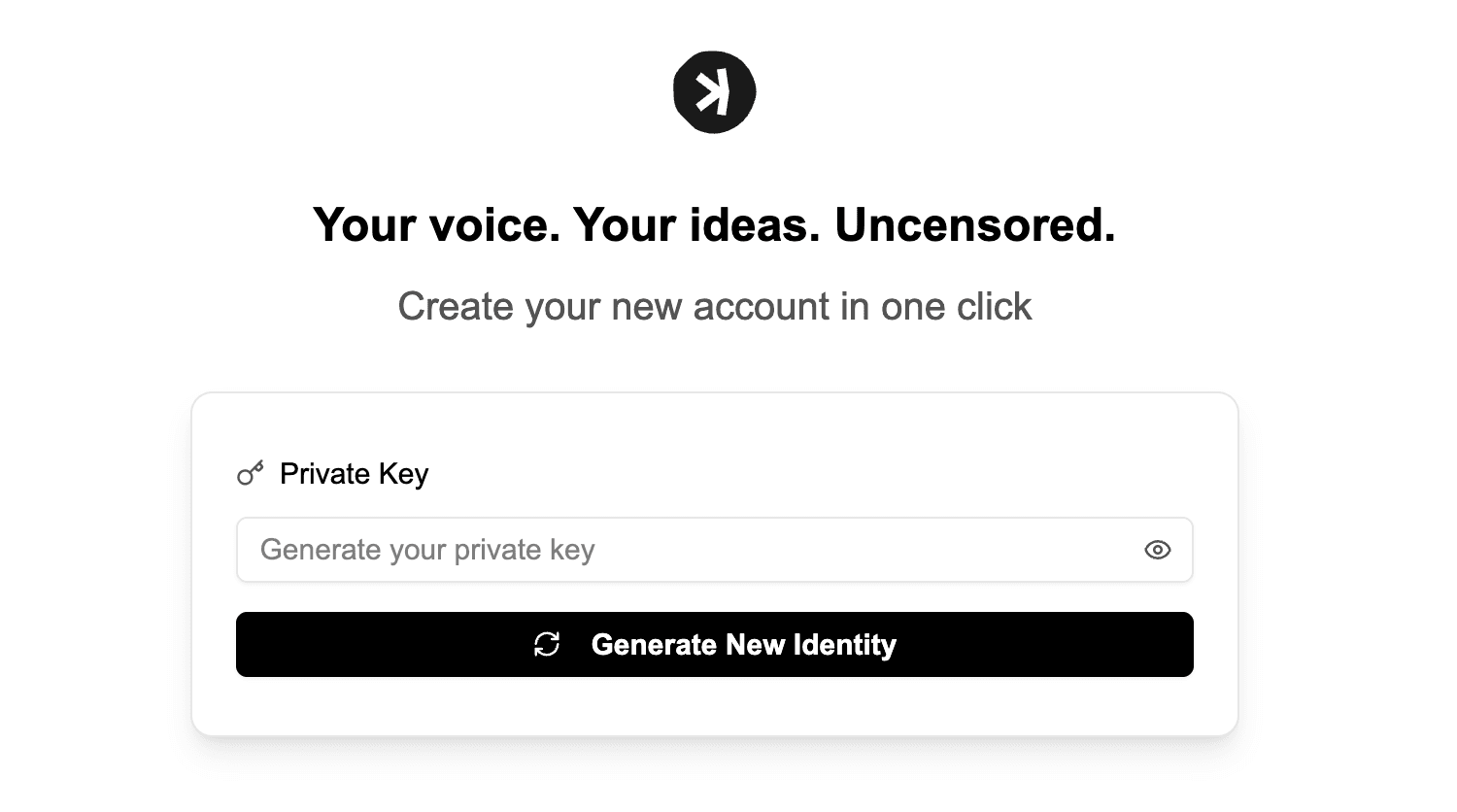
- Visit https://k-social.network/
- Click “Generate New Identity” as shown in the image above
- A public and private key pair will be created in your browser
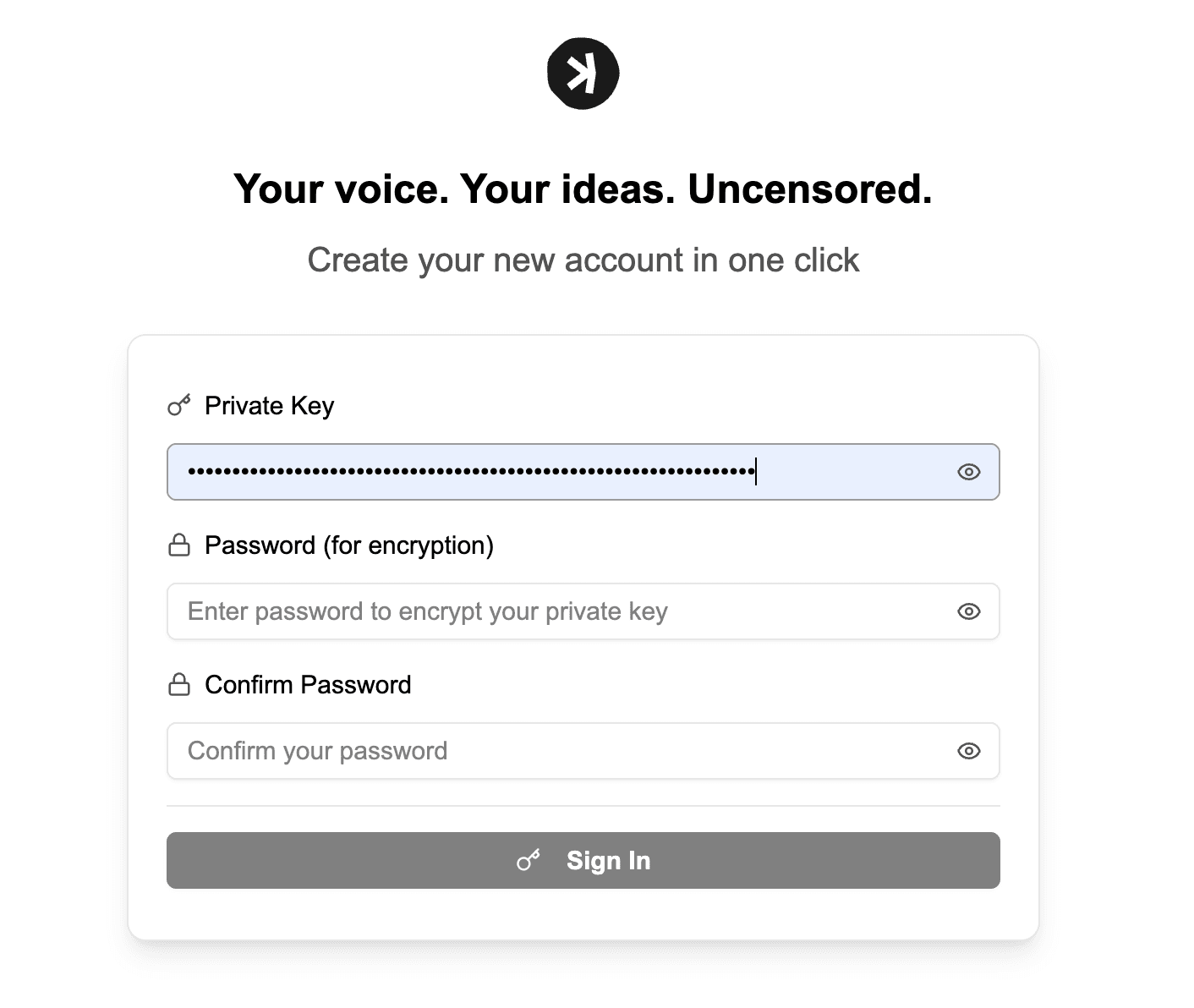
- Set a password to encrypt your private key
- Store the password securely; losing it means losing access to the identity
This identity represents both your social profile and your on-chain address for K-Social activity.
Step 2: Fund Your K-Social Wallet
To interact on K-Social, you need UTXOs (unspent transaction outputs). These are created by sending KAS to your generated address.
- Navigate to your profile page
- Locate your wallet address
- Send 1–5 KAS to that address
K-Social recommends multiple small transactions. Each post or interaction consumes a small amount of KAS, so having several posts or interactions improves responsiveness.
Step 3: Set Up Your Profile
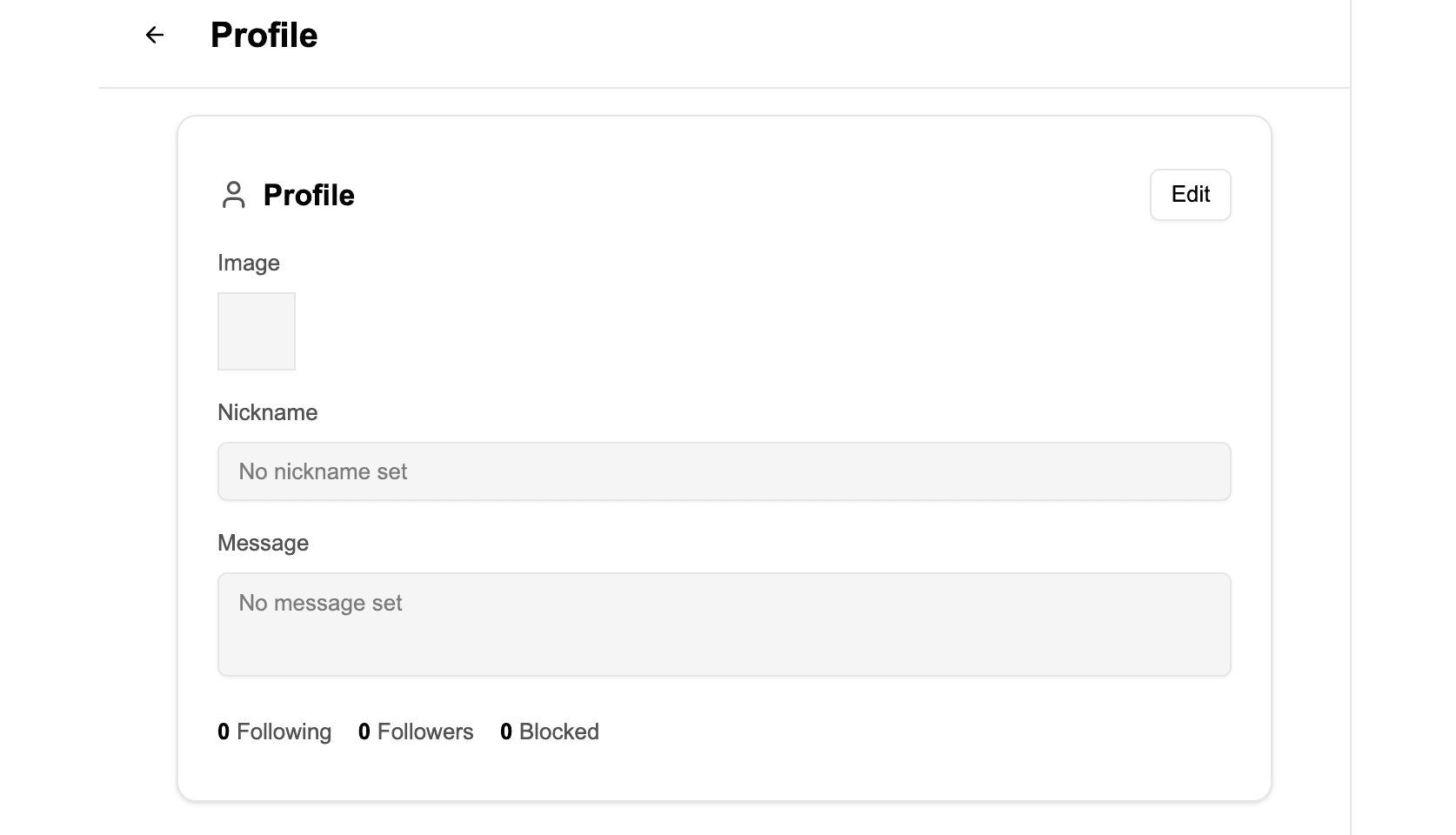
Once funds are received:
- Choose a unique nickname
- Add a short bio
- Upload a profile image
All profile data is associated with your on-chain identity and displayed through the indexer.
Step 4: Create and Manage Posts
- Create new posts
- View all posts you have published
Each post is a Kaspa transaction containing a message payload.
Step 5: Explore the Ecosystem
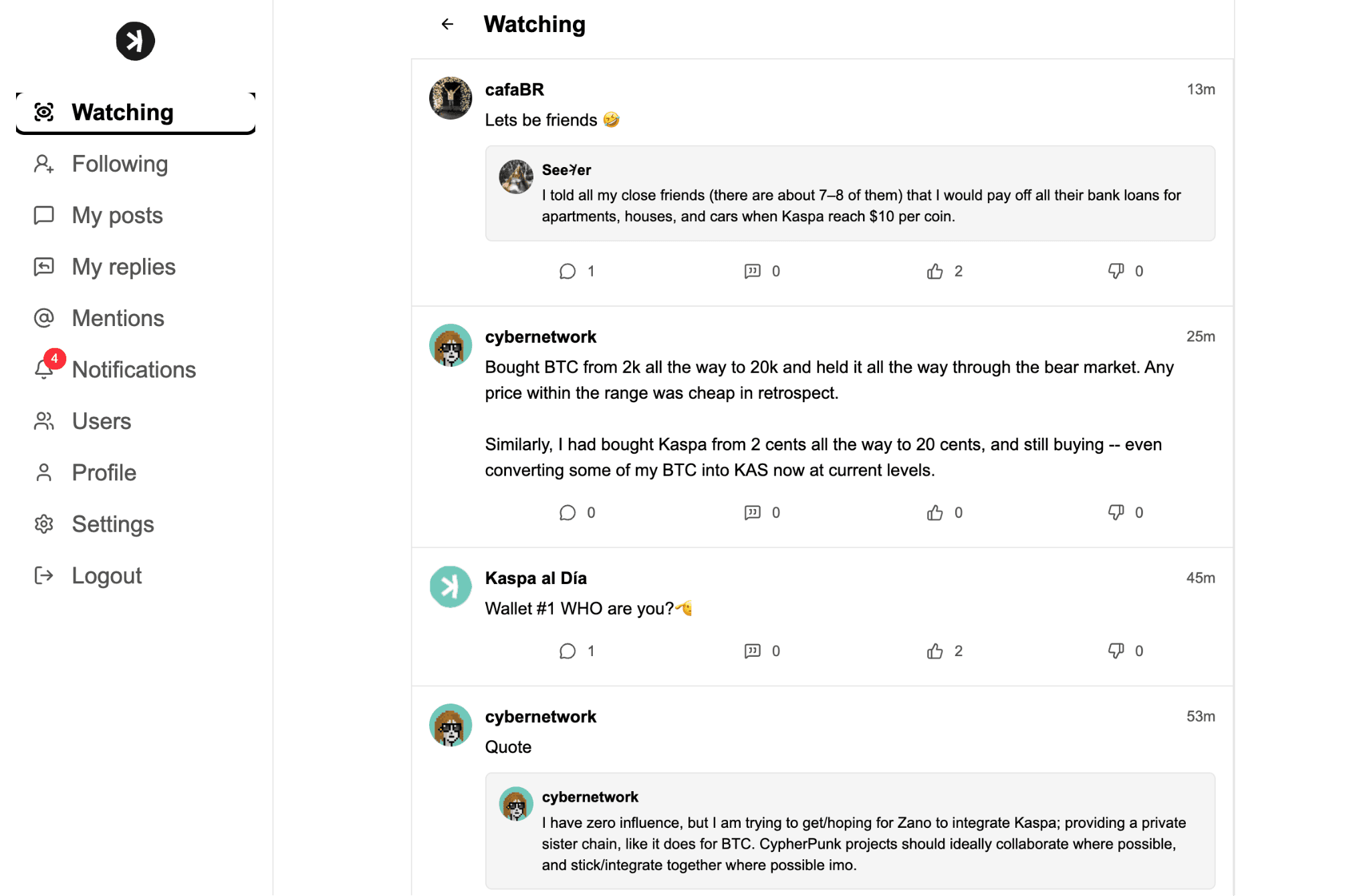
K-Social includes several core portals:
- Watching portal – See all public posts across the network
- Users portal – View active users and follow accounts
- Notifications – Track replies, mentions, and interactions
- Mentions – Track your account mention
- My Replies – Check all the replies you have made to posts
- Following – Check posts from all accounts that you follow.
Every action, posting, following, liking, and commenting is paid in KAS, with fees measured in fractions of a cent.
Features Available on K-Social Today
K-Social focuses on essential social functions rather than media-heavy features. Current capabilities include:
- Blockchain-based identity creation
- Public user profiles
- Text-based posting and replies
- Global public timeline
- Notifications for mentions and replies
- Upvoting and downvoting
- Quote posts with commentary
- Following and unfollowing users
- User blocking for local content filtering
- Dark mode interface
Financial Inclusion and Decentralization
K-Social’s design enables social identities to double as crypto-enabled accounts. In theory, this allows:
- Self-sovereign digital identities without bank-based KYC
- Social profiles functioning as lightweight crypto wallets
- Low-friction micro-payments, tipping, and paid posts
- Censorship-resistant communication in restrictive environments
These properties may be particularly relevant in regions with limited banking access, though real-world impact depends on infrastructure, education, and regulatory conditions.
Conclusion
K-Social is a decentralized microblogging application that records social activity directly on the Kaspa blockchain. By using Kaspa nodes, open-source indexers, and lightweight frontends, it removes centralized control over posts and accounts while keeping transaction costs extremely low.
Although still experimental, K-Social demonstrates that on-chain social networks can operate without private servers or algorithmic moderation, offering a practical reference point for censorship-resistant social communication built on proof-of-work infrastructure.
Source:
- K-Social Mainnet: Explore the Kaspa Social Application
Read Next...




Frequently Asked Questions
What do I need to use K-Social?
You need a generated K-Social identity, a secure password, and a small amount of KAS to fund transactions.
Are K-Social posts permanent?
Yes. Posts are recorded on the Kaspa blockchain and cannot be selectively removed once confirmed.
Is K-Social safe to use with large balances?
It is recommended to use dedicated keys and only small amounts of KAS, as the platform is still experimental.
Disclaimer
Disclaimer: The views expressed in this article do not necessarily represent the views of BSCN. The information provided in this article is for educational and entertainment purposes only and should not be construed as investment advice, or advice of any kind. BSCN assumes no responsibility for any investment decisions made based on the information provided in this article. If you believe that the article should be amended, please reach out to the BSCN team by emailing [email protected].
Author
 UC Hope
UC holds a bachelor’s degree in Physics and has been a crypto researcher since 2020. UC was a professional writer before entering the cryptocurrency industry, but was drawn to blockchain technology by its high potential. UC has written for the likes of Cryptopolitan, as well as BSCN. He has a wide area of expertise, covering centralized and decentralized finance, as well as altcoins.
(Advertisement)
Latest News
July 15, 2026

REAL Joins Blockchain for Europe to Shape EU Tokenisation Rules
July 15, 2026

Which Crypto Companies and Protocols Make The Most Money?
July 15, 2026

How SBI Built Japan's Largest Crypto Business
July 15, 2026

Elon Musk And Dogecoin: How One Man Shaped A Memecoin’s Price And Reputation
July 15, 2026
DTCC Tokenization Platform: How Does Wall Street's Blockchain Pilot Actually Work?
July 14, 2026

Report: Cardano's Biggest Updates from H1 2026
July 14, 2026

What is an XDC Network Masternode Validator?
July 13, 2026

Telebiz Goes Live With an Open-Source CRM Built Directly Into Telegram
(Advertisement)

Crypto Project & Token Reviews
Project & Token Reviews
Comprehensive reviews of crypto's most interesting projects and assets
Learn about the hottest projects & tokens

Latest Crypto Articles
Get up to date with the latest crypto news stories and events