(Advertisement)


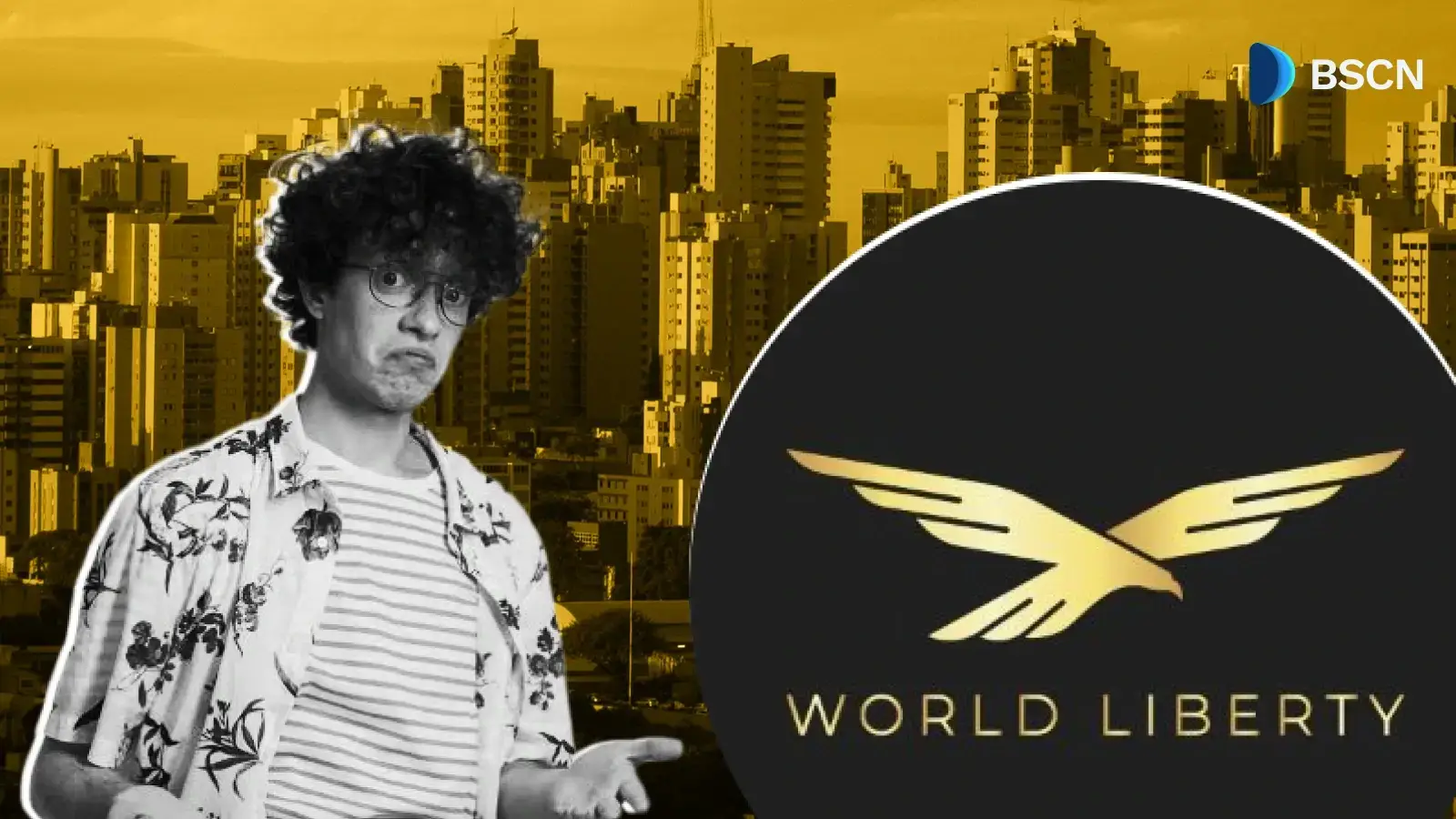
Did Abu Dhabi Royal Pay $500M For Trump Backed World LibertyFi?

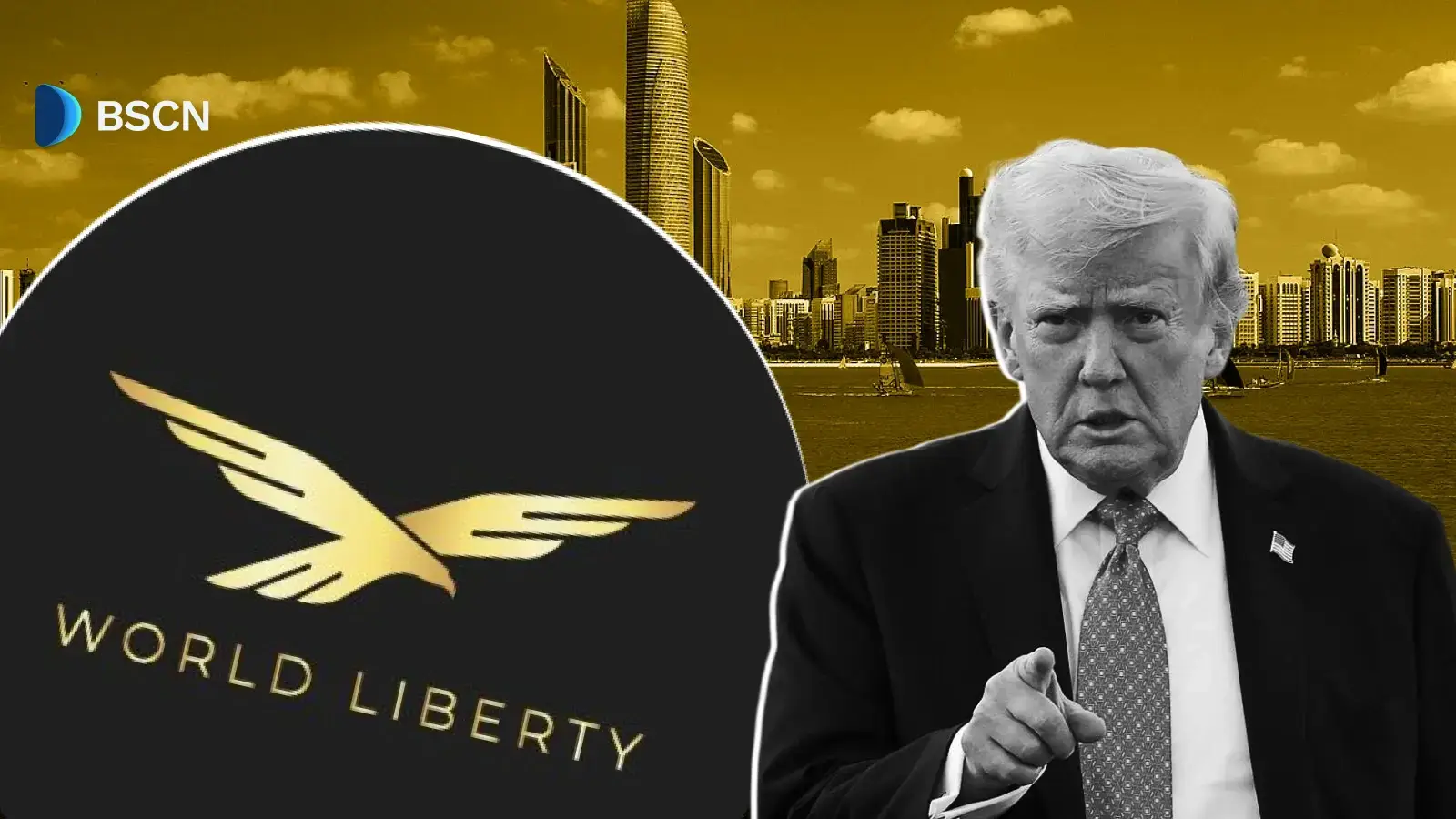
WSJ reports Abu Dhabi's Sheikh Tahnoon bought 49% of World Liberty Financial for $500M, but Nano Labs CEO denies the claim. Here's what we know.

Soumen Datta
February 2, 2026

(Advertisement)
Table of Contents
An Abu Dhabi entity backed by Sheikh Tahnoon bin Zayed Al Nahyan purchased a 49% stake in World Liberty Financial for $500 million in January 2025, the Wall Street Journal reported. However, certain publications denied these reports, calling the claims false and stating the information was officially denied after being circulated by insiders.
The conflicting statements have created confusion around one of the most scrutinized crypto deals involving President Trump's family, with significant implications for the U.S.-UAE relations and potential conflicts of interest.
What Does The Wall Street Journal Report Claim?
According to the WSJ, Aryam Investment 1, an Abu Dhabi entity backed by Sheikh Tahnoon bin Zayed Al Nahyan, signed a deal to acquire a 49% stake in World Liberty Financial for $500 million. The agreement was reportedly signed by Eric Trump on January 16, 2025, four days before Donald Trump's presidential inauguration.
The deal structure divided the $500 million into two installments. The first $250 million was paid upfront and distributed across multiple entities:
- $187 million went to Trump family-controlled entities
- $31 million went to entities linked to Steve Witkoff's family (Witkoff is a World Liberty co-founder and current U.S. Middle East envoy)
- $31 million was allocated to entities tied to co-founders Zak Folkman and Chase Herro
The remaining $250 million was due by July 2025, though its distribution details were not disclosed. As part of the transaction, G42 executives reportedly helped manage Aryam Investment 1 and took board seats at World Liberty, making the Abu Dhabi vehicle the crypto venture's largest outside shareholder.
Who Is Sheikh Tahnoon And Why Does This Matter?
Sheikh Tahnoon bin Zayed Al Nahyan serves as the UAE's national security adviser and deputy ruler of Abu Dhabi. He oversees the $1 trillion Abu Dhabi Investment Authority and has been central to the UAE's push to become a global leader in artificial intelligence and technology.
Under the Biden administration, Tahnoon's efforts to secure advanced U.S.-made AI chips faced restrictions due to concerns that sensitive technology could reach China through companies like G42, an AI conglomerate he chairs. Following Trump's election, these restrictions were reversed.
Tahnoon reportedly met multiple times with Trump and senior U.S. officials after the election. Within months, the Trump administration committed to granting the UAE access to hundreds of thousands of advanced AI chips annually. In November 2025, the administration approved sales of computing power equivalent to 35,000 of Nvidia's most advanced GB300 processors to G42.
Who Denied The Reports And What Did They Say?
ME News earlier posted on X that reports of the $500 million investment by an Abu Dhabi royal family member to acquire a 49% stake in WLFI Company. However, later they said the reports were false. According to reports, the information was initially circulated by an insider but has been officially denied.
This creates a direct contradiction with the WSJ report, which cited documents and people familiar with the matter.
How Does The Ownership Structure Support The WSJ Claims?
The Block reported in June 2025 that DT Marks DeFi LLC, the Trump-linked firm behind World Liberty Financial, had quietly reduced its equity interest from 60% to 40%, down from 75% in December 2024. The company did not explain at the time who had acquired the stake.
The math roughly tracks with the WSJ's reporting. If Aryam's 49% stake came proportionally from all existing shareholders, a 75% stake diluted by a 49% outside investment would leave DT Marks with approximately 38%, close to the 40% figure disclosed on World Liberty's website.
This ownership shift provides circumstantial support for the WSJ's claims, though it doesn't definitively prove the identity of the buyer.
What Are The Conflict Of Interest Concerns?
The overlapping timelines between World Liberty's UAE deals and the Trump administration's policy decisions have drawn scrutiny from Democratic lawmakers. Weeks before the administration announced the framework allowing UAE access to advanced AI chips, another Tahnoon-led firm, MGX, used World Liberty's USD1 stablecoin to complete a $2 billion investment into Binance.
In September 2025, Senators Elizabeth Warren and Elissa Slotkin called for investigations into potential conflicts of interest involving Witkoff and White House AI and Crypto Czar David Sacks. They cited a New York Times investigation documenting the proximity between World Liberty's UAE deals and the administration's chip export negotiations.
In November 2024, Senators Warren and Jack Reed sent a letter to the Justice Department and Treasury citing claims that WLFI governance tokens were bought by blockchain addresses tied to North Korea's Lazarus Group, as well as Russian and Iranian-linked entities. The controversy intensified due to WLFI's ownership structure, which gives Trump family-linked entities control over the majority of token revenue.
What Is World Liberty Financial And What Does It Do?
World Liberty Financial launched in October 2024 as a crypto venture backed by President Trump and his family. The project lists President Trump and his sons Eric, Donald Jr., and Barron as co-founders, though spokespeople maintain that Trump and his family are not involved in day-to-day management.
In January 2025, World Liberty launched World Liberty Markets, its first decentralized finance web app offering onchain lending and borrowing services. The platform uses infrastructure provided by the DeFi protocol Dolomite and supports USD1 stablecoin, WLFI governance token, Ether, Coinbase wrapped bitcoin, USDC, and USDT.
On January 7, 2025, World Liberty Financial filed an application with the Office of the Comptroller of the Currency to create World Liberty Trust Company, a national trust bank focused on issuing and custodying its USD1 stablecoin. The proposed entity would bring stablecoin operations under direct federal banking supervision if approved.
USD1 has grown to over $5 billion in circulation, establishing itself as one of the fastest-growing stablecoins by market capitalization. The stablecoin's rapid adoption was partly driven by MGX's $2 billion Binance investment, which used USD1 for the transaction.
What Did World Liberty And The White House Say?
World Liberty Financial and the White House denied any wrongdoing in response to the WSJ's reporting. Spokespeople told the outlet that President Trump was not involved in the deal and that it did not influence U.S. policy decisions. A World Liberty spokesperson said the investment aimed to support growth and that Trump and Witkoff had no involvement in the deal.
Conclusion
The conflicting reports about an Abu Dhabi royal's alleged $500 million investment in World Liberty Financial highlight the challenges of verifying major crypto transactions with geopolitical implications. The WSJ's detailed reporting, citing documents and sources, contrasts sharply with some other publications’ public denial. World Liberty's documented ownership structure changes support the possibility of a major outside investment, while the timing of UAE policy shifts and World Liberty deals raises legitimate conflict of interest questions.
The controversy underscores the regulatory and transparency challenges facing crypto projects with ties to political figures, particularly when those projects intersect with national security considerations like advanced AI chip exports. Until additional documentation surfaces or parties provide more detailed public statements, the truth about this reported transaction remains disputed.
Resources
Report by The WSJ: ‘Spy Sheikh’ Bought Secret Stake in Trump Company
Report by The Guardian: Trump agrees deal for UAE to build largest AI campus outside US
Report by Bloomberg: The Many Faces of Abu Dhabi’s Trillions
Report by The Block 1: Trump-linked firm quietly reduces 20% of its equity interests in World Liberty Financial
Report by The Block 2: Binance elevates Trump-backed World Liberty's stablecoin by adding USD1 trading pairs
Read Next...

Frequently Asked Questions
Did an Abu Dhabi royal buy 49% of World Liberty Financial?
The Wall Street Journal reported that Sheikh Tahnoon bin Zayed Al Nahyan's entity purchased a 49% stake for $500 million, with $187 million going to Trump entities. However, Nano Labs CEO Jack Kong has publicly denied these reports, calling them false and officially denied. The conflicting claims leave the transaction's existence in dispute.
Who is Sheikh Tahnoon bin Zayed Al Nahyan?
Sheikh Tahnoon is the UAE's national security adviser, deputy ruler of Abu Dhabi, and oversees the $1 trillion Abu Dhabi Investment Authority. He chairs G42, an AI conglomerate that received approval to access 35,000 of Nvidia's advanced GB300 processors after Trump took office, reversing Biden-era restrictions on advanced chip exports.
What conflicts of interest concern lawmakers?
Democratic senators have raised concerns about the proximity between World Liberty's UAE deals and the Trump administration's approval of advanced AI chip exports to the UAE. A Tahnoon-led firm used World Liberty's USD1 stablecoin for a $2 billion Binance investment weeks before the chip framework was announced, while Trump family entities control the majority of WLFI token revenue.
Disclaimer
Disclaimer: The views expressed in this article do not necessarily represent the views of BSCN. The information provided in this article is for educational and entertainment purposes only and should not be construed as investment advice, or advice of any kind. BSCN assumes no responsibility for any investment decisions made based on the information provided in this article. If you believe that the article should be amended, please reach out to the BSCN team by emailing [email protected].
Author
 Soumen Datta
Soumen has been a crypto researcher since 2020 and holds a master’s in Physics. His writing and research has been published by publications such as CryptoSlate and DailyCoin, as well as BSCN. His areas of focus include Bitcoin, DeFi, and high-potential altcoins like Ethereum, Solana, XRP, and Chainlink. He combines analytical depth with journalistic clarity to deliver insights for both newcomers and seasoned crypto readers.
(Advertisement)
Latest News
0h : 25m ago
How Is Polygon Trying to Connect Every Blockchain Into a Single Network?
4h : 55m ago
What Does It Really Mean To Host A Website On The Internet Computer?
July 15, 2026
REAL Joins Blockchain for Europe to Shape EU Tokenisation Rules
July 15, 2026
Which Crypto Companies and Protocols Make The Most Money?
July 15, 2026
How SBI Built Japan's Largest Crypto Business
July 15, 2026

Elon Musk And Dogecoin: How One Man Shaped A Memecoin’s Price And Reputation
July 15, 2026
DTCC Tokenization Platform: How Does Wall Street's Blockchain Pilot Actually Work?
July 14, 2026

Report: Cardano's Biggest Updates from H1 2026
(Advertisement)

Crypto Project & Token Reviews
Project & Token Reviews
Comprehensive reviews of crypto's most interesting projects and assets
Learn about the hottest projects & tokens

Latest Crypto Articles
Get up to date with the latest crypto news stories and events