

Bitcoin'S Available Supply On Exchanges Continues To Fall, According To Data From Cryptoquant, Adding Pressure To A Market Already Grappling With Rising Institutional Demand.
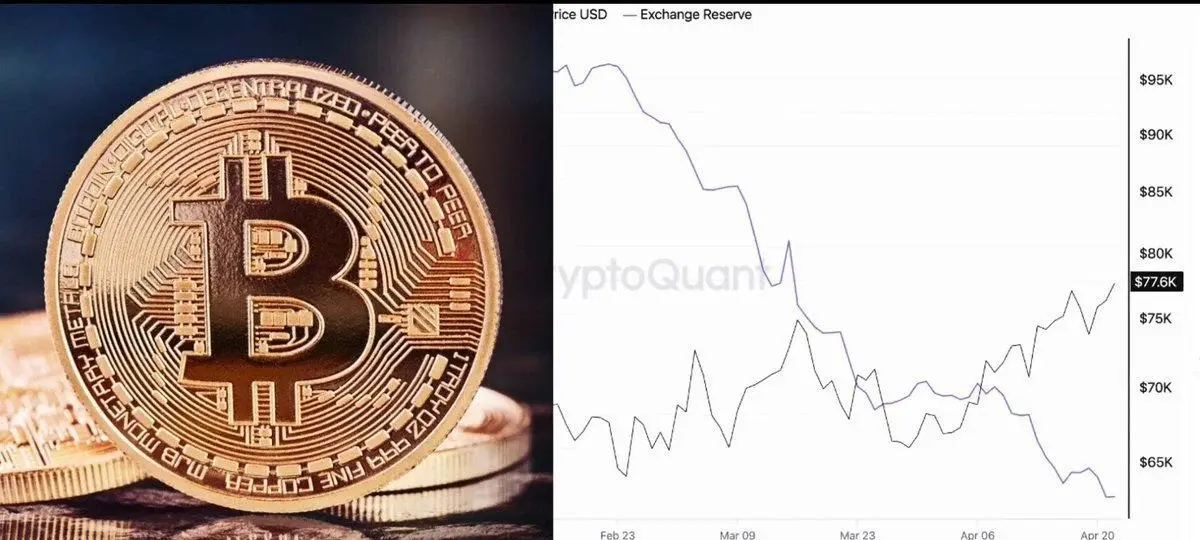
Analyst Sunnymom has flagged 2023 and 2024 as the period when exchange reserves began depleting at a notably faster pace. The trend suggests more holders are moving $BTC into self-custody or long-term storage rather than keeping coins on trading platforms where they could be sold.
On the demand side, institutional appetite shows little sign of cooling. BlackRock's spot Bitcoin ETF has accumulated billions in assets under management since its January 2024 launch, while Strategy — formerly MicroStrategy — now controls roughly 4% of Bitcoin's total supply following a sustained run of debt-funded purchases.
Morgan Stanley drew $100 million on the first day of trading its low-fee Bitcoin ETF, signalling strong retail and institutional interest. Charles Schwab has opened direct Bitcoin trading to its 46 million clients, a move that significantly broadens mainstream access to the asset. Goldman Sachs has also filed for a Bitcoin Covered Call Yield ETF, the latest in a string of traditional finance moves into the space.
The combination of shrinking exchange supply and growing institutional buying channels is what analysts typically describe as a supply shock setup — fewer coins available at the precise moment demand is structurally increasing.

(Advertisement)
Author
 BSCN
BSCNBSCN's dedicated writing team brings over 41 years of combined experience in cryptocurrency research and analysis. Our writers hold diverse academic qualifications spanning Physics, Mathematics, and Philosophy from leading institutions including Oxford and Cambridge. While united by their passion for cryptocurrency and blockchain technology, the team's professional backgrounds are equally diverse, including former venture capital investors, startup founders, and active traders.